- Out of stock




The Rea's Mammoth quince tree is a hardy fruit tree producing very large, fragrant quinces. Ideal for the family orchard, it combines decorative blossoms, quality fruit, and excellent longevity in the garden.
Description
The Rea's Mammoth quince is a remarkable heritage fruit tree, primarily valued for the exceptional size of its fruits and its cultural value in the garden. This cultivar of Cydonia oblonga stands out due to its generous production of very large quinces, often among the largest observed in the species. Its presence in the garden combines fruiting, ornamental, and ecological interests, making it a versatile subject for traditional fruit enthusiasts.
In spring, Rea's Mammoth offers a delicate and bright flowering, consisting of large pinkish-white blossoms highly attractive to pollinators. In summer, its dense, soft green, and slightly downy foliage structures the space and provides light shade. By autumn, the golden-yellow fruits, with their slightly velvety skin, become the tree's focal point. Their intense fragrance is typical of ripe quince and signals a harvest ready for culinary transformation.
This cultivar is particularly sought after for the aromatic quality of its fruits, which are rich in pectin and ideal for making jellies, quince paste, and jams. Grafted onto K. Adams Cydonia oblonga rootstock, it shows consistent growth, regular cropping, and reliable adaptation to garden soils. Hardy, low-maintenance, and long-lived, Rea's Mammoth fits perfectly into a family orchard or a kitchen garden.
The quince tree is native to the Caucasus and Western Asia. The Rea's Mammoth cultivar was selected for its exceptional fruit size and follows the tradition of ancient cultivars preserved for their culinary qualities.
It belongs to the Rosaceae family, which includes many fruit trees such as apple, pear, and medlar.
Quince has been used since Antiquity for its culinary and medicinal properties. The Rea's Mammoth cultivar is unique for fruits that can reach a very high weight while retaining a powerful fragrance and firm flesh.
At maturity, Rea's Mammoth typically reaches 4 to 5 metres in height, depending on growing conditions and soil vigour.
Its average spread is between 3 and 4 metres, with a well-balanced branch structure.
It has a rounded to slightly spreading habit, with a naturally harmonious framework.
The bark is grey-brown, becoming slightly fissured with age, giving the tree a rustic appearance.
The foliage is deciduous, consisting of large oval leaves, soft green and slightly downy, sometimes taking on a yellowish tint in autumn.
Growth is moderate, promoting good longevity and a solid structure.
This quince tree can withstand temperatures down to -20 °C, making it suitable for most temperate regions.
Flowering occurs in April-May, after the risk of severe frosts has passed.
The flowers are large, single, pinkish-white, very decorative, and rich in pollen.
The fruits are very large quinces, bright yellow when ripe, with firm flesh that is astringent when raw but highly fragrant after cooking. Pollination is facilitated by other quince or pear trees with a similar flowering time.
For optimal pollination, varieties with a flowering period (April-May) are needed. The best companions are:
A unique characteristic of quince trees is that they can be pollinated by certain pear trees that flower at the same time. "Beurré" or Williams pear varieties can help if planted nearby, although the results are less spectacular than with another quince tree.
The flowers attract bees and pollinating insects, contributing to local biodiversity.
A sunny to slightly semi-shaded exposure is recommended.
It prefers deep, fertile, cool but well-drained soils.
Soil loosened deeply and enriched with organic matter promotes good rooting.
Allow a spacing of about 4 metres for proper development.
Neutral to slightly acidic soil, cool, and not excessively dry.
Potted plants can be planted year-round except during frost periods, ensuring regular watering after planting.
Regular watering during the first few months to ensure successful establishment.
Once established, the tree tolerates short dry periods.
Pruning is limited to light maintenance in late winter, aiming to thin the canopy and maintain a balanced structure.
Propagation is mainly done by grafting, ensuring the cultivar remains true to type.
Perfect in a family orchard or as a specimen tree in a large garden.
Pairs well with apple trees, pear trees, and hardy soft fruits.
Quinces are used for jellies, fruit pastes, compotes, and artisanal preparations.
May be sensitive to fire blight under certain conditions.
Good air circulation and moderate pruning limit the risks.
Bright exposure, living soil, and reasoned pruning ensure regular production.
The Rea's Mammoth cultivar is distinguished by the exceptional size of its fruits, significantly larger than those of classic quince trees. Grafted on Cydonia oblonga K. Adams, it offers controlled vigour, good adaptation to garden soils, and a regular production of highly aromatic quinces. This cultivar is particularly sought after for culinary processing due to its richness in pectin and the intensity of its fragrance.
Shipping & delivery
 As soon as you place your order your plants are selected
 Each order is processed individually.
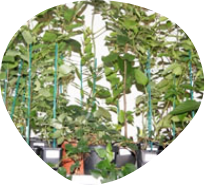 Plants are packed, staked and labeled.
 Packaging is carefully implemented to avoid any problems.
 Packages are ready to be shipped.
We ship our plants throughout Europe (excluding overseas territories and islands).
Avis clients
avis plantes
arbre top, comme toujours...Hâte de le voir grandir
;;;
j'attends les fruits avec impatience ...
merci
très bon plant
très bon plant pour cette ancienne variété. Merci
Le client n'a pas laissé de commentaire.
Strong young plant!
Received a healthy young plant! with good developed branches


The Rea's Mammoth quince tree is a hardy fruit tree producing very large, fragrant quinces. Ideal for the family orchard, it combines decorative blossoms, quality fruit, and excellent longevity in the garden.
Your cart is empty
Continue shopping