- novelty





- Pick up on site


Description
The Acer negundo 'Variegatum' is an exceptional small tree that brings incredible luminosity to green spaces, acting as a true natural light reflector. Unlike classic maples, it stands out with compound leaves that strangely resemble those of the ash tree, hence its common name. Its major appeal lies in its highly pronounced creamy white variegation, which looks hand-painted on each leaflet. In spring, the spectacle begins from the first bud break with young shoots often tinged with soft pink, creating a striking contrast with the bluish-green branches. It is a species particularly recommended for small urban gardens or semi-shade areas that it manages to brighten instantly. Its fast growth allows for a beautiful mass effect to be achieved in just a few seasons. In addition to its aesthetic qualities, this shrub (or small tree) is a robust and very accommodating plant, capable of withstanding air pollution, making it an ideal candidate for city gardens. Whether you use it as a focal point on a lawn or to structure a shrubbery, it offers an airy elegance and a unique visual texture that leaves no one indifferent.
The parent species, Acer negundo, is native to North America, extending from Canada to Mexico. There it grows naturally along waterways and in moist plains. The 'Variegatum' cultivar is an old horticultural selection, highly prized in Europe since the 19th century for its decorative stability.
It belongs to the Sapindaceae family (formerly Aceraceae). This family includes all maples, but also more exotic plants like the lychee, often sharing characteristics of vigorous growth and efficient root systems.
This variety is distinguished by its dioecious character, meaning that male and female flowers are borne on different individuals. Its botanical singularity lies mainly in its juvenile branches which feature a white waxy bloom (pruina), giving it a very decorative bluish appearance in winter, even after the foliage has fallen.
At maturity, this maple generally reaches a height of between 5 and 7 metres. This is a reasonable size that allows it to be easily integrated into medium-sized gardens without becoming cumbersome or excessively shading surrounding homes.
Its spread is around 4 to 5 metres. Its canopy is naturally airy and irregular, giving it a very natural and light appearance, avoiding the compact mass effect found in some other ornamental trees.
It presents a spreading and rounded habit, often with several trunks from the base (multi-stemmed). Its silhouette is picturesque and slightly untidy, which reinforces its wild charm while retaining the structural elegance typical of collector maples.
The bark of young branches is bright green to olive, covered with a grey-white pruinose veil. With age, the main trunk becomes darker, turning towards brownish-grey, and fissures longitudinally, offering an interesting rough texture during the winter season.
The foliage is deciduous and odd-pinnate, composed of 3 to 7 toothed leaflets. Green in the centre and broadly margined with creamy white, some leaves on certain shoots can be entirely white. In autumn, they turn golden yellow before falling, extending visual interest.
Its growth rate is considered fast, especially during the first years following planting. It easily gains 30 to 40 cm per year, allowing impatient gardeners to structure their landscape in record time.
It is an extremely solid tree capable of resisting harsh winters. Its hardiness is excellent, withstanding temperatures down to -25°C to -30°C. It is not afraid of frost, although young spring shoots appreciate being sheltered from drying easterly winds.
Flowering occurs early in the spring, generally in April, just before or at the same time as the first leaves appear. Although discreet, it marks the awakening of the vegetation with delicacy.
The flowers are small pendulous clusters. Male flowers have quite decorative reddish stamens when viewed up close, while female flowers are a more discreet yellowish green, grouped in long drooping racemes that float elegantly in the wind.
The fruits are winged disamaras (the famous "helicopters"), typical of maples. They form in pendulous clusters and turn light brown at maturity. They are dispersed by the wind in autumn and sometimes persist on the tree after the leaves have fallen.
It is a plant very attractive to biodiversity. Its spring flowers provide nectar for the first bees and pollinators, while its seeds are a valued food source for certain birds and small rodents during the late season.
It flourishes ideally in partial shade. An exposure that is too scorching in mid-summer can sometimes burn the white margin of the leaves, while too much shade could reduce the brightness of its variegation. Dappled sun is the perfect compromise.
This maple is undemanding and tolerates a wide variety of soils, including poor land. It prefers, however, a cool, deep, and well-drained soil. It accepts slightly calcareous soils but dislikes excessively dry ground for prolonged periods.
It is recommended to dig a hole at least two to three times the size of the root ball. Enrich your garden soil with a mixture of well-rotted compost and quality potting soil to encourage rapid root establishment.
If you wish to integrate it into a free hedge or a border, respect a distance of 3 to 4 metres between each specimen. As a solitary specimen, leave a free space of 5 metres around it so it can spread its canopy without constraint.
Ideally, the soil should be loamy or sandy-clay, capable of retaining some residual moisture. Humus-rich soil will encourage larger leaves and a brighter variegation, thus avoiding hydraulic stress that dulls colours.
Planting all year round (except during ground frost). Soak the root ball in water before placing it in the hole, backfill, tamp lightly, and form a watering basin to optimise the first waterings.
Watering must be copious and regular during the first two years after planting. Even if you plant in winter, monitor soil moisture to ensure deep and robust rooting before the first summer heat.
Once well established, it tolerates short periods of drought. However, to maintain magnificent foliage, supplementary watering during heatwaves is recommended. Mulching at the base of the trunk helps greatly to maintain the necessary coolness.
Pruning is best done in late summer or early winter (November-December), as sap rises early in spring. Imperatively remove branches that return to entirely green (reversion) to preserve the variegation. Formative pruning is usually sufficient.
The 'Variegatum' cultivar is mainly propagated by semi-ripe stem cuttings in summer or by grafting onto the species (Acer negundo). Sowing is possible but does not guarantee the transmission of the white variegation of the leaves.
It is sublime as a specimen in the middle of a lawn or placed in front of a grove of dark-foliage trees (like conifers) to create a colour contrast. It is also very suitable for the back of borders to provide depth.
Pair it with purple-toned plants like Physocarpus or dark foliage to make its white pop. Heucheras at the foot or spring-flowering shrubs like Viburnums perfectly complement its light appearance.
In North America, the wood of the parent species was used by indigenous peoples to make domestic objects or instruments. Although less sweet than that of the sugar maple, its sap has sometimes been harvested to produce a local syrup.
It can be subject to aphids in spring or verticillium wilt (a soil fungus) if drainage is insufficient. Caterpillars can sometimes attack the tender foliage, but damage generally remains minor for the health of the tree.
Ensure planting in healthy and draining soil to avoid fungal diseases. In case of aphids, a spray of soapy water (black soap) is often enough. Avoid wounds on the trunk that could let in pathogens.
Applying an annual dose of organic matter (compost or leaf mulch) to the base of the tree in spring is an excellent natural booster. Avoid high-nitrogen fertilisers which would promote excessive growth at the expense of the variegation quality.
The Acer negundo 'Variegatum' is distinguished from the species by its smaller size and more compact habit. Its unique characteristic is its persistent colour that does not burn as easily as other variegated maples. It is also more stable than the 'Flamingo' variety (which is pinker), offering a more constant pure white throughout the season.
The Variegated Ash-leaved Maple (Acer negundo 'Variegatum') is the ideal ornamental tree to brighten gardens. Thanks to its spectacular white and green foliage and fast growth, it creates a luminous focal point in no time. Easy to grow, hardy, and pollution-resistant, this medium-sized maple adapts to all cool soils. Perfect as a specimen or in borders, it offers a changing spectacle, from spring pink to autumn yellow. Buy a pot-grown plant for successful year-round planting and enjoy an architectural and original tree.
Expédition & livraison
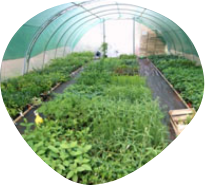
 As soon as you place your order your plants are selected
 Each order is processed individually.
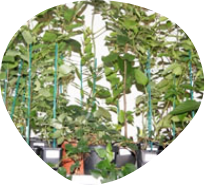 Plants are packed, staked and labeled.
 Packaging is carefully implemented to avoid any problems.
 Packages are ready to be shipped.
Shipping of our plants throughout Europe (except overseas and islands).
Customer reviews