- Out-of-Stock
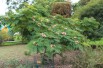
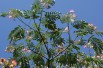
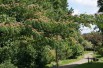
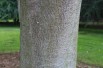
Persian silk tree
Albizia Julibrissin
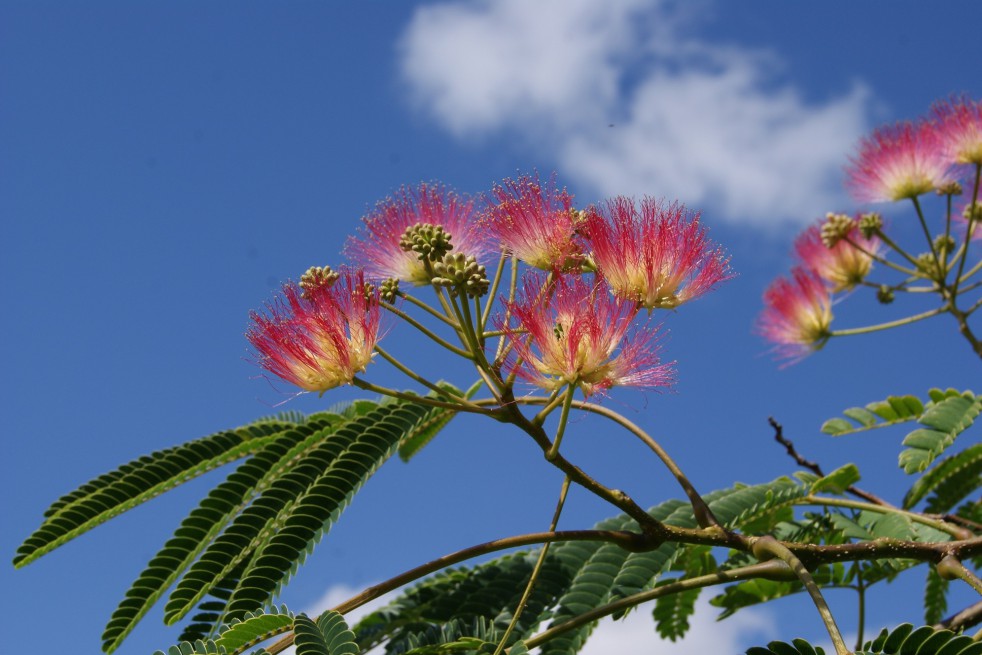
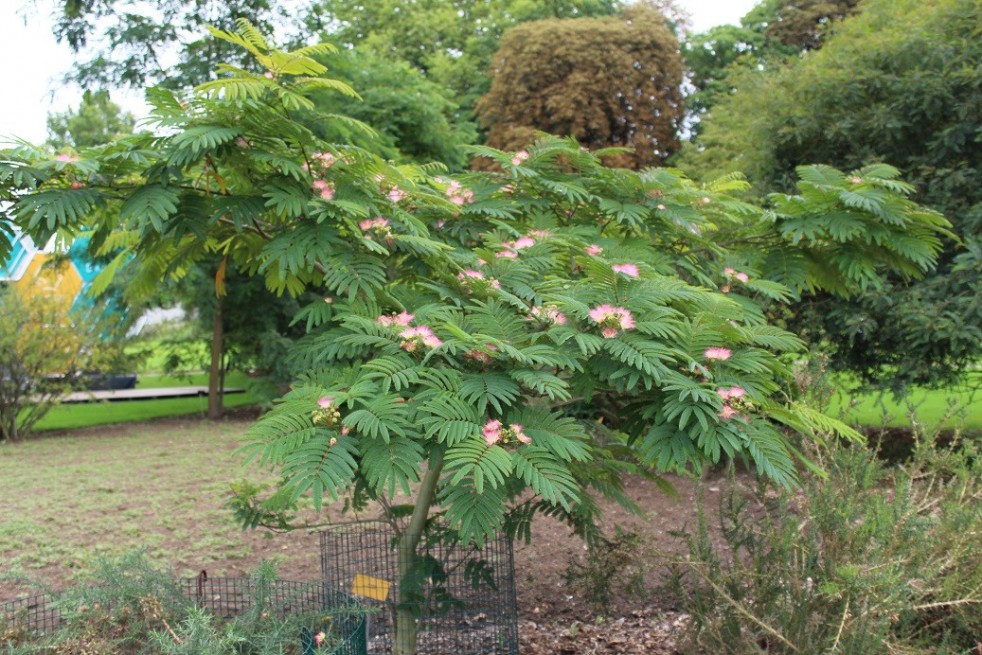
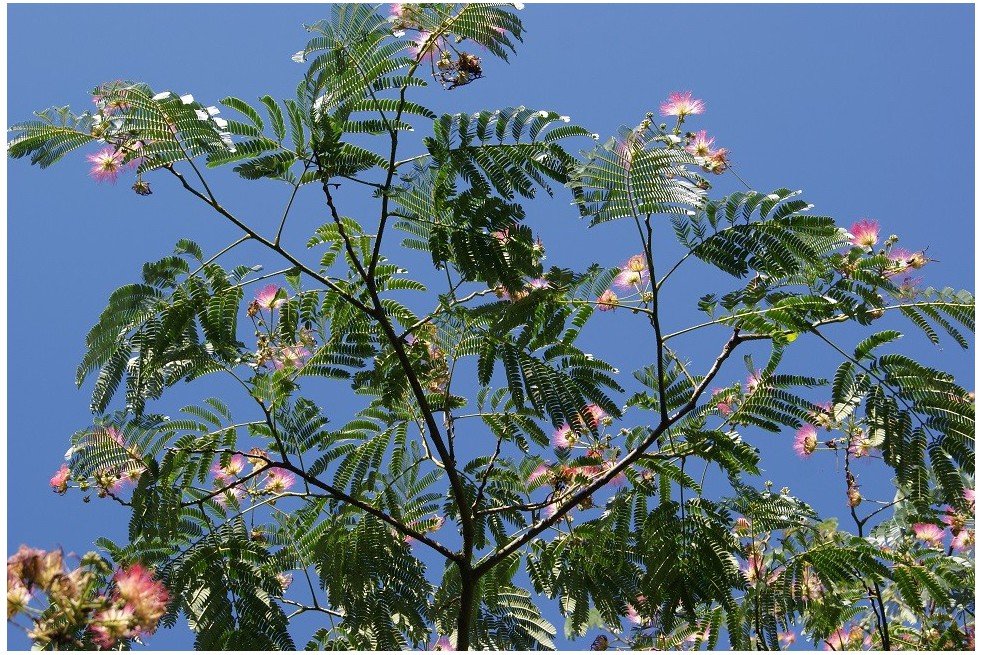
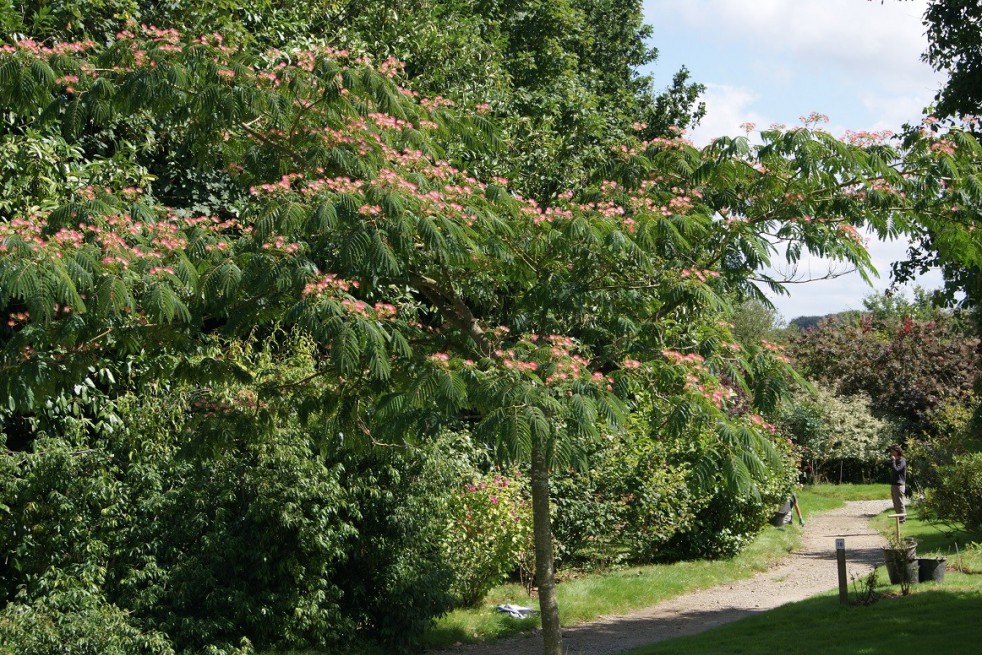
Also known as Albizia or Persian silk tree or pink silk tree , it is a deciduous tree with a spreading umbrella-shaped port, its finely cut foliage such as mimosas and its pink feather flowers give it an appearance gracious.
Description
Height at maturity
6M
Wingspan at maturity
4/6M
Exposure
sun
Flowering
June to August
Hardiness
-20°C
Origin
Northern Iran, China, Japan
Albizia julibrissin – Persian silk tree
Origins and characteristics
Native to Western Asia (Iran, China, Korea, Japan), Albizia julibrissin belongs to the Fabaceae family. Introduced to Europe in the 18th century, it quickly became a popular ornamental tree thanks to its unique appearance, heat tolerance and good hardiness. In Chinese tradition, its bark and flowers are used to calm the mind and ease anxiety.
Description and particularities
The Persian silk tree forms a wide, umbrella‑shaped crown with horizontal or slightly arched branches. Its finely divided compound leaves close at night or during rain. From June to August, it produces airy, silky pink flower tufts with a light fragrance. Foliage may turn pale yellow in autumn.
- Adult height : 5 to 7 m
- Spread : 6 to 8 m
- Habit : Spreading, umbrella‑shaped
- Foliage : Deciduous, bipinnate, very light, mid‑green
- Flowering : June to August
- Hardiness : Good (–17 to –20 °C depending on exposure and drainage)
- Growth : Medium to fast
Flowering
- Flowers : Silky pink tufts, very decorative
- Period : Summer (June–August)
- Fragrance : Light, sweet
- Interest : Highly ornamental, attracts bees and butterflies
Exposure and soil
- Exposure : Full sun, warm and sheltered from cold winds
- Soil : Light, well‑drained, neutral to slightly acidic
- Tolerates poor, stony, slightly dry soils
- Does not tolerate winter waterlogging
Planting
- Plant in spring or early autumn in mild regions
- Choose a sheltered, free‑draining location
- Add compost at planting
- Mulch to retain summer moisture
Watering
- Regular watering during the first two years
- Afterwards, good drought tolerance
- Water during prolonged drought or in very sandy soils
Pruning
- No mandatory pruning
- Possible in late winter to shape the structure
- Avoid late‑season pruning (may reduce flowering)
Propagation
- By seed (easy after soaking)
- By cuttings or grafting for cultivars
- May self‑seed in warm climates
Garden uses
Perfect for :
- Sunny or dry gardens
- Specimen planting to shade a terrace or lawn
- Mediterranean or exotic borders
- Combinations with lavender, salvias, cistus, grasses, figs, agapanthus
Additional interest
- Traditional medicinal plant in Asia (relaxing properties)
- Summer flowering extends garden interest
- Unique shape ideal for calm, contemplative spaces
Disease resistance
- Generally healthy
- Watch for :
- Late frost on young shoots
- Chlorosis in alkaline soils
- Root rot in poorly drained soils
Tips for good growth
- Choose a warm, sunny location
- Excellent drainage is essential in cold climates
- Mulch in winter in marginal regions
- Protect young trees for the first 2–3 winters
Albizia julibrissin, the Persian silk tree, is a poetic and spectacular small tree that brings an exotic, airy atmosphere to sunny gardens. Its pink summer blooms, mimosa‑like foliage and umbrella habit make it both elegant and highly sought after.
Features
- Common name : Persian silk tree - pink silk tree
- Family : Papilionaceae
- Category : shrub
- Spread : 4/6M
- Foliage : deciduous
- Color of flowers : pink
- Use : terrace - isolated
- Soil : poor tolerated, well drained
- Habit : Spreading
- Earth to use : universal potting soil/garden soil/compost
- Enemies : whitefly - red spider
- Possible diseases : resistant to diseases
Expédition & livraison
How does the delivery work?
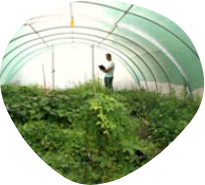 As soon as you place your order your plants are selected
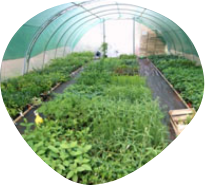 Each order is processed individually.
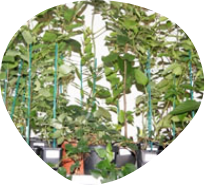 Plants are packed, staked and labeled.
 Packaging is carefully implemented to avoid any problems.
 Packages are ready to be shipped.
Our delivery methods
Shipping of our plants throughout Europe (except overseas and islands).





Customer reviews
Nobody has posted a review yet
in this language
16 other products in the same category:
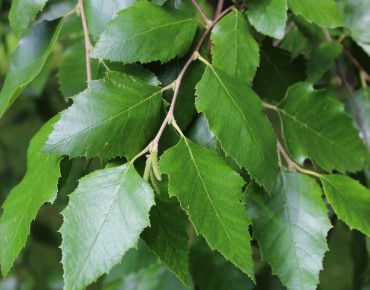

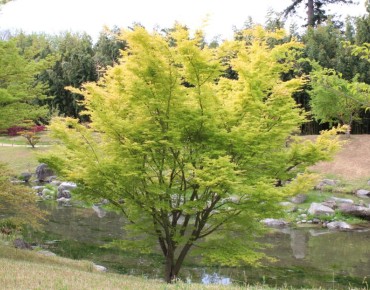
Jordan Japanese maple
Acer Shirasawanum Jordan
Plant height
40/50 cm in 2 liter pot (Grafted plant)
- novelty
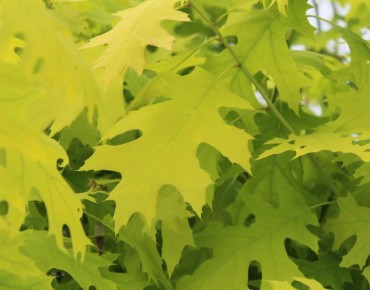
Northern red oak Boltes Gold
Quercus rubra Boltes Gold
Plant height
130/150 cm in 5 litre pot (grafted plant)
- Pick up on site
- Pick up on site
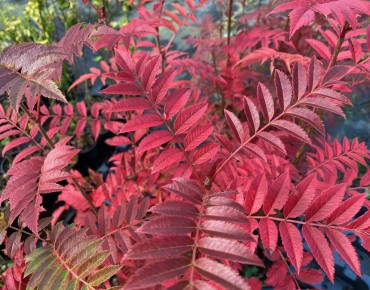
Mountain ash Autumn Spire
Sorbus aucuparia Autumn Spire
Plant height
120/130 cm in 2 liter pot (Grafted plant)
- Pick up on site


- novelty
- Out-of-Stock