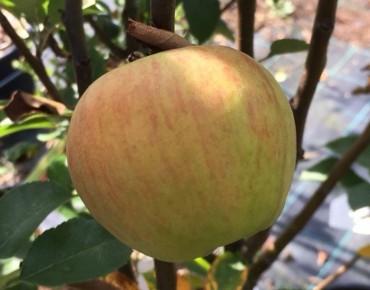
Carpathian English Walnut - Juglans regia 'Carpathian'
Main interest
The 'Carpathian' English Walnut is an exceptional selection of the species, particularly prized for its extraordinary cold hardiness and the superior quality of its production. Unlike classic varieties that struggle with harsh winters, this cultivar was selected in the Eastern European mountains for its ability to withstand extreme temperatures while guaranteeing an abundant harvest. Its utility in the garden is twofold: it serves as a majestic shade tree with an imposing habit and a productive fruit tree whose nuts are renowned for their refined taste. Its distinctive characteristics lie in its relatively fast fruiting for a walnut and a slightly delayed flowering, which allows it to more easily escape late spring frosts. It is a tree that brings a strong structure to the landscape thanks to its balanced silhouette and dense foliage, while providing valuable food autonomy. By choosing the 'Carpathian', the gardener ensures a lasting plant legacy, capable of crossing decades without faltering in the face of climatic hazards. Its natural presence and the generosity of its fruit make it a centerpiece for any medium or large garden wishing to combine landscape aesthetics with culinary pleasure.
Origins and characteristics
Geographic origin :
As its name suggests, this walnut draws its origins from the Carpathian Mountains, stretching from Poland to Romania. This region with a severe continental climate naturally selected individuals capable of surviving winters regularly dropping below -30°C (-22°F). In the 1930s, seeds were introduced to North America by Reverend Paul Crath, allowing for the stabilization of this cultivar for cold temperate climates.
Botanical family :
Juglans regia 'Carpathian' belongs to the Juglandaceae family, a group of woody plants primarily distributed in the Northern Hemisphere. This family is famous for the production of precious wood and lipid-rich nuts, but also for the secretion of juglone. The genus Juglans includes trees with compound leaves and unisexual flowers, playing a major ecological role in forest ecosystems.
Notable features :
One of the most fascinating singularities of this walnut is its ability to produce nuts with a very thin shell, easily crackable by hand or with light pressure. Historically, the walnut husk (the fleshy envelope of the fruit) was used as a natural dye for wood and fabrics due to its powerful pigments. Botanically, it is known for its influence on its immediate environment, as its roots release a biochemical substance that limits competition from other plants at its base.
Description and specificities :
Adult height
Although our plants are grafted low-stem to facilitate fruiting and maintenance, the 'Carpathian' retains significant natural vigor. At maturity, it can reach a height oscillating between 8 and 12 meters (26 to 40 feet), depending on soil richness and growing conditions. This respectable size makes it a dominant subject that requires sufficient space to flourish fully without constraint.
Adult width
The spread of the tree is equally impressive, with a span that can reach 6 to 8 meters (20 to 26 feet) in diameter. Its crown widens with age to form a protective dome, offering a vast shade area in summer. It is therefore crucial to plan for this future occupancy when planting so as not to obstruct surrounding structures or other plantings.
Habit
The habit of the Carpathian Walnut is generally globular and well-branched, with solid scaffold branches starting from the trunk. Its silhouette is harmonious and balanced, exuding an impression of strength and serenity. With the years, the lower branches tend to horizontalize, reinforcing this majestic appearance typical of large park trees.
Bark
The bark is one of its winter aesthetic assets, presenting a very bright silvery light gray color. On young subjects, it remains smooth and shiny before cracking longitudinally over time, creating elegant furrows. This rough texture provides an interesting contrast with the soft green foliage of spring.
Foliage
The foliage is composed of large deciduous and pinnate leaves, emitting a characteristic aromatic scent when crushed. Of a lush green throughout the growing season, they turn golden yellow nuances in autumn before falling. The arrangement of the leaflets lets through filtered light, creating pleasant shade without being totally opaque.
Growth
The growth rate is considered moderate to fast during the first years following installation in the ground. Once the deep root system is well established, the tree focuses on strengthening its structure and wood production. Its exceptional longevity allows it to grow and produce fruit for more than a century if well maintained.
Hardiness
This is the strong point of this cultivar, which displays exceptional hardiness reaching -32°C (-25°F). It withstands not only intense cold but also the brutal temperature variations typical of continental climates. This resistance makes it the priority choice for mountain regions or geographical zones where winters are particularly long.
Flowering and fruiting :
Flowering period
Flowering generally occurs in May, which is later than many other walnut varieties. This deliberate delay is a survival strategy that protects future harvests from late spring frosts. The flowers appear at the same time as the leaf bud burst, marking the true start of the growing season.
Flower description
The walnut bears separate male and female flowers on the same individual, in the form of hanging catkins for the former. Male flowers are green and elongated, releasing a large amount of pollen carried by the wind. Female flowers are much more discreet, located at the end of young shoots, waiting to be fertilized to form future fruits.
Fruits
The nuts of the 'Carpathian' cultivar are medium to large in size, housed in a thin and tender shell of light beige color. The kernel is fleshy, cream-colored, and detaches very easily from its membrane. Regarding the taste of the nut, it is exceptionally mild, marked by notes of fresh butter and hazelnut, with a total absence of bitterness, even on the thin skin surrounding the kernel.
Pollinators
The 'Carpathian' is considered self-fertile, meaning that a single tree is enough to obtain a walnut harvest. However, to maximize yield and fruit size, the presence of another spring-flowering variety like 'Broadview' can be beneficial. Since pollination is anemophilous (by wind), it is not necessary to have pollinating insects to ensure fruiting.
Melliferous or attractive characteristics for fauna
Although its pollination is ensured by the wind, the tree plays a crucial role for local fauna by offering a safe shelter and a nesting site for birds. Nuts fallen to the ground in autumn constitute a vital and highly energetic food source for squirrels and certain small rodents. In winter, its wood and bark house a multitude of beneficial insects that participate in the garden's biological balance.
Exposure :
Ideal exposure :
To guarantee optimal fruiting and perfect ripening of the nuts, an exposure in full sun is indispensable. Summer heat is necessary for the fruits to accumulate the essential oils that make their unique flavor. The tree appreciates being sheltered from the most violent prevailing winds, although its robustness allows it to adapt to open situations.
Planting
Advice for preparing the soil :
The walnut develops a powerful taproot, so it is essential to decompact the soil to a depth of at least 80 cm (31 inches). An input of well-decomposed organic matter or ripe compost will allow for soil enrichment while improving its structure. Since our plants are in pots, they can be installed at any time of the year, outside periods of intense frost or extreme heatwave, which ensures stress-free recovery.
Spacing between plants :
Due to its future spread, provide a minimum space of 10 to 12 meters (33 to 40 feet) between two walnut trees if you wish to create an orchard. For isolated planting, leave a clearance of at least 6 meters (20 feet) from buildings or other large trees. This space is vital for air to circulate freely, thus limiting the risks of fungal diseases on the foliage.
Nature of the soil :
This cultivar prefers deep, fertile, and well-drained soils, with a preference for slightly calcareous or neutral lands. It dreads overly acidic soils or, conversely, excessively sandy lands that do not retain enough moisture in summer. Loose soil allows the roots to descend quickly to seek necessary coolness during the driest months.
How to plant :
Dig a hole twice as wide as the root ball and install a mixture of garden soil and quality potting soil at the bottom. Position the tree so that the graft point is well above ground level to avoid any rot or self-rooting. Water generously immediately after planting to flush out air bubbles and ensure solid staking to keep the trunk straight in the first years.
Watering
Water needs at planting :
During the first two years, regular watering is paramount to promote deep root anchoring. Provide about 20 to 30 liters (5 to 8 gallons) of water once a week in dry periods, preferably in the evening to limit evaporation. The soil should remain fresh around the root ball, without becoming a stagnant water zone that would asphyxiate young roots.
Water needs at maturity :
An adult walnut is capable of drawing water very deep in the soil thanks to its extensive root system, which makes it relatively drought resistant. However, a severe lack of water in July and August can harm the filling of the nuts and their taste quality. In case of a particularly arid summer, one massive watering per month will help the tree finalize the maturation of its harvest.
Pruning
When and how to prune :
Pruning of the low-stem grafted walnut should remain minimalist and be mainly limited to pruning dead wood or poorly oriented branches. Intervene preferably in late summer or early autumn (September) to avoid major sap bleeding that occurs during spring pruning. Ensure to maintain an airy structure at the center of the tree to let light penetrate, which promotes fruit production on the inner branches.
Multiplication
Possible propagation methods :
The 'Carpathian' is multiplied almost exclusively by grafting onto a vigorous rootstock of Juglans regia. This technique is the only one that guarantees the faithful transmission of the cultivar's hardiness and fruit quality characters. Sowing nuts can give interesting results but never guarantees obtaining the specific properties of the 'Carpathian', and fruiting would be much later.
Garden uses
Ideal location for the plant :
Its place of choice is as an isolated specimen in the middle of a lawn or at the back of the property to mark a strong landscape boundary. It can also be integrated into a family orchard where it will serve as a dominant high structure. Avoid planting it too close to a vegetable garden, as the juglone secreted by its roots can inhibit the growth of certain vegetables like tomatoes or potatoes.
Recommended plant associations :
You can plant plants at its base that tolerate juglone well, such as Hostas, Ferns, or Spring Bulbs (Crocus, Muscari). Raspberries and currants also accommodate the walnut's vicinity fairly well if they receive enough light. For a foliage contrast, grasses like Miscanthus installed on the periphery of its shade will create a very natural picture.
Traditional uses :
Traditionally, the walnut is the farm tree par excellence, providing food, quality firewood, and timber for fine cabinetry. Leaves were once used in infusion for their tonic and astringent properties. Today, it remains the symbol of family transmission, as planting a walnut is an act that often benefits future generations.
Protection against diseases and pests :
Possible sensitivities
The walnut can be subject to anthracnose (brown spots on leaves) or bacterial blight, especially during very wet springs. On the insect side, the walnut husk fly is the main pest, whose larva develops in the fleshy husk without however altering the kernel's taste. Codling moth can also attack the nuts, causing their premature fall if not controlled.
Prevention advice and natural treatments
Systematically collect and burn fallen leaves and nuts at the end of the season to eliminate overwintering forms of fungi. The use of pheromone traps against codling moth is an ecological and effective solution to protect the harvest. An input of compost at the base of the tree strengthens its natural defenses, making it less vulnerable to parasitic attacks.
Advice for good development :
Practical tips for promoting good development
Install a thick organic mulch (wood chips or straw) at the base of the tree over a two-meter radius to conserve moisture and feed the soil. Avoid working the soil too deeply near the trunk to avoid wounding the superficial roots that absorb oxygen. Finally, when harvesting, wait for the nuts to fall naturally to the ground, a sign they have reached their full potential for flavor and storage.
Cultivar differences and specificities
The 'Carpathian' cultivar differs radically from southern varieties by its ability to withstand Polish or Canadian winters without any damage to the wood. Its nut has a significantly thinner and easier-to-open shell than that of the common wild walnut. Its fruiting generally occurs after 4 to 6 years, which is much earlier than seedlings which often require more than 10 years.
Summary
The 'Carpathian' English Walnut (Juglans regia 'Carpathian') is the exceptional fruit tree for cold climates, hardy down to -32°C. This grafted cultivar offers rapid production of nuts with a mild, buttery taste, without bitterness, protected by a thin shell. Easy to grow in full sun and deep soil, this majestic tree combines generous productivity with landscape elegance, ideal for sustainably structuring your garden.



 As soon as you place your order your plants are selected
 Each order is processed individually.
 Plants are packed, staked and labeled.
 Packaging is carefully implemented to avoid any problems.
 Packages are ready to be shipped.