- New
- In cultivation



The 'Brunswick' fig tree (also known as 'Magnolia' or 'Madonna') is a breba-bearing variety with excellent hardiness, particularly renowned for its cold resistance and productivity in regions north of the Loire River. This vigorous shrub is distinguished by its highly ornamental, deeply lobed foliage and its ability to produce two crops a year of large, fleshy, sweet, and flavorful figs. Its tolerance of cool, damp climates makes it an ideal choice for orchards in Northern Europe and Belgium.
Description
The 'Brunswick' Fig Tree represents one of the best options for gardeners in northern regions wishing to grow large-caliber figs despite a cool climate. Its biferous nature makes it possible to obtain two distinct harvest waves, thus maximizing the yield over the same season. Beyond its undeniable taste qualities, the tree possesses a remarkable ornamental value thanks to its deeply lobed leaves which bring a resolutely graphic and exotic touch to the garden. Its exceptional resistance to winter frost and its ability to fruit even during gloomy summers make it a safe bet for securing the production of Mediterranean fruits in Northern Europe.
The species Ficus carica is native to a vast area encompassing the Mediterranean basin and the Middle East, where it has been cultivated since antiquity. The specific variety 'Brunswick' was stabilized and popularized in Western Europe, particularly in England and Germany, due to its rigorous selection for tolerance to harsh winters. It has perfectly acclimated to the growing conditions of Belgium and cool-temperate zones.
The fig tree belongs to the Moraceae (Mulberry) family, a botanical group that also includes mulberries (Morus) and the Osage orange (Maclura pomifera). This family is mainly characterized by the presence of laticiferous ducts secreting a milky sap (latex) when a branch or leaf is picked. At the floral level, it stands out for very specific infructescence structures, the fruit of the fig tree being botanically a syconium.
The 'Brunswick' variety is recognized for its status as a biferous variety, meaning that it fruits twice a year on wood of different ages. It shows excellent resistance to thermal amplitudes and a unique ability to bring its fruits to maturity with lower sunshine than purely Mediterranean varieties. In addition, it develops a powerful and shallow root system that allows it to optimize the absorption of nutrients and water.
At maturity, this fig tree generally reaches a height between 3 and 4 meters, depending on soil conditions and the regularity of pruning. Its development remains easily controllable, allowing it to be integrated without difficulty into medium-sized gardens or against a protective wall. Its initial vertical growth quickly balances with the widening of its branches.
The spread of its canopy extends over approximately 3 to 4 meters at adulthood, forming a bushy and generous dome. The tree tends to spread naturally, which offers a beautiful shade zone in summer and a graphic structure in winter. This spread requires providing sufficient space during installation so as not to stifle neighboring plants.
The habit is bushy, spreading and naturally branched from the base if the trunk is not cleared. The thick, winding and vigorous structural branches give the tree a robust and stocky silhouette over the years. This low architecture greatly facilitates access to the fruits during the two harvest periods.
The bark is light grey to silvery grey in color, very smooth to the touch during the tree's youth, then developing slight roughness with age. It is thin but dense, reflecting part of the sunlight, which protects internal tissues from sunburn in summer. Its pure grey appearance offers a striking winter contrast with the earth and persistent vegetation.
The foliage is deciduous, composed of very large palmatilobate leaves, cut into 5 to 7 narrow and deep lobes, with a matte dark green on top and lighter on the reverse. The very marked incisions of the 'Brunswick' leaf make it easily distinguishable from other varieties with rounder lobes. They release a characteristic aromatic smell under the effect of summer heat.
The growth rate is fast to medium, the tree establishing itself vigorously during the first three years following its planting. It easily emits new shoots from the crown, which allows for rapid renewal of the fruiting wood after an exceptionally harsh winter. Its fruiting is early, often occurring as early as the second year.
This fig tree displays excellent hardiness, well-lignified wood being able to tolerate winter temperatures dropping down to -15 °C. This strong resistance to frost makes it one of the most recommended varieties for Belgian and Central European climates. In case of severe frost of the aerial parts, the vigorous crown emits new shoots in spring to reconstitute the tree.
The flowering of the fig tree is invisible to the naked eye because it takes place inside the young figs themselves (the syconia) from July to September.
The flowers are tiny and completely line the inner wall of the hollow fig. Unlike varieties requiring the blastophaga (a small Mediterranean pollinating insect), 'Brunswick' is parthenocarpic: the fruits develop and ripen without requiring external pollination, which secures production in the north.
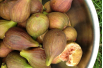
The figs are large, elongated and pear-shaped, changing color to become green-yellow washed with brown-purple at maturity. The first harvest (breba figs or figues-fleurs) occurs in July on the wood of the previous year, offering very voluminous fruits. The second harvest (autumn figs) takes place from September to October on the shoots of the current year, giving smaller but extremely sweet fruits with amber, melting and juicy flesh.
Although the internal flowering is not accessible to bees, the ripe fruits at the end of the season represent a major energy source for wildlife. Frugivorous birds, late summer butterflies and various beneficial insects feed on the well-ripened fruits, reinforcing the overall biodiversity of the fruit area.
The 'Brunswick' Fig Tree requires exposure in full sun, ideally oriented south or southwest. In northern regions, it benefits from being installed leaning against a brick or stone wall that will accumulate the heat of the day to restore it during the night. This location, sheltered from cold north and east winds, promotes complete ripening of the second autumn harvest.
The soil must be decompacted in depth over about 60 to 80 centimeters to allow the good deployment of the fleshy roots. Although the fig tree is accommodating, a moderate input of well-rotted compost on the surface improves the soil structure at installation. Since our plants are raised in pots with a perfectly intact root system, planting can be carried out successfully throughout the year, simply avoiding periods of intense frost or absolute drought.
To allow a natural spreading of the branches without excessive competition, provide a distance of 4 meters between each plant. This spacing guarantees that each branch receives the light necessary for the ripening of the figs. Sufficient space also limits the stagnation of moisture in the heart of the foliage.
This fig tree adapts to a wide variety of substrates but prefers light, loamy, limestone and perfectly drained soils. It dreads above all heavy, clayey soils waterlogged in winter, which asphyxiate the roots and harm its hardiness. A soil too rich in nitrogen will promote foliage at the expense of fruiting.
Dig a trench twice as large as the volume of the pot, place a bed of gravel at the bottom if drainage is insufficient, then install the root ball burying it slightly deeper (by 5 centimeters) to encourage the departure of new stems from the crown. Fill with garden soil mixed with coarse sand, pack gently by hand so as not to wound the fleshy roots and form a basin. Water copiously to naturally pack the earth and mulch generously.
A monitored, abundant and regular watering is essential during the summer following planting, at the rate of a copious input every 8 to 10 days in the absence of significant rainfall. This initial moisture allows the root system to anchor deeply into the surrounding soil. The formation of a retention basin at the base of the trunk optimizes the efficiency of each input.
Once firmly established, the 'Brunswick' fig tree shows excellent resistance to drought thanks to its roots capable of drawing water at depth. However, extra watering in periods of prolonged drought in July and August supports the swelling of autumn figs and avoids their premature drop. Too much water just before harvest should be avoided because it can crack the thin skin of the fruits.
Pruning takes place at the end of winter, ideally in March, as soon as the risks of heavy frosts move away and before the sap rises. On this biferous variety, pruning must be moderate: it consists of removing dead wood, thinning the inside of the tree to let the sun's rays penetrate and pinching vigorous shoots to encourage branching. Be careful to preserve a part of the branches of the previous year, because it is they that bear the breba figs of July.
The multiplication of 'Brunswick' is carried out very easily by hardwood cuttings in winter or by layering during the growing season. These vegetative methods allow to faithfully duplicate the characteristics of the mother plant without altering its productivity or its hardiness. Grafting is generally not necessary for this species which roots vigorously on its own roots.
This fig tree finds its place of predilection as a specimen on a lawn, along a large retaining wall or within a temperate climate orchard. Its graphic aesthetics make it an excellent background subject for beds of exotic or contemporary inspiration. Trained in a fan against a well-exposed facade, it structures the space in a spectacular way while optimizing fruit production.
The 'Brunswick' Fig Tree is a robust variety that presents a very good natural resistance to common diseases of the species. It can sometimes be subject to the fig moth (whose caterpillars nibble the leaves) or attacks of aphids on young spring shoots. At the end of summer, the main vigilance concerns birds and wasps, attracted by the high sugar content of the ripe fruits, which can be protected using fine nets or adapted traps.
Avoid fertilizer inputs too rich in nitrogen which stimulate the production of giant leaves and soft wood sensitive to frost, at the expense of the appearance of figs. Prefer an application of wood ash or well-decomposed compost under the canopy footprint each autumn to bring potash and calcium. A permanent organic mulching (dead leaves, wood chips) at the base of the trunk protects the shallow root system from winter frost and maintains a welcome coolness in summer.
Shipping & delivery
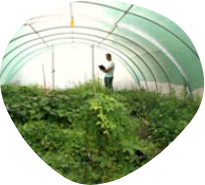 As soon as you place your order your plants are selected
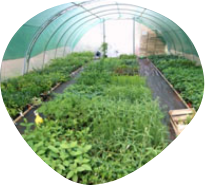 Each order is processed individually.
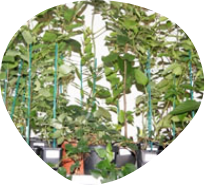 Plants are packed, staked and labeled.
 Packaging is carefully implemented to avoid any problems.
 Packages are ready to be shipped.
We ship our plants throughout Europe (excluding overseas territories and islands).
Avis clients


The 'Brunswick' fig tree (also known as 'Magnolia' or 'Madonna') is a breba-bearing variety with excellent hardiness, particularly renowned for its cold resistance and productivity in regions north of the Loire River. This vigorous shrub is distinguished by its highly ornamental, deeply lobed foliage and its ability to produce two crops a year of large, fleshy, sweet, and flavorful figs. Its tolerance of cool, damp climates makes it an ideal choice for orchards in Northern Europe and Belgium.
Your cart is empty
Continue shopping