- New
- In cultivation



Discover the 'Terza' Fig Tree, a Swiss cultivar of exemplary robustness, specially adapted to cooler climates. This compact tree will seduce you with its round figs with unique notes of wild strawberries.
Description
The major interest of the Fig Tree 'Terza' lies in its perfect suitability for small spaces and regions with short or cool summers. Unlike expansive Mediterranean varieties, 'Terza' naturally develops a moderate size and a compact, stocky habit, making it an ideal candidate for small urban gardens or training as a small standard tree. Its proven frost resistance combined with its ability to bring its fruits to maturity early at the end of summer makes it a reliable choice to secure a generous harvest.
This variety is believed to originate from Switzerland, a birthplace that explains its remarkable tolerance to harsh winters and its responsiveness as soon as spring temperatures begin to rise. This Swiss pedigree makes it a particularly reliable and tested choice for the climatic conditions of Belgium and northern European regions.
The fig tree belongs to the Moraceae family (the mulberry family), characterised by its latex canals that secrete a protective white sap. The “fruit” of the fig tree 'Terza' is a syconium: an inverted inflorescence where the invisible flowers line the inside of a fleshy, closed receptacle.
'Terza' stands out for its rapid fruiting (often from the first years) and the geometry of its branches, which are shorter and denser than the species average. Its sap flow slows earlier in autumn, allowing the wood to fully harden in preparation for winter frost.
With particularly moderate growth, 'Terza' generally reaches between 2.50 and 3.50 metres in height. This compact character drastically simplifies pruning operations and allows the entire harvest to be carried out without a ladder.
Its spread is limited to about 2 to 3 metres at maturity. This compactness allows it to be easily integrated into terrace corners, small vegetable gardens or close to buildings without risk of invasion.
Its habit is upright, stocky and naturally compact. It shows excellent predisposition to being trained as a “small standard” (a single trunk topped with a rounded crown), giving it the appearance of a true small architectural ornamental tree.
The bark is a very matte ash grey, smooth and soft to the touch during the tree’s youth. It thickens over time, forming attractive sinuous reliefs at the base of the trunk, beautifully catching the low winter light.
The deciduous foliage consists of thick leaves of a deep, strong green, deeply lobed at the base. Smaller than those of a classic fig tree, they remain proportional to the tree’s size and form a dense, graphic screen of greenery.
Its growth rate is moderate. This contained vigour prevents the excessive production of long sterile shoots and concentrates the plant’s energy on structural development and fruit maturation.
Thanks to its presumed origins in Swiss valleys, 'Terza' shows excellent cold resistance, withstanding frosts of around -15 °C without difficulty. Even if the tips of young shoots were to freeze during an exceptionally harsh winter, its vigorous base regrows very easily in spring.
As with all fig trees, the internal and discreet flowering takes place inside the young figs from the month of June.
The tiny flowers line the internal cavity. The variety 'Terza' is parthenocarpic: it requires no pollination by the fig wasp (a small southern wasp) to ensure the development and full maturity of its fruits in northern climates.
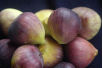
'Terza' produces medium-sized figs (50 g), remarkable for their very round, almost spherical shape, attached to the branch by a short peduncle. Their thin skin takes on a lovely bronze to brown‑violet tint under the sun. The taste of the fruit is its true signature: far from purely honeyed figs, its pinkish-red flesh releases an intensely fruity flavour that immediately evokes wild strawberry and red fruit jam. It is a pleasantly tangy, juicy fig, fine on the palate and endowed with a very refreshing sugar/acid balance. Harvest begins at the end of August but reaches its peak during the second half of September.
Its late-season maturity makes it a valuable pantry. The fruity scent of ripe figs attracts the last butterflies of summer as well as frugivorous birds seeking energy before autumn.
The Fig Tree 'Terza' requires a full sun exposure. Although it tolerates wind very well thanks to its stocky silhouette, it appreciates a position against a south-facing wall to store maximum warmth and accelerate the ripening of its glowing September figs.
Although not demanding, loosening the soil to a depth of 60 cm helps with good establishment. An initial addition of light organic matter improves soil structure. As the plants are delivered in pots with intact roots, planting is possible all year round (except during severe frost or extreme drought).
Its natural compactness allows reduced spacing: a distance of 3 metres from other plants or masonry is more than sufficient for its development.
It adapts to most soils but shows a preference for well-drained, loose and moderately rich soils. It is particularly sensitive to stagnant winter moisture, which suffocates its shallow roots.
Dig a hole twice the volume of the root ball. Add a drainage layer of gravel if your soil is heavy. Place the plant slightly burying the collar to encourage anchoring. Backfill with lightened garden soil, firm without compacting the roots, form a watering basin and mulch generously to preserve soil life.
Although adapted to cool climates, the fig tree 'Terza' requires regular and generous watering during the summer following planting (a substantial watering every 8 to 10 days in dry periods) to encourage its roots to explore deeper soil layers.
Once established, its root system is autonomous. However, to maintain the size and juiciness of its strawberry‑scented flesh, supplemental watering in July/August is beneficial during particularly dry summers.
Pruning is carried out at the end of winter, ideally in March, once the risk of severe frost has passed. As 'Terza' is compact, the intervention simply consists of removing dead wood, eliminating crossing branches in the centre to maximise fruit sunlight exposure, and maintaining its harmonious silhouette.
The variety is faithfully propagated by cuttings of hardened wood in winter or by air layering in spring. These methods guarantee the strict preservation of its compact habit and unique flavour qualities.
Thanks to its small footprint, 'Terza' is ideal to stand alone on a small lawn, integrated into a vegetable bed, or grown in a large container on a sunny terrace. Its neat appearance makes it an excellent focal point.
With excellent natural health, it is little susceptible to diseases. Its main vulnerability at the end of summer remains the attraction of birds and hornets, irresistibly drawn to the scent of ripe figs, against which the temporary use of a fine-mesh net is effective.
Avoid nitrogen-rich fertilisers, which would cause excessive leaf growth and ruin its natural compact habit. An addition of wood ash in spring strengthens the wood structure and supports fruiting. Regular organic mulching at its base keeps the soil cool, an essential condition to avoid water stress that halts fig development.
Shipping & delivery
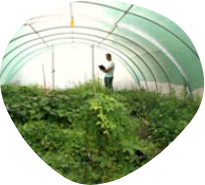 As soon as you place your order your plants are selected
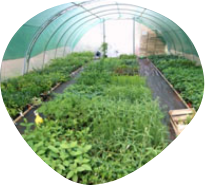 Each order is processed individually.
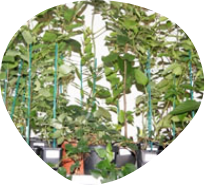 Plants are packed, staked and labeled.
 Packaging is carefully implemented to avoid any problems.
 Packages are ready to be shipped.
We ship our plants throughout Europe (excluding overseas territories and islands).
Avis clients


Discover the 'Terza' Fig Tree, a Swiss cultivar of exemplary robustness, specially adapted to cooler climates. This compact tree will seduce you with its round figs with unique notes of wild strawberries.
Your cart is empty
Continue shopping