- New



The 'Annabella' Cherry tree is a sweet cherry variety notable for its original weeping habit and the excellent resistance of its fruits to summer rains. Its rapid fruiting and managed vigor make it an excellent choice for modern hobby orchards.
Description
The major interest of the 'Annabella' Cherry tree lies in the high quality of its fruit production, which is particularly resilient against bad weather conditions in early summer. Its unique weeping habit gives it a very elegant silhouette in the garden, while significantly facilitating the picking of cherries. Its strong initial vigor ensures a rapid formation of the canopy, followed by a regular and generous fruiting.
This variety results from a controlled cross between the cultivars 'Rube' and 'Alkers Späte', carried out in 1970 at the Jork Fruit Research Station in Germany. It was selected to improve the firmness and tolerance of cherries against summer rains.
It belongs to the Rosaceae family and the genus Prunus, which groups stone fruit trees. Like most sweet cherry trees, it develops specific flower buds called "May bouquets", which bear the majority of the future harvest.
This cultivar is grafted as a low-stem onto a Colt rootstock. This support gives the tree excellent tolerance to heavy or wet soils and induces much faster fruiting than a seedling. Its moderate vigor keeps the development of the tree limited, making it perfectly manageable for small spaces without affecting cherry quality.
At maturity, the height of this cherry tree stabilizes around 3 meters. This compact size allows easy maintenance and simplifies the installation of a protective net against birds.
The spread of its canopy reaches about 2 meters in diameter at adult age. Its limited lateral space requirements make it easy to integrate into orchard rows or medium-sized gardens.
Its habit is naturally weeping and highly vigorous, characterized by secondary branches arching gracefully towards the ground under the weight of foliage and fruits. This hanging silhouette offers great decorative landscape value.
The bark is a shiny purplish to greyish brown, marking horizontally with bands of rough lenticels with age. It tends to exfoliate finely in transverse strips on older trunks.
Its deciduous leaves are oblong, obovate, finely serrated and display a matte clear green color. In autumn, they turn into beautiful yellow and orange hues before falling.
The growth rate is sustained during the first years thanks to the strong natural energy of the cultivar. The weeping structure balances quickly, channeling the tree's energy directly into the formation of flower buds.
The tree shows excellent hardiness (down to -20 °C), easily tolerating the harsh winters of Central and Northern Europe. The flower buds remain sensitive to late spring frosts.
The white and decorative flowering unfolds in the heart of spring, generally during the month of April.
The white flowers, grouped in dense umbels, appear just before or at the same time as the first leaves. Since this variety is not self-fertile, pollination must be ensured by compatible varieties nearby.
To ensure good fruiting, plant one of the following varieties nearby: Castor, Stella, Bigarreau Ghijssens, Bigarreau Burlat, Hedelfingen, Early Rivers, Kordia or Ulster.
The harvest takes place during the first half of July, offering fruits of medium size with an agreeably sweet taste. These cherries have the great advantage of being unlikely to crack or rot, even during wet summers.
The spring flowering is an important source of nectar for bees, while the ripe fruits are a treat for local birds if the cherry tree is not protected.
The 'Annabella' Cherry tree requires an exposure in full sun to optimize the sugar concentration in its fruits and ensure good coloration. A sheltered position from dominant winds is preferred to protect the flowering.
The soil must be loosened deeply within a one-meter radius around the planting hole. An input of well-decomposed organic matter mixed with the original soil will facilitate the initial anchoring of the roots.
Respect a minimum spacing of 3 meters between this cherry tree and other surrounding plants or structures. This distance guarantees a homogeneous light, which is essential for the ripening of lower branches.
It likes deep, fertile, fresh but imperatively well-drained soils. It tolerates slightly calcareous or clayey soils, but fears excess stagnant water in winter as well as too dry sandy soils.
Dig a hole twice as large as the root ball, install a solid stake against dominant winds and position the tree. Take care to keep the graft union well above ground level, then pack and water.
Regular and generous waterings are required during the first spring and summer following planting. An input of 15 liters of water per week in the absence of rain ensures recovery without drought stress.
Once established, its root system manages normal summer periods well. A supportive watering remains beneficial in June if the drought persists, to maintain the size and juice of the cherries.
Pruning is carried out at the end of summer, in August-September after harvest, to limit the risk of gummosis. This mainly consists of removing dead wood and thinning out the center of the weeping canopy.
The propagation of the variety is done exclusively by grafting (budding at the end of summer or cleft grafting at the end of winter). This professional technique is necessary to maintain the weeping form and taste qualities.
Thanks to its highly aesthetic hanging growth habit and its height of 3 meters, it is ideal as a specimen plant on a lawn or as a central element in a small orchard. Its graphic silhouette also makes it an excellent choice for ornamental gardens.
Although the fruits are resilient against rot (monilia) and cracking, the tree can suffer from black aphids in spring. Applying a glue band on the trunk prevents ants from climbing up and thus limits the pest infestation.
An annual input of compost or well-decomposed manure under the canopy in autumn supports its strong vigor. Maintaining an organic mulching at the base keeps the soil fresh during fruit growth.
Shipping & delivery
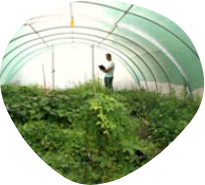 As soon as you place your order your plants are selected
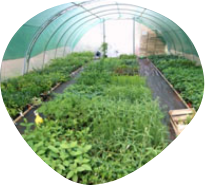 Each order is processed individually.
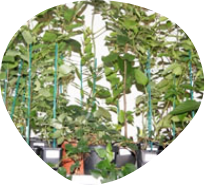 Plants are packed, staked and labeled.
 Packaging is carefully implemented to avoid any problems.
 Packages are ready to be shipped.
We ship our plants throughout Europe (excluding overseas territories and islands).
Avis clients


The 'Annabella' Cherry tree is a sweet cherry variety notable for its original weeping habit and the excellent resistance of its fruits to summer rains. Its rapid fruiting and managed vigor make it an excellent choice for modern hobby orchards.
Your cart is empty
Continue shopping