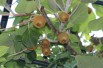
Kiwi fruit plant self‑fertile Solissimo® — Actinidia deliciosa ‘Solissimo’®
Main interest
The kiwi fruit plant self-fertile Solissimo® is a variety capable of producing fruit without a male pollinator, making it ideal for small gardens or isolated plantings. Vigorous, productive and reliable, it produces large brown kiwis with green flesh, sweet, aromatic and rich in vitamin C. With a hardiness of –12 °C to –15 °C, it adapts well to many regions when planted in a sheltered spot. This fast‑growing climber quickly covers pergolas, walls and garden structures. Decorative, tasty and easy to grow, it is perfect for gardeners wanting abundant harvests from a single plant.
Botanical family
Family:
Actinidiaceae, a family of climbing plants native to East Asia. Actinidia species are valued for their vigorous growth, ornamental foliage and vitamin‑rich fruits. They are easy to grow even for beginners.
Description and particularities
Mature height:
The Solissimo® kiwi reaches 4 to 6 m in height depending on growing conditions. Its rapid growth requires a strong support such as a pergola or trellis. It establishes quickly and forms a dense canopy.
Mature width:
It spreads 3 to 4 m, forming a dense, covering climber. This makes it ideal for shading structures or covering vertical surfaces.
Habit:
The habit is twining and climbing, with flexible stems that naturally wrap around supports. This makes training the plant easy.
Bark:
The bark is light brown and becomes more fibrous with age. Young shoots are velvety and slightly reddish.
Foliage:
The foliage is deciduous, with large heart‑shaped leaves that can exceed 20 cm. Their velvety texture and bright green colour give an exotic appearance. In autumn, the leaves turn yellow.
Growth:
Growth is fast, especially in fresh, humus‑rich soil. In ideal conditions, the plant can grow more than a metre per year. Regular training is needed to guide the vine.
Hardiness:
The Solissimo® kiwi is hardy to –12 °C, sometimes –15 °C in sheltered, well‑drained soil. Young plants should be protected for the first two years.
Flowering and fruiting
Flowering period:
Flowering occurs in May – June, with lightly scented cream‑coloured flowers. They appear on the year’s new shoots.
Flower description:
The flowers are hermaphroditic, which explains the self‑fertility. They grow in small clusters and attract pollinators.
Fruits:
The fruits are large brown kiwis with sweet, juicy green flesh. They generally weigh 70 to 90 g, depending on growing conditions. Harvest takes place from October to November.
Wildlife value:
The flowers attract bees and pollinating insects. Fallen fruits may attract small wildlife.
Exposure
Ideal exposure:
The Solissimo® kiwi prefers full sun, essential for good fruiting. It tolerates light partial shade, especially in warm regions. A sheltered spot protected from cold winds is recommended.
Planting
Soil preparation:
The soil should be deep, rich, humus‑based and well‑drained, with a slightly acidic to neutral pH. Compost or well‑rotted manure improves establishment.
Spacing:
Allow 3 to 4 m between plants.
Soil type:
The Solissimo® kiwi tolerates various well‑drained soils but prefers fresh, fertile ground. Heavy soils should be lightened.
How to plant:
Plant at collar level, water thoroughly and mulch. In cold regions, plant in spring. Avoid planting during frost or heatwaves.
Watering
Water needs at planting:
Water regularly during the first two years. The soil should remain moist but not waterlogged.
Water needs at maturity:
Once established, the plant does not tolerate prolonged drought. Occasional watering in summer improves fruit quality.
Pruning
When and how to prune:
Prune in winter like grapevines: shorten lateral shoots and remove dead wood. A summer pruning in August can stimulate flowering.
Propagation
Propagation methods:
Cuttings and layering are possible, but grafting remains the most reliable method to preserve cultivar characteristics.
Garden uses
Ideal placement:
Perfect for covering pergolas, walls and garden structures. Ideal for small gardens thanks to its self‑fertility. Can also be grown in large containers.
Recommended plant associations:
Pairs well with nectar‑rich plants that attract pollinators.
Traditional uses
Kiwis are eaten fresh, used in desserts, smoothies or jams. They are particularly rich in vitamin C.
Pests and diseases
Vulnerabilities:
The Solissimo® kiwi is rarely affected by pests or diseases. Chlorosis may occur in calcareous soil.
Prevention and natural treatments:
Use anti‑chlorosis products if needed. Maintain fresh, well‑drained soil. Protect young plants from frost.
Tips for healthy growth
Provide full sun, rich soil and strong support. Water regularly during the first years. Prune each winter to stimulate production.
Cultivar differences and specifics
The Solissimo® kiwi stands out for its self‑fertility, high productivity, hardiness and ability to produce large fruits without a pollinator. It is one of the most reliable kiwis for gardeners growing a single plant.



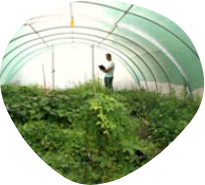 As soon as you place your order your plants are selected
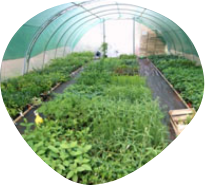 Each order is processed individually.
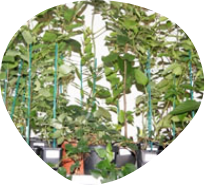 Plants are packed, staked and labeled.
 Packaging is carefully implemented to avoid any problems.
 Packages are ready to be shipped.