- New
- Pickup at nursery



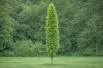
Adopt the American Sweetgum 'Slender Silhouette', the columnar tree with a unique graphic design and flamboyant autumn colors, perfect for small gardens.
Description
The American Sweetgum 'Slender Silhouette' is a true feat of nature, offering an elegant and spectacular response to the constraints of contemporary gardens. This cultivar is distinguished by an exceptionally fine fastigiate habit, rising towards the sky like a plant totem without ever spreading out, making it a precious ally for structuring space without cluttering it. Its main appeal lies in its seasonal metamorphosis: after sporting a coat of deeply cut, lush green leaves all summer, it literally ignites in autumn to offer a gradient of flamboyant red, orange, and deep purple. This architectural utility makes it possible to create strong vertical lines, emphasize a perspective, or green up narrow passages with unparalleled presence. Unlike the type species which requires a lot of space, the 'Slender Silhouette' selection guarantees minimal ground occupancy with a majestic height. It is a tree that combines the robustness of forest species with the precision of a living sculpture, bringing a touch of modernity and a chromatic brilliance that few trees can boast. By adopting it, the gardener is assured of a permanent visual spectacle, ranging from the textured bark in winter to the sparkling foliage of the late season.
The original species, Liquidambar styraciflua, draws its roots from the vast forests of the Southeastern United States, where it appreciates humid zones and rich lands. The specific mutation named 'Slender Silhouette' was spotted in a wild area of Tennessee by the famous botanist Don Shadow. This fortuitous discovery allowed for the stabilization of a naturally narrow form, perfectly adapted to temperate climates and capable of withstanding significant climatic variations.
This plant belongs to the Altingiaceae family, a group limited to only a few genera, including the prestigious Liquidambar. Long attached to the Hamamelidaceae, this family is characterized by the production of aromatic substances and a remarkable longevity. Trees in this family are world-renowned for the quality of their wood and the unparalleled splendor of their autumn colorations.
One of the singularities of the Liquidambar is its ability to produce a fragrant resinous gum, formerly called "white balsam of Peru," used in cosmetics and ancient pharmacopoeia. Botanically, it is fascinating to note that its leaves are arranged alternately, a feature that makes it easy to distinguish from maples with which it is often confused. Its branches sometimes develop very graphic corky ridges, giving it a rough and wild appearance highly appreciated in winter.
At maturity, this subject reaches an average height of 5 meters (16 feet), although it may climb slightly higher depending on the richness of the soil. Its growth is mainly directed towards the top, allowing it to dominate borders without creating overly dense shade in the garden. Its silhouette remains perfectly straight and balanced, even after several decades of growth.
Width is the most breathtaking feature of this cultivar, as it does not exceed 1 meter (3 feet) in span. This exceptional narrowness is maintained throughout the life of the tree, avoiding any risk of encroachment on neighboring roofs or fences. It is the choice par excellence for small urban gardens or confined living spaces.
The habit is strictly columnar and narrow, with main branches growing very tightly against the central trunk. This vertical structure is so regular that it seems to have been sculpted by human hands, although it is entirely natural. This unique graphic quality allows for the creation of very dense plant columns that retain their shape without any outside help.
The bark of 'Slender Silhouette' is a deep gray-brown, becoming deeply furrowed and textured with the years. It often features prominent corky ridges on young branches, a detail that catches the low winter light. This rough texture provides additional visual interest when the tree has lost its foliage, highlighting its robustness.
The foliage is composed of deciduous leaves, deeply lobed in the shape of five or seven-pointed stars, reminiscent of small green celestial bodies. In autumn, the show is guaranteed: the leaves turn intense purple-red, often nuanced with bronze and gold. The firm consistency of the leaves allows them to stay attached to the branches longer than in other trees, thus prolonging the color period.
The growth rate is considered moderate, allowing the root system to anchor well before the tree takes on height. Once established, it regularly gains verticality each year without ever losing its density. This regular growth makes it an easy tree to monitor and integrate into a precise landscape design.
This tree shows excellent cold resistance, withstanding temperatures down to -24 °C (-11 °F) without damage. Its robustness allows it to be planted in almost all regions, from plains to mid-mountains. It is not sensitive to late spring frosts once its wood is well-ripened.
Flowering generally occurs in May, at the time when the leaves finish unfolding completely. Although discreet, it marks the tree's spring awakening and attracts the first pollinating insects. It is a bloom that blends into the mass of foliage without altering its clean aesthetics.
The flowers appear as small yellow-green clusters, with male flowers arranged in terminal spikes and female flowers in hanging globes. Lacking petals, they rely on the wind to ensure cross-pollination. They are a fascinating example of botanical simplicity at the service of reproduction.
The fruits are globular capsules bristling with small woody spines, hanging from a long stalk. They turn brown at maturity and release tiny winged seeds during the winter season. These decorative balls often persist on bare branches, adding a touch of geometric fantasy to the tree's winter silhouette.
Although the Sweetgum is not the melliferous plant par excellence, its flowers provide a useful supply of pollen at the beginning of the season. The fruits, rich in seeds, constitute a winter pantry for certain birds and small rodents. The density of the columnar foliage also offers an excellent site for protection and rest for local birdlife.
'Slender Silhouette' requires a full sun exposure so that its foliage can synthesize the pigments responsible for its autumn colors. Abundant light also promotes a short internode, which reinforces the dense and compact appearance of the column. It accepts partial shade, but this will often be at the expense of the brilliance of its autumnal blaze.
It is essential to work the soil deeply to eliminate any compaction that could hinder root development. A massive input of acidic organic matter, such as heather soil, must be mixed with the original soil to correct the pH. Since our plants are delivered in pots, they already benefit from a healthy root system, ready to colonize its new environment as soon as it is planted.
For a strict alignment, a spacing of 1.20 meters to 1.50 meters (4 to 5 feet) is ideal so that each column retains its individuality. In specimen planting, provide a clearance of 2 meters (6.5 feet) to highlight the perfect verticality of the subject. Too tight a spacing could harm the sunshine at the base of the tree and thin out the lower foliage.
This cultivar absolutely requires acidic soil with a humic tendency, as it tolerates active lime very poorly, which causes yellowing of the leaves. The soil must remain fresh, deep, and well-drained to avoid root asphyxia while guaranteeing a constant water supply. The use of heather soil is highly recommended to optimize the chances of recovery and the beauty of the foliage.
Dig a hole two to three times wider than the root ball and arrange a drainage layer at the bottom if necessary. Place the tree perfectly vertically and fill with a mixture of garden soil and heather soil, making sure not to bury the graft point. Water copiously to pack the earth naturally and install a discreet but solid stake to support growth in the first years.
Monitored watering is indispensable during the first two years following installation, the time for the tree to explore its new soil. In summer, watering two to three times a week is advised, especially if rainfall is scarce. The soil should remain moist to the touch, but never stagnantly soggy.
Once well established, the 'Slender Silhouette' tolerates dry periods better, but its autumn color will be much more beautiful if it benefits from constant moisture. Mulching with pine bark at the base of the tree is an excellent solution to limit evaporation and maintain soil acidity. In case of extreme drought, one deep watering per month will help maintain foliage vigor.
One of the great advantages of this cultivar is that it requires almost no structural pruning. If a branch deviates from the columnar silhouette, you can intervene in late winter to reduce it slightly. Avoid drastic pruning, as Liquidambar heals slowly and its natural form is its main ornamental quality.
Multiplication of this specific variety is done exclusively by grafting in bud or cleft onto a rootstock of Liquidambar styraciflua. Cuttings are extremely difficult and uncertain, while sowing would not allow the narrow columnar form to be preserved. It is this professional grafting work that guarantees the genetic stability of the 'Slender Silhouette' cultivar.
It finds its ideal place as a focal point at the center of a bed of low plants or to mark the corners of a terrace. Its graphic silhouette is particularly highlighted when planted in repetition along a path or facade. Its low width allows it to be installed even in inner courtyards or patios bathed in light.
It pairs beautifully with heather soil shrubs like Camellias or Pieris, which appreciate the same soil conditions. For a contrast of shapes, plant supple grasses at its feet, such as Pennisetum, which will wave in the wind against the rigidity of the tree. Winter heathers can also bloom at its feet, creating a colorful carpet during its rest period.
Beyond its current ornamental use, Sweetgum wood was formerly used for the manufacture of fine furniture and boxes due to its homogeneous texture. The resin harvested from the bark also served in the making of perfumes and traditional chewing gums in North America. Today, it primarily symbolizes landscape modernity and plant resilience in constrained environments.
The tree is not very sensitive to diseases, but it can sometimes be attacked by aphids or scale insects during very hot springs. The main threat remains iron chlorosis, due to overly calcareous soil, which manifests as a bleaching of the leaves. In overly heavy and poorly drained soils, root rot can appear, weakening the entire structure.
To prevent chlorosis, maintain optimal soil acidity through regular inputs of heather soil or acidic compost. Promote the presence of beneficials in the garden, such as ladybugs, to naturally regulate any aphid populations. Balanced watering and aerated soil are the best preventions against root fungal diseases.
Avoid installing the tree in a wind tunnel with too violent a wind, because although flexible, its high silhouette can undergo significant wind load. An input of special heather soil fertilizer in spring will stimulate growth and intensify the colors of future foliage. Also, be careful not to wound the bark with mowing tools, as wounds on the trunk can be entry points for fungi.
The 'Slender Silhouette' cultivar is unique because it retains a narrow base of 1 meter where other so-called "pyramidal" varieties always end up widening at the base. Its regularity is much superior to that of Liquidambar 'Fastigiatum', whose habit is often more disordered with age. Its ability to produce brilliant autumn colors even on young subjects makes it an elite selection for impatient gardeners.
The Liquidambar styraciflua 'Slender Silhouette' is the ultimate columnar tree for small spaces and modern gardens. Its maximum width of 1 meter and its purple-red autumn foliage make it a landscape centerpiece. Easy to grow in acidic soil, it offers an elegant verticality and remarkable hardiness up to -24°C, ideal for sustainably structuring your outdoors.
Shipping & delivery
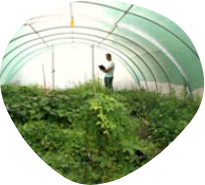 As soon as you place your order your plants are selected
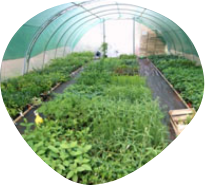 Each order is processed individually.
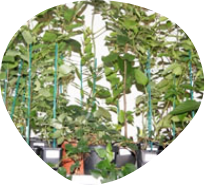 Plants are packed, staked and labeled.
 Packaging is carefully implemented to avoid any problems.
 Packages are ready to be shipped.
We ship our plants throughout Europe (excluding overseas territories and islands).
Avis clients





Adopt the American Sweetgum 'Slender Silhouette', the columnar tree with a unique graphic design and flamboyant autumn colors, perfect for small gardens.
Your cart is empty
Continue shopping