- Out of stock
- Pickup at nursery




The Juglans ailantifolia is a tree native to the Sakhalin Islands in Japan, it was introduced in Europe as an ornamental plant species around 1860. Called Japanese walnut, its resemblance to the common walnut of our gardens is mainly differentiated by its heart-shaped nuts.
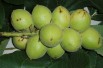
Rather slow growing, the Japanese walnut easily climbs to 15 m in height, it has a short trunk with bark cracking with age. It is adorned with a rounded crown with deciduous foliage. Its efflorescence, in very long catkins of 20 to 30 cm very decorative, continues from May to June. Its male flowers consist of greenish catkins and its female flowers form a 10 cm cluster with red stigmas. Fruits follow, nuts, grouped by 10 to 20, they detach from the tree at maturity, in early September to October. Their shell splits easily offering a heart-shaped kernel. Gourmets can then feast on its subtle and delicate taste.
Juglans ailantifolia is very easy to cultivate, it is satisfied with a neutral, deep, humus-rich and rather well-drained soil, in a sunny position. Particularly hardy, Japanese walnut withstands temperatures of -30 ° C, it is also resistant to canker.
Associated with the Himalayan birch, the Japanese walnut offers a source of serenity in the garden.
Description
The Juglans ailantifolia is a tree native to the Sakhalin Islands in Japan, it was introduced in Europe as an ornamental plant species around 1860. Called Japanese walnut, its resemblance to the common walnut of our gardens is mainly differentiated by its heart-shaped nuts.
Rather slow growing, the Japanese walnut easily climbs to 15 m in height, it has a short trunk with bark cracking with age. It is adorned with a rounded crown with deciduous foliage. Its efflorescence, in very long catkins of 20 to 30 cm very decorative, continues from May to June. Its male flowers consist of greenish catkins and its female flowers form a 10 cm cluster with red stigmas. Fruits follow, nuts, grouped by 10 to 20, they detach from the tree at maturity, in early September to October. Their shell splits easily offering a heart-shaped kernel. Gourmets can then feast on its subtle and delicate taste.
Juglans ailantifolia is very easy to cultivate, it is satisfied with a neutral, deep, humus-rich and rather well-drained soil, in a sunny position. Particularly hardy, Japanese walnut withstands temperatures of -30 ° C, it is also resistant to canker.
Associated with the Himalayan birch, the Japanese walnut offers a source of serenity in the garden.
Shipping & delivery
 As soon as you place your order your plants are selected
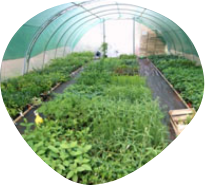 Each order is processed individually.
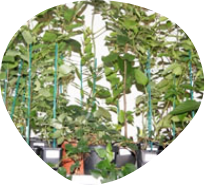 Plants are packed, staked and labeled.
 Packaging is carefully implemented to avoid any problems.
 Packages are ready to be shipped.
Expédition de nos plantes dans toute l'Europe (sauf en outre mer et les îles).
Avis clients
Strong young plant!
Fast Delivery!
Received a young plant in perfect health as a replacement for a order that had been delayed in shipping and died.
The store replaced it asap! Perfect service!
Will be a great addition to the other walnut trees I have today.


The Juglans ailantifolia is a tree native to the Sakhalin Islands in Japan, it was introduced in Europe as an ornamental plant species around 1860. Called Japanese walnut, its resemblance to the common walnut of our gardens is mainly differentiated by its heart-shaped nuts.
Rather slow growing, the Japanese walnut easily climbs to 15 m in height, it has a short trunk with bark cracking with age. It is adorned with a rounded crown with deciduous foliage. Its efflorescence, in very long catkins of 20 to 30 cm very decorative, continues from May to June. Its male flowers consist of greenish catkins and its female flowers form a 10 cm cluster with red stigmas. Fruits follow, nuts, grouped by 10 to 20, they detach from the tree at maturity, in early September to October. Their shell splits easily offering a heart-shaped kernel. Gourmets can then feast on its subtle and delicate taste.
Juglans ailantifolia is very easy to cultivate, it is satisfied with a neutral, deep, humus-rich and rather well-drained soil, in a sunny position. Particularly hardy, Japanese walnut withstands temperatures of -30 ° C, it is also resistant to canker.
Associated with the Himalayan birch, the Japanese walnut offers a source of serenity in the garden.