- New
- In cultivation



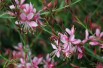
Beeblossom 'Siskiyou Pink' is an essential perennial with veined pink flowering, light and abundant all summer. Hardy and very drought-resistant, it brings a romantic and vaporous touch to beds and pots.
Description
The Beeblossom Pink (or Gaura lindheimeri 'Siskiyou Pink') is an iconic variety that revolutionized the use of perennials in contemporary gardens. While Gaura is often compared to butterflies, the 'Siskiyou Pink' variety is more reminiscent of a swarm of dancers in pink tutus. Its main appeal lies in its romantic and wild charm: it offers a profusion of tender pink flowers, delicately veined with deeper pink, dancing above the foliage from June until the frosts of October.
It is a "mist" plant par excellence, ideal for linking beds together, softening the rigid lines of borders, or filling gaps between more static shrubs. Less upright and more spreading than some recent varieties, 'Siskiyou Pink' forms a vaporous cushion that brings moving and light volume. An all-terrain plant for the modern gardener, it excels in dry gardens, rockeries, or "cottage garden" atmospheres, requiring negligible maintenance once its powerful root system is established. It is the indispensable touch of bohemian whimsy to energize a terrace or a sunny flowerbed.
The botanical species comes from the arid zones of Texas and Mexico. The 'Siskiyou Pink' cultivar takes its name from the "Siskiyou Rare Plant Nursery" in Oregon (USA), where it was selected and introduced to the horticultural world in the mid-90s, quickly becoming a global standard.
It is part of the Onagraceae family. This family groups varied genera like Fuchsia or Epilobium, often sharing flowers with four petals and a great capacity for adaptation to pioneer environments.
What makes 'Siskiyou Pink' unique is its genetic origin: it is said to come from a spontaneous mutation ("sport") discovered on a white variety. This genetic instability means that it can sometimes, though rarely, produce a stem with white flowers, recalling its ancestor, which adds to its singular character.
It is a herbaceous perennial that reaches a balanced height of about 0.60 meters in full bloom. Its stature is therefore more modest and compact than the wild species which can exceed a meter, facilitating its integration into borders or pots.
The plant spreads gracefully over a width of 0.60 meters, forming a loose hemisphere. Peripheral stems tend to lie supplely on the ground, covering the surface well and thus limiting weed growth around the base.
The habit is bushy, flared, and flexible. Unlike perennials with a rigid habit, 'Siskiyou Pink' presents a disheveled and free silhouette. The fine stems curve elegantly under the weight of the flowers, creating a very dynamic plant fountain effect.
The stems, although fine, are solid and flexible. They are glabrous (smooth) and often display a reddish to purplish hue, particularly visible in spring or on the lower part of the plant, contrasting nicely with the green of the foliage.
The leaves are deciduous, alternate, and narrow, measuring a few centimeters. They are medium green, sometimes spotted with irregular brown or dark purple marks, especially when the plant is exposed to full sun or autumn cold. This light foliage does not hide the plants located behind it.
Gaura 'Siskiyou Pink' shows vigorous and rapid growth. Planted in spring, it occupies its definitive volume from the first summer. It is a rewarding plant for hurried gardeners, capable of flowering just a few weeks after planting.
Although of Texan origin, this plant is surprisingly hardy, tolerating frosts in the range of -15°C to -20°C. Its sensitivity lies more in winter moisture: in heavy and wet soil, it risks freezing or rotting, whereas in dry soil, it is indestructible.
The flowering is exceptionally long, generally beginning in June only to fade with the first serious colds of October or November. It ensures the decor during the hottest months where many other perennials stall.
The zygomorphic flowers (bilateral symmetry) measure 2 to 3 cm. They are composed of four petals of a bright pink veined with dark pink, arranged like wings, and a bunch of long white stamens hanging downwards. The ensemble evokes an insect or a small bird in flight. The flower buds are burgundy red before opening.
Unlike the type species which reseeds abundantly, the 'Siskiyou Pink' cultivar is often sterile or produces few viable seeds. This is an advantage because the plant devotes all its energy to producing new flowers rather than fruiting, explaining its uninterrupted floriferousness.
It is a very useful plant for biodiversity. Its flowers are rich in nectar and attract a multitude of foraging insects, notably honeybees, hoverflies, and butterflies (both diurnal and nocturnal like Sphinx moths), animating the garden with perpetual movement.
Gaura lindheimeri requires full sun to give its best. A warm exposure favours the density of the clump and the intensity of the pink colour. In shade, stems elongate desperately ("leggy") and the plant collapses unesthetically.
It loves poor, stony, and perfectly drained soils. It is the ideal candidate for barren, sandy, or calcareous lands. It is absolutely necessary to avoid soils rich in organic matter and heavy soils (sticky clay) which cause soft growth and winter death.
Prepare a neat planting bed by loosening the earth to 30-40 cm. If your garden is wet or clayey, do not plant flat: create a small mound or massively incorporate draining gravel at the bottom of the hole and in the backfill soil. Ban rich compost.
Respect a distance of 40 to 50 cm between each plant. Planting too closely harms air circulation and promotes diseases. In a group of 3 or 5, it forms a spectacular cloudy mass, but it is also superb interspersed individually between roses.
The soil must be draining above all. Gaura prefers being "thirsty" rather than having "wet feet". A "gravel garden" type soil or rockery is its preferred environment, ensuring increased longevity.
Planting is possible from spring to autumn. Moisten the root ball before unpotting. Install the plant without burying the base of the stems (the collar must remain in the open air to avoid rot). Backfill, tamp lightly, and water to remove air pockets.
Consistent watering is necessary the first few weeks to encourage establishment, at a rate of once a week. However, always let the soil surface dry between two waterings to encourage the taproot to dive deep.
Once installed, it is a xerophyte plant (adapted to drought). It requires almost no watering in open ground, even in summer. In pots, water moderately when the substrate is dry, never leaving water in the saucer.
Two prunings are possible. The most important takes place in late winter (March): cut back the entire dry clump flush with the ground to make way for new growth. In summer (July), if the plant opens up too much or flowers less, you can cut the flowering stems by half: it will reform a compact clump and flower again in September.
The most reliable method to reproduce 'Siskiyou Pink' is tip cuttings (softwood stems) in spring (May-June). Sowing does not allow faithful retention of the mother variety's characteristics and often yields plants with paler or white flowers.
Install it at the edge of a path to enjoy its movement, in a sunny rockery, or in a pot on a balcony. It is also perfect to "fill holes" in a bed of perennials or newly planted shrubs thanks to its rapid growth.
The veined pink of 'Siskiyou Pink' marries divinely with the grey foliage of Mugworts (Artemisia) or Stachys. It is the traditional companion of landscape Roses, hiding their bare base with lightness. Grasses like Pennisetum reinforce its country and natural aspect.
Although the genus Gaura has no major ancestral medicinal use, it has become in a few decades a "cult" plant of modern ornamental horticulture, symbolizing the transition from rigid gardens to more flexible and ecological naturalistic gardens.
Gaura 'Siskiyou Pink' is little sensitive to diseases. Its main enemy is grey mold (Botrytis) or rust, which occur if the plant is confined in a humid place without air. Slugs can sometimes nibble tender young shoots in spring.
Always plant in full sun and respect planting distances to aerate the foliage. In heavy soil, drainage is your best preventive weapon. Against gastropods, a cordon of wood ash or crushed eggshells in spring usually suffices to protect the start of vegetation.
Be stingy with care! Do not fertilize your Gaura. Soil that is too rich causes excessive elongation of stems which end up lying miserably under rain. Let it live "hard", it will remain more compact, more colourful, and live longer.
Gaura 'Siskiyou Pink' stands out for several specific aspects:
Shipping & delivery
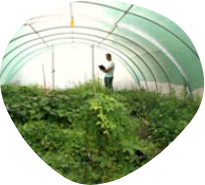 As soon as you place your order your plants are selected
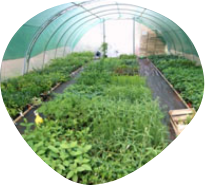 Each order is processed individually.
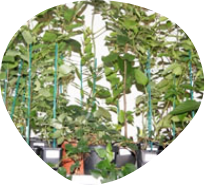 Plants are packed, staked and labeled.
 Packaging is carefully implemented to avoid any problems.
 Packages are ready to be shipped.
Expédition de nos plantes dans toute l'Europe (sauf en outre mer et les îles).
Avis clients


Beeblossom 'Siskiyou Pink' is an essential perennial with veined pink flowering, light and abundant all summer. Hardy and very drought-resistant, it brings a romantic and vaporous touch to beds and pots.
Your cart is empty
Continue shopping