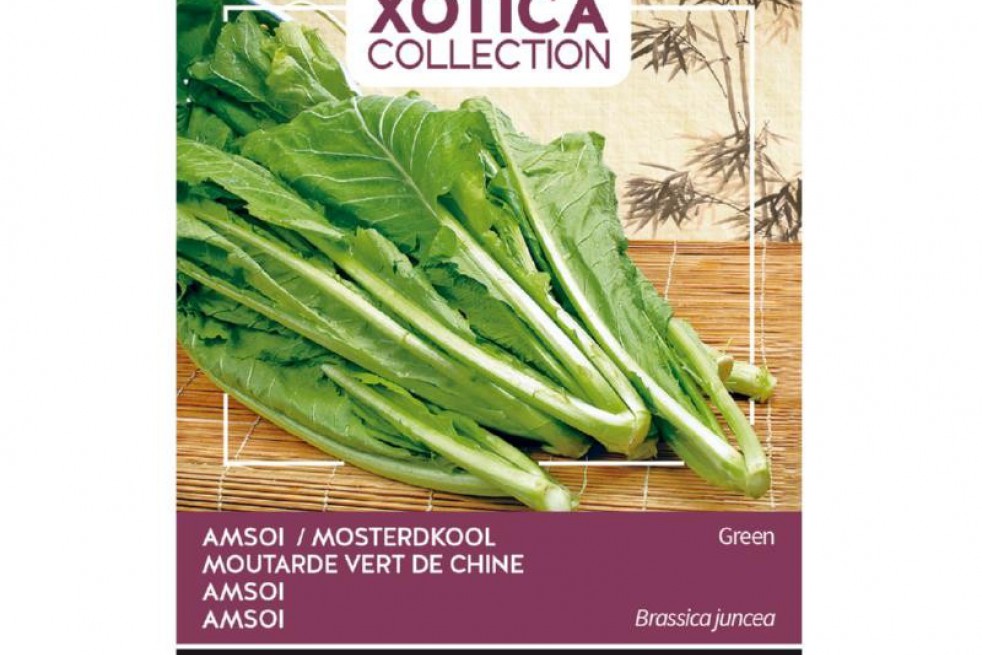

Indian green Mustard - Amsoi Mung Choi
Brassica juncea var. rugosa
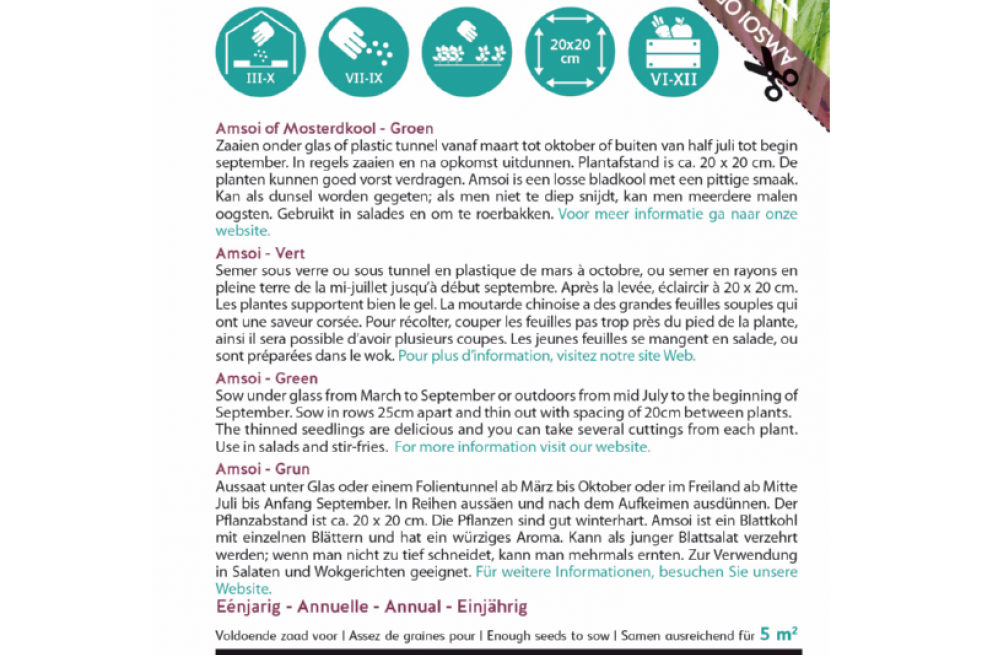
Add some spice to your garden with Amsoi! This fast-growing Green Mustard is perfect for spicy salads and delicious stir-fries. A hardy and productive leafy green that is ready to harvest in record time!
Description
Indian green Mustard, Amsoi Mung Choi - Brassica juncea
Introductory Summary
Indian Green Mustard, often called Amsoi or Mung Choi, is an exceptionally generous leafy vegetable that adds a refreshing spicy touch to the vegetable patch. Originating from Asia, this variety stands out with its large, tender, light green leaves that are slightly fleshy and serrated, offering a crunchy texture and a peppery flavor subtly reminiscent of horseradish or strong mustard. It is particularly appreciated by gardeners for its ultra-fast growth and its ability to produce fresh greens even when temperatures start to drop in autumn.
Beyond its undeniable taste qualities, Amsoi is a true nutritional goldmine, rich in vitamins A, C, and K, as well as antioxidants beneficial for health. In the kitchen, it proves to be highly versatile: its tender young shoots are perfect for spicing up salads, while mature leaves develop a more complex and full-bodied flavor once stir-fried in a wok or integrated into traditional soups. Growing this mustard means ensuring abundant harvests with minimal effort, while discovering a staple of Asian and Creole gastronomy.
Origins and Botanical Family
Geographical Origin
Amsoi finds its historical roots in Central and East Asia, specifically between the foothills of the Himalayas and China. From there, it traveled across the world, becoming a staple ingredient in India as well as in Caribbean (Suriname) and African cuisines.
Botanical Family
It belongs to the vast Brassicaceae family (formerly Crucifers), just like cabbages, turnips, and radishes. It is part of the species Brassica juncea, known for its high content of mustard essential oils which give it its pungency.
Historical Particularities
Historically, this plant was not only cultivated for its edible leaves but also for its seeds used to make condiments and oil. In many Asian cultures, it is considered a medicinal plant that purifies and tonifies the body.
Botanical Description and Characteristics
Mature Height
At maturity, the plant forms a dense rosette which can reach 30 to 50 cm in height depending on soil richness. If allowed to bolt during summer heat, its flower stalk can rise to over 80 cm.
Habit
Amsoi presents an upright and bushy habit, with leaves that flare out elegantly from a central base. Its compact shape allows it to be grown easily, even in small spaces, pots, or square foot gardens.
Foliage Description
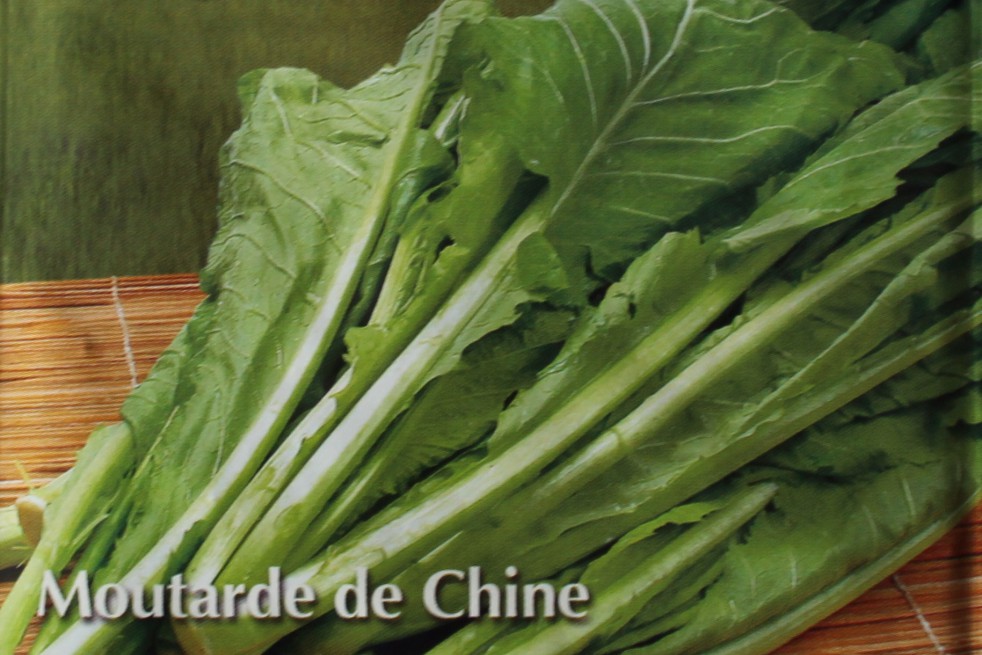
The foliage is a glossy emerald green, with broad, pliable blades that are slightly wavy at the edges. The central ribs are white, thick, crunchy, and very juicy, bringing an interesting textural contrast to the palate.
Other Morphological Particularities
When bolting, the plant produces small clusters of bright yellow flowers with four petals, typical of the cabbage family. The roots are taproots but remain quite shallow, making the plant sensitive to rapid soil drying.
Sowing and Culture Conditions
Ideal Sowing Period
Sowing takes place mainly in spring, from March to May, or preferably in late summer, from August to October. By avoiding the heatwaves of July, you limit the risk of premature bolting caused by heat stress.
Ideal Germination Temperature
Seeds germinate very easily and quickly as soon as the soil temperature reaches 10°C to 15°C. Moderate warmth around 20°C significantly accelerates the emergence of young seedlings, but cold does not block them.
Germination Time
The emergence time is extremely short, with the first shoots generally appearing between 3 and 7 days after sowing. It is one of the most rewarding crops for impatient gardeners or for introducing children to gardening.
Sowing Depth and Spacing
Sow seeds at a shallow depth of 0.5 to 1 cm and cover with fine soil. Space rows 30 cm apart and, after thinning, leave about 25 cm between each plant for optimal leaf development.
Recommended Soil Type
It prefers cool, humus-rich, and well-drained soil, with a neutral or slightly alkaline pH. Adding well-rotted compost or organic nitrogen before sowing guarantees vigorous growth and more tender leaves.
Ideal Exposure
Amsoi appreciates exposure in dappled sun or partial shade, especially if you are growing it towards late spring. In autumn or early spring, however, full sun is beneficial to warm the vegetation and speed up growth.
Thinning Method
As soon as the plants have two to three true leaves, remove the weaker plants to keep only one vigorous subject every 25 cm. The seedlings removed during this operation are delicious and can be eaten immediately as microgreens in salads.
Water Requirements
Water requirements are constant and regular in order to keep the soil always moist but not waterlogged. A lack of water would make the leaves excessively strong in taste, pungent, and cause premature flowering.
Maintenance and Care
Pruning or Pinching
It is not necessary to prune the plant, but you can harvest the outer leaves as needed ("cut and come again" method). This allows the heart of the plant to continue producing new shoots and extends the harvest over several weeks.
Trellising
No trellising is required for this low and robust crop, as its stem is strong enough to support the leaves. However, if you let it go to seed for reproduction, a small stake can help support the flower stalk.
Disease and Pest Prevention
Chinese mustard is quite hardy, but it can attract flea beetles, small jumping insects that pierce tiny holes in leaves during dry weather. An insect-proof net or frequent sprinkling over the foliage is usually enough to keep them away.
Harvest
Harvest Period
Harvest occurs very early, about 30 to 45 days after sowing depending on the season. You can start harvesting "baby greens" from the third week for a milder and less spicy flavor.
Recognizing Maturity
The plant is ready when it has formed a well-filled rosette and the leaves reach about twenty centimeters in length. Be sure to harvest everything before the appearance of flower buds, as flowering makes the leaves tough and bitter.
Average Yield
The yield is very generous for a plant of this size, with about 2 to 3 kg of leaves per linear meter. By sowing in batches every three weeks, you ensure a continuous production of greens.
Storage Method
Leaves are fragile and keep for a few days in the vegetable crisper of the refrigerator, ideally wrapped in a damp cloth. They can also be briefly blanched and frozen for later use in cooked dishes or soups.
Garden Usage
Placement in the Vegetable Garden
Its rapid growth makes it an ideal plant to serve as a catch crop or to fill empty spaces between two slower crops (like tomatoes or leeks). It adapts very well to container growing on a balcony or a semi-shaded terrace.
Beneficial Plant Associations
It appreciates the company of lettuce, spinach, and onions, which do not compete directly for aerial space. Avoid placing it too close to other cabbages or radishes to limit the spread of pests common to Brassicaceae.
Crop Rotation
It is advisable to wait 3 to 4 years before growing a Brassicaceae (cabbage, turnip, radish, mustard) in the same spot. This prevents specific soil depletion and the establishment of root diseases like clubroot.
Culinary Uses
Flavor
The flavor of Amsoi is unique, combining the vegetal freshness of cabbage with a distinct aromatic heat that fades slightly upon cooking. It leaves a pleasant warming sensation in the mouth, a bit like wasabi but much milder.
Ways to Cook
It can be eaten raw in thin strips to give zest to a mixed salad. It excels especially when stir-fried in a wok with garlic, ginger, and soy sauce, or integrated at the end of cooking into Asian broths.
Tip or Typical Recipe
For a quick and tasty preparation, stir-fry the coarsely chopped leaves for 2 minutes over high heat with a drizzle of toasted sesame oil. This method preserves the crunch of the white ribs and the vibrant color of the green blade.
Ecology, Curiosities, and Assets
Ecological Interest
Like all mustards, it is an excellent honey plant if allowed to flower at the end of the season, attracting bees and pollinators. Its roots secrete substances that can help naturally sanitize the soil (biofumigation) against certain nematodes and fungi.
Anecdote or Curiosity
The name "Amsoi" is of Surinamese origin, testifying to the importance of this vegetable in the fusion cuisine of former Dutch colonies. It is an ingredient renowned for its digestive virtues ("bitter greens") and high assimilable iron content.
Permaculture
In permaculture, it is often used as a fast-growing green manure to cover the soil in winter. It protects the earth from erosion, suppresses weeds, and returns a lot of biomass once mowed to the ground.
Why this vegetable deserves a place in the garden
Indian Green Mustard is the ideal ally for the gardener seeking productivity and simplicity. Its cold resistance makes it a valuable crop for extending harvests into autumn and winter. Finally, its distinctive taste and nutritional richness transform any simple dish into an exotic culinary experience.
Features
- Common name : Indian green Mustard - Amsoi Mung Choi
- Category : vegetable
- Time to sow seeds : March to May or August to October
- Harvest : 30 to 45 days after sowing
Specific References
- EAN13
- 8711117804055
Expédition & livraison
How does the delivery work?
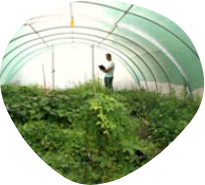 As soon as you place your order your plants are selected
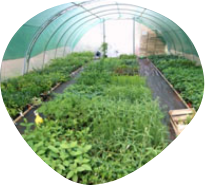 Each order is processed individually.
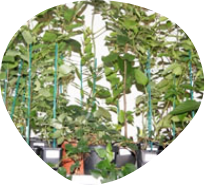 Plants are packed, staked and labeled.
 Packaging is carefully implemented to avoid any problems.
 Packages are ready to be shipped.
Our delivery methods
Shipping of our plants throughout Europe (except overseas and islands).





Customer reviews
Nobody has posted a review yet
in this language