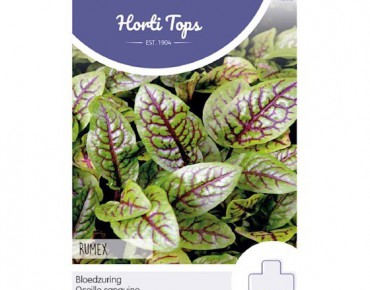
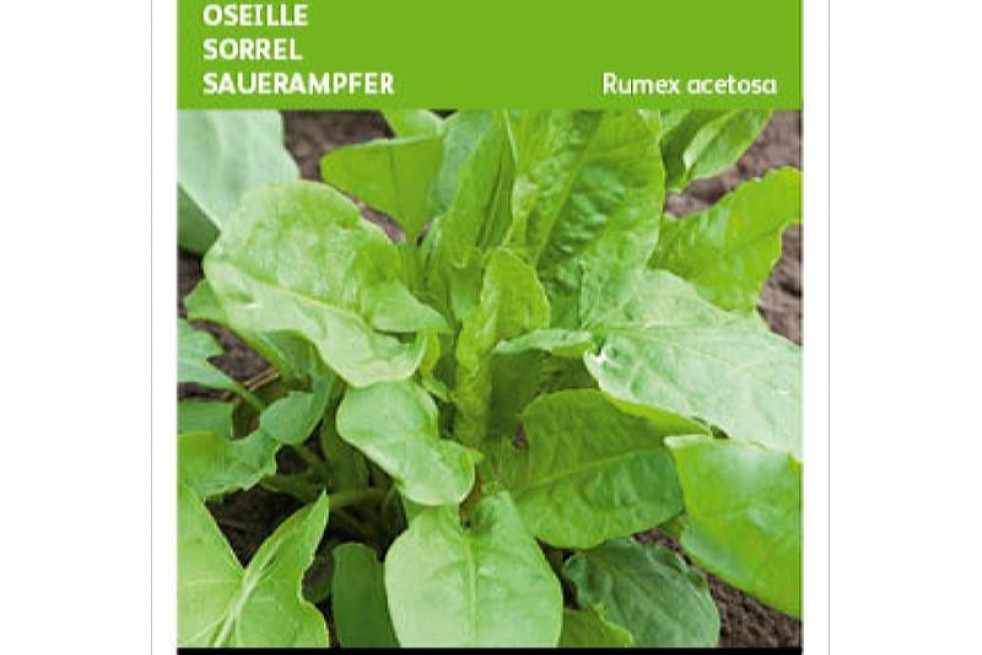
- Out-of-Stock
Sorrels of Belleville
Rumex Acetosa
(5/5)
- 1 rating(s)
Belleville Sorrel is a great classic of the French vegetable garden! This vigorous perennial produces large tender leaves with a unique tangy flavor. Ideal for sauces and soups, it returns faithfully every year. A safe and easy bet.
Description
Sorrel broad-leaved of Belleville - Rumex acetosa
Introductory Summary
Belleville Sorrel is the most famous and widely grown variety in French vegetable gardens, and rightfully so. It is a vigorous, herbaceous perennial plant known for its high productivity and large, lance-shaped, light green leaves. It has been appreciated for centuries for its characteristic tangy and lemony flavor, which awakens the taste buds and lightens rich dishes. Unlike wild sorrel, this market garden selection offers tender, broader, and less fibrous foliage, making it more culinarily appealing.
Indispensable in traditional cuisine for making the famous sorrel cream sauce or herb soup, it is also very easy to manage in the garden. Once established, it produces faithfully for several years, requiring little care other than cool soil. It is an ideal "perennial vegetable" for the beginner gardener or anyone wishing to create a sustainable and self-sufficient vegetable patch.
Origins and Botanical Family
Geographical Origin
This variety takes its name from the Belleville district in Paris, which was formerly a major market gardening area supplying the capital's markets. It was selected by Parisian gardeners over the centuries for the width of its leaves and its great productivity. It is therefore a historic variety of French heritage, perfectly adapted to our temperate climates.
Botanical Family
It belongs to the Polygonaceae family (buckwheat family), just like rhubarb and buckwheat. The genus Rumex includes many wild species (docks), but Rumex acetosa is the species most commonly grown for human consumption. This family is often characterized by knotted stems and the presence of oxalic acid in the tissues.
Historical Particularities
Sorrel was already consumed by the Egyptians and Romans for its digestive virtues, long before becoming a Parisian specialty. In the Middle Ages, it was considered a medicinal plant capable of preventing scurvy thanks to its richness in vitamin C. The "Belleville" selection marked horticultural history by transforming a wild herb into a fleshy and noble leafy vegetable.
Botanical Description and Characteristics
Mature Height and Habit
The plant forms a dense and flared clump of basal leaves, generally reaching 30 to 40 cm in height. During summer flowering, the upright flower stalks can rise up to 60 cm or even a meter. The habit remains bushy, and the plant spreads slowly via its rootstock over the years.
Foliage Description
The leaves are large, broad, arrow-shaped or lance-shaped, with a tender green to blond-green color. They are fleshy, smooth, and possess a fairly long petiole, which facilitates harvesting. Unlike wild varieties, the leaf blade is less acidic and remains tender longer before going to seed.
Other Morphological Particularities
The plant develops a thick, fleshy taproot that serves as a reserve and allows it to regrow each spring. The discreet, reddish flowers are grouped in panicles at the top of the stems. However, flowering tends to exhaust the plant and toughen the foliage, which is why it is often removed in cultivation.
Sowing and Culture Conditions
Ideal Sowing Period
Sowing is ideally done in spring, from March to May, for a harvest starting in summer. It is also possible to sow in late summer or early autumn (August-September) for early production the following spring. Root division is best done in autumn or very early spring.
Ideal Germination Temperature
Sorrel seeds germinate easily as soon as the soil reaches 12°C to 15°C. They do not need excessive heat and prefer relative coolness to emerge uniformly. Temperatures that are too high can sometimes inhibit germination or dry out fragile young seedlings.
Germination Time
Emergence is generally quite rapid, occurring between 10 and 15 days after sowing if moisture is maintained. It is a plant that does not require much patience, with the first true leaves appearing quickly after the cotyledons.
Sowing Depth and Spacing
Sow seeds in rows, about 1 cm deep, covering with fine soil and packing lightly. Space rows 30 cm apart and then thin to leave one plant every 20 to 25 cm. This distance is necessary for each clump to flourish without being stifled by its neighbors.
Recommended Soil Type
Belleville Sorrel appreciates cool, slightly heavy, humus-rich, and acidic soil. It dreads limestone and overly dry soils, which cause it to bolt prematurely. Adding well-rotted compost or leaf mold at planting is very beneficial.
Ideal Exposure
Although it tolerates sun if the soil remains moist, it clearly prefers partial shade or a shaded exposure. It is one of the few vegetable plants that produces very well with only a few hours of sun per day, making it valuable for less exposed corners of the garden.
Thinning Method
Thinning occurs when the plants have 3 or 4 leaves: keep only the most vigorous ones. You can transplant the removed plants elsewhere or consume them as young shoots ("mesclun") in a salad. This step is crucial to obtain beautiful, productive, and long-lasting clumps.
Water Requirements
Sorrel is a plant that loves coolness and has regular and constant water needs. The soil should never dry out completely, otherwise the leaves will become hard and bitter. A thick mulch at the base is strongly recommended to maintain this vital moisture in summer.
Maintenance and Care
Pruning or Pinching
It is imperative to cut off the flower stalks as soon as they appear at the base of the plant. This "pruning" forces the plant to produce new tender leaves rather than exhausting itself making seeds. In late winter, clean the clump by removing all dead or damaged leaves to make way for new shoots.
Disease Prevention
Sorrel is robust but attracts slugs and snails that love its tender leaves, especially in spring. It can also be attacked by the green dock beetle, a small shiny green beetle whose larvae devour the foliage. Regular monitoring and manual removal of intruders are often sufficient in a small garden.
Harvest
Harvest Period
Harvest begins about 2 to 3 months after sowing and continues until the first frosts. On established plants, harvest can begin as early as March or April and last the entire season.
Recognizing Maturity
Leaves are ready to be picked when they are well developed, reaching 15 to 20 cm in length. Prioritize picking leaf by leaf, choosing the largest ones on the periphery of the clump. This allows the heart to continue producing young leaves constantly.
Average Yield
It is a very productive plant: a few plants (4 or 5) are amply sufficient to cover the needs of an average family. A well-maintained clump can produce several hundred grams of leaves per year and live for 3 to 4 years.
Storage Method
Sorrel is ideally eaten fresh because it wilts very quickly after cutting. To store it, the best way is to wash it, stem it, and freeze it raw or blanched. It can also be canned in jars, cooked with a little salt, to be used as a condiment in winter.
Garden Usage
Placement in the Vegetable Garden
Install it in the perennial plant zone (with rhubarb, artichokes) or at the edge of a shaded bed. Since it remains in place for several years, it should not be put in the middle of areas that are worked every year (plowed or dug).
Beneficial Plant Associations
It associates well with other leafy vegetables like spinach, lettuce, or Swiss chard. It also appreciates the proximity of strawberries and can be planted at the foot of fruit trees whose light shade it enjoys.
Crop Rotation
Since sorrel is a perennial plant that stays in place for 3 or 4 years, it does not fit into a classic annual rotation. When deciding to remove old plants, it is advisable to wait 3 to 4 years before replanting sorrel or another polygonaceous plant in the same spot.
Culinary Uses
Flavor
Its flavor is unique, marked by a distinct acidity and lemon notes due to oxalic and ascorbic acid. It is this tangy taste that makes it an excellent condiment to spice up bland or fatty dishes.
Ways to Cook
It is famous for the sorrel sauce that traditionally accompanies salmon or poached eggs. It is also cooked as a "fondue" (wilted in butter like spinach), in creamy soup, or chopped raw in small quantities in a mesclun salad.
Tip or Typical Recipe
To attenuate its acidity, you can blanch it for a minute in boiling water before cooking, or add a little crème fraîche (the casein neutralizes the oxalate). A sorrel omelet is a quick and delicious dish: simply add the chopped leaves to beaten eggs just before cooking.
Ecology, Curiosities, and Assets
Ecological Interest
It is a host plant for several species of butterflies, notably the Small Copper, whose caterpillars feed on the leaves. By growing it, you promote specific lepidopteran biodiversity in your garden.
Anecdote or Curiosity
The Latin name Rumex means "lance" or "dart", referring to the characteristic shape of its leaves. Formerly, salt of sorrel (potassium oxalate) extracted from the plant was used to bleach laundry and remove ink or rust stains.
Permaculture
In permaculture, sorrel is a flagship plant because it is perennial, covers the ground, and requires very little maintenance. It can be grown in a pot on a shaded balcony, provided the substrate is kept moist at all times.
Why this vegetable deserves a place in the garden
Belleville Sorrel is the most profitable investment in the vegetable garden: one sowing ensures harvests for 3 or 4 years. Its tangy flavor is irreplaceable in cooking and impossible to find with such freshness in stores. It is the ultimate "anti-waste" plant, always available in the garden when the fridge is empty.
Features
- Common name : Sorrels of Belleville
- Category : vegetable
- Time to sow seeds : March to June
- Harvest : 2 to 3 months after sowing
Specific References
- EAN13
- 8711117012504
Expédition & livraison
How does the delivery work?
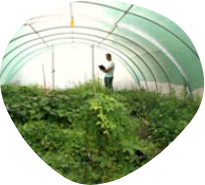 As soon as you place your order your plants are selected
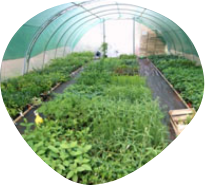 Each order is processed individually.
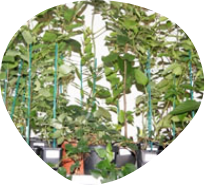 Plants are packed, staked and labeled.
 Packaging is carefully implemented to avoid any problems.
 Packages are ready to be shipped.
Our delivery methods
Shipping of our plants throughout Europe (except overseas and islands).





Customer reviews
16 other products in the same category:



Curly Kale Westland Herfst BIO
Brassica oleracea convar. acephala var. sabellica
Pack of
0,4 grams
- Out-of-Stock