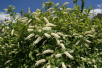








Virginia sweetspire 'Henry's Garnet' is an exceptional ornamental shrub that transforms the landscape from late spring until the onset of winter. This renowned cultivar is distinguished by spectacular clusters of fragrant white flowers in summer, followed by an autumnal metamorphosis when its foliage takes on garnet and mahogany hues of rare intensity. Perfectly suited to cool or partially shaded areas of the garden, this vigorous and easy-to-grow shrub integrates beautifully into heather beds and pond edges, offering a constantly renewed visual display.
Description
Virginia Sweetspire 'Henry's Garnet' is an exceptional deciduous ornamental shrub that brings structure and multi-season interest to damp, semi-shaded garden areas. This particular cultivar is highly celebrated for its improved performance, featuring longer flower racemes and a more reliable, brilliant autumn color than the species type. In early summer, the shrub produces a bounty of cascading, fragrant white flower spikes that fill the air with a sweet scent and attract numerous pollinators. As autumn approaches, the glossy green foliage turns an outstanding, long-lasting garnet-red to deep purple. With its arching, compact habit, it fits beautifully into mixed borders, woodland gardens, or along the edges of water features where the soil stays consistently moist. It is a highly dependable plant that requires very little specific maintenance once fully established.
This species is native to the wetlands and forested understories of the southeastern United States, extending from Virginia to Texas. The specific cultivar 'Henry's Garnet' was selected for its superior ornamental qualities by the famous Scott Arboretum in Pennsylvania. This selection made it possible to propagate a plant that is much more colorful and free-flowering than the wild form found in nature.
The Sweetspire belongs to the Iteaceae family, a small botanical group of woody plants primarily found in temperate and subtropical regions. This family is very closely related to the Saxifragaceae, with which it shares distinct floral characteristics. It contains only a few genera, making this shrub an original and uncommon subject in European horticultural collections.
The name of this cultivar is a direct reference to Henry Skinner, the botanist who collected the plant, as well as to the unique color of its autumn leaves, which resemble the garnet gemstone. Historically, indigenous peoples used the flexible stems of certain Itea species for fine basketry due to their pliability. Its natural resilience in acidic and wet soils makes it an important ecological component in its native habitat for stabilizing banks.
At maturity, this shrub typically reaches a height between 1.50 and 2 meters. Its development remains compact, which allows it to be easily grown in medium-sized gardens without becoming invasive. This moderate size also makes it an excellent choice for smaller gardens or the foreground of shrub borders.
The spread of its branches is equivalent to its height, measuring from 1.50 to 2 meters in diameter. It thus forms a well-balanced plant mass, ideal for filling empty spaces in a shrub border. Its lateral growth remains well-behaved and does not require special support structures.
The habit is bushy, flexible, and slightly arching, which gives the shrub a natural and elegant silhouette. The outer branches tend to lean gently toward the ground under the weight of the summer blooms, creating a beautiful cascade effect. This supple architecture brings a lot of visual lightness to structured landscape designs.
The bark of young twigs displays a decorative pinkish-green to reddish hue during the winter, once the shrub has lost its leaves. As the wood ages, the main trunk becomes greyer and develops a smooth, discrete texture that highlights the surrounding vegetation. The bark does not peel, maintaining a clean appearance throughout the life of the plant.
The foliage is deciduous, composed of alternate, oblong, and finely serrated leaves of an intense glossy green color during the warm season. From the end of summer, the leaves begin a remarkable color transition toward purple, scarlet, and garnet tones that last for many weeks. This autumn coloration is considered one of the most durable and intense among shrubs of temperate climates.
The growth rate is moderate, with the shrub taking time to develop a solid root system before fully deploying its branches. It reaches its adult size in just a few years, providing a quick but lasting result in the garden. Young spring shoots appear quite early, as soon as the risk of hard frosts recedes.
The plant possesses excellent resistance to cold and tolerates winter frosts down to -20°C (-4°F). This robustness makes it perfectly adapted to Belgian winters and those of Northern Europe, where it does not suffer from frost damage to the twigs. Even exceptionally severe winters do not affect the following year's bloom.
The generous blooming manifests itself in the middle of summer, extending from June to July, a period when few other shade shrubs are in flower. This timing ensures a perfect transition from spring blooms and maintains the aesthetic value of the garden.
The flowers are small white bells united in long, cascading racemes with a length between 20 and 30 centimeters. They emit a sweet and pleasant fragrance, which is especially noticeable on calm and warm days. The inflorescences open gradually from the base to the tip, ensuring the floral display lasts for a long time.
The fruiting takes the form of small dry brown capsules that appear after blooming at the end of summer. Although visually not very attractive, they remain on the shrub for part of the winter. These capsules open at full maturity to release minuscule seeds that small birds love.
The blooming of this shrub is a valuable food source for pollinating insects, particularly bees and butterflies. The dense structure of the summer foliage also offers excellent shelter and protection for small garden wildlife. It is a true hub of biodiversity for ecologically managed spaces.
The Virginia Sweetspire prefers a position in mild sun or semi-shade, which ensures a good compromise between a rich bloom and healthy foliage. In regions with hot summers, semi-shade is highly recommended to prevent the foliage from burning due to direct sunlight. Sufficient light at the end of summer is, however, indispensable to guarantee the vividness and brilliance of the autumn colors.
The planting hole must be well loosened in width to aerate the ground and facilitate root growth. It is advisable to enrich the existing soil by incorporating matured organic matter and a little peat moss if the soil is too heavy. Because our plants are grown and delivered in pots, they have an intact root system that allows successful planting all year round, except during periods of prolonged frost.
For planting a border or an informal hedge, maintain a distance of 1.20 to 1.50 meters between plants. This distance allows each shrub to develop its characteristic arching form without suffocating neighboring plants. Good spacing also guarantees optimal air circulation, which is essential for the health of the foliage.
This cultivar thrives best in a rich, moist, slightly acidic to neutral soil. It likes humus-rich ground that naturally retains moisture, but avoids alkaline soils that cause yellow leaves. Sandy-clay soil structures are also suitable provided the drainage is good.
Moisten the root ball thoroughly by dipping it in water before placing it in the planting hole, making sure not to bury the root collar of the plant. Fill in with the improved soil mixture, press gently by hand, and form a watering ring to optimize future waterings. An organic mulch layer based on pine bark is highly recommended to maintain the acidity and moisture of the soil.
Copious and regular watering is absolutely necessary in the first year after planting, especially during the summer season. This allows the shallow roots to spread effectively into the surrounding soil and ensure good regrowth. Do not hesitate to water twice a week in case of a very dry spring.
Once mature, the needs are moderate, but the Itea remains sensitive to prolonged summer drought. Regular watering is necessary if the soil dries out, because the shrub absolutely dislikes bone-dry ground, which would affect the beauty of the foliage. Maintaining a fresh soil guarantees a long life for the shrub.
Pruning is done mainly after flowering, at the end of summer, so as not to compromise the formation of future flower buds. The intervention consists of removing dead wood, weakened branches, or branches that disrupt the general silhouette of the shrub. It should never be severely pruned, but rather a light thinning to maintain the natural fluidity of the arching branches.
The most effective propagation method for this cultivar is via semi-ripe cuttings, taken at the end of summer from the shoots of the current year. Natural layering of low branches touching the damp soil is also common and makes it easy to obtain new plants identical to the parent plant. Division of the clump can also be considered for very old specimens.
This shrub fits perfectly into borders with acid-loving plants, where its soil requirements match those of other acidophilic plants. Its flexible silhouette makes it an excellent element for informal hedges, light woodland edges, or to elegantly stabilize the banks of ponds. Its ornamental value extends over four seasons, making it a structural element of the first order.
The Virginia Sweetspire 'Henry's Garnet' shows excellent natural resistance and is very insensitive to common garden diseases. In a particularly humid climate, small, harmless leaf spots may sometimes appear on the foliage. To prevent this, it is sufficient to ensure good air circulation around the shrub when planting and avoid watering the leaves.
To guarantee optimal growth, plant the shrub in a ground that remains constantly cool and rich in humus. Applying a thick organic mulch layer every spring helps to retain the indispensable moisture at the base during the summer while enriching the soil. A gift of matured compost at the beginning of the season supports the lavishness of the bloom. In regions with very harsh winters, a position somewhat sheltered from the prevailing winds will protect the structure of the young branches.
Shipping & delivery
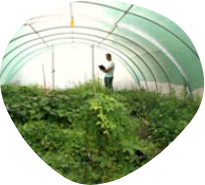 As soon as you place your order your plants are selected
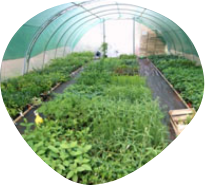 Each order is processed individually.
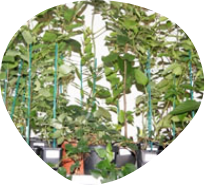 Plants are packed, staked and labeled.
 Packaging is carefully implemented to avoid any problems.
 Packages are ready to be shipped.
Expédition de nos plantes dans toute l'Europe (sauf en outre mer et les îles).
Avis clients


Virginia sweetspire 'Henry's Garnet' is an exceptional ornamental shrub that transforms the landscape from late spring until the onset of winter. This renowned cultivar is distinguished by spectacular clusters of fragrant white flowers in summer, followed by an autumnal metamorphosis when its foliage takes on garnet and mahogany hues of rare intensity. Perfectly suited to cool or partially shaded areas of the garden, this vigorous and easy-to-grow shrub integrates beautifully into heather beds and pond edges, offering a constantly renewed visual display.
Your cart is empty
Continue shopping