• Out of stock
Japanese Cherry Blossom Kanzan - Prunus serrulata ‘Kanzan
  • Japanese Cherry Blossom Kanzan - Prunus serrulata ‘Kanzan

Japanese Cherry Blossom Kanzan - Prunus serrulata ‘Kanzan

Prunus serrulata ‘Kanzan’

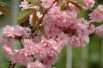
Prunus serrulata ‘Kanzan’, the Japanese Cherry Blossom Kanzan, seduces with its spectacular flowering in April-May, raspberry-pink double flowers and decorative foliage from spring to autumn.

Description

Height at maturity 6 to 8 m
Spread at maturity 4 to 6 m
Exposure Sun, partial shade
Flowering period April - May
Hardiness -23°C
Origin China - Japan

Japanese Cherry Blossom Kanzan – Prunus serrulata ‘Kanzan’

Main interest

The Japanese Cherry Blossom Kanzan is perhaps the most famous ornamental cherry. Its spectacular and abundant spring bloom turns the tree into a cloud of double, raspberry-pink flowers, grouped in clusters. A tree of celebration and poetry, it symbolizes the Japanese spring. With its upright then spreading habit, elegant silhouette and deciduous foliage that changes from bronze in spring, to green in summer, and yellow-orange in autumn, it is a four-season ornamental tree. Hardy down to –23 °C, it adapts to many well-drained soils and is suitable as a specimen, in rows, or in groups.

Origins and characteristics

  • Geographic origin: Japan, China, Korea (Japanese horticultural selection)
  • Botanical family: Rosaceae
  • Notable features: Emblematic tree of spring festivals (Hanami in Japan)
  • Description: Small deciduous tree, upright then spreading, with a dense rounded crown
  • Mature height: 6–8 m (sometimes up to 10 m)
  • Mature spread: 4–6 m
  • Habit: Upright then spreading, dense rounded crown
  • Bark: Brown-grey, smooth, becoming slightly fissured with age
  • Growth: Moderate, about 30–40 cm/year
  • Hardiness: Down to –23 °C (USDA zone 6a)
  • Foliage:
  • Young leaves bronze-coloured
  • Medium green in summer
  • Yellow-orange to red in autumn
  • Deciduous, 8–12 cm long

Flowering and fruiting

  • Period: April–May
  • Flowers: Double, raspberry-pink, 5–6 cm, in clusters of 2–5
  • Fruits: Rare, without ornamental value

Exposure and soil

  • Exposure: Full sun, partial shade tolerated
  • Soil: Light, well-drained, sandy or stony, not too dry, lime tolerant

Planting

  • Spacing: 4–6 m depending on use (specimen, row planting)
  • Advice: Provide well-drained soil, avoid cold winds that damage blossoms

Watering

  • At planting: Regular watering during the first two years
  • Mature tree: Tolerates moderate drought, prefers fresh soil

Pruning

  • When: After flowering, in summer
  • How: Light thinning, remove dead wood or crossing branches. Avoid heavy pruning.

Propagation

  • Methods: Grafting in nursery (seedlings not true to type)

Garden uses

  • Ideal location: Specimen tree, row planting, ornamental border
  • Companions: Spring bulbs (tulips, daffodils), discreet perennials (forget-me-nots, candytuft), summer clematis
  • Traditional uses: Celebration tree, symbol of Japanese spring

Pests and diseases

  • Susceptibilities: Aphids, fungal diseases (scab, blossom blight)
  • Prevention: Ensure good air circulation, avoid excess humidity, use organic treatments if needed

Tips for good growth

Plant in full sun, in fresh but well-drained soil. Organic mulch recommended. Protect from cold winds to preserve blossoms.

Specific features of the cultivar

‘Kanzan’ is distinguished by its spectacular double flowers and upright then spreading habit. Unlike other Japanese cherries (Prunus serrulata ‘Amanogawa’, narrow, or ‘Taihaku’, white-flowered), it offers intense pink blossoms and flamboyant autumn foliage.

Caractéristiques

  • Common name : Japanese Cherry Blossom Kanzan
  • Family : Rosaceae
  • Category : tree
  • Spread : 4 to 6 m
  • Foliage : deciduous
  • Color of flowers : Double, bright pink, lightening as they open, 5 to 6 cm, grouped in clusters of 2 to 5 flowers
  • Use : isolated - shrubbery - flowering hedge
  • Soil : all
  • Habit : upright
  • Enemies : aphid
  • Possible diseases : Scab, brown rot

Shipping & delivery

How does the delivery work?

  • Step 1 As soon as you place your order your plants are selected
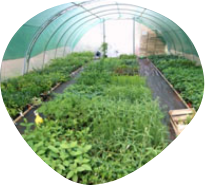
  • Step 2 Each order is processed individually.
  • Step 3 Plants are packed, staked and labeled.
  • Step 4 Packaging is carefully implemented to avoid any problems.

  • Step 5 Packages are ready to be shipped.

Nos méthodes de livraison

Expédition de nos plantes dans toute l'Europe (sauf en outre mer et les îles).

Avis clients

My cart

Select delivery country:
Only €95.00 to take advantage of free delivery in Belgium and France! Congratulations, shipping is free!
€0.00 €95.00

Your cart is empty

Continue shopping