• Himalayan Birch
  • Himalayan Birch
  • Himalayan Birch
  • Himalayan Birch
  • Himalayan Birch
  • Pick up on site
  • Himalayan Birch
  • Himalayan Birch
  • Himalayan Birch
  • Himalayan Birch
  • Himalayan Birch

Himalayan White Birch

Betula Utilis Jacquemontii

 (5/5)  - 1 rating(s)
(Deciduous ornamental tree with brilliant white bark) The Himalayan White Birch (Betula utilis var. jacquemontii) is a majestic ornamental tree native to the Himalayan slopes, prized for its slender growth, graceful form, and especially its brilliant white bark.
€25.00
Tax included

No delivery for this item. Only available for collection from the nursery after ordering.

Quantity

Paiement sécurisé

Description

Height at maturity 10/15M
Wingspan at maturity 6/8M
Exposure sun
Flowering April - May
Hardiness -25°C
Origin China - Himalayas - Nepal

Betula utilis var. jacquemontii – Himalayan white Birch

Origins and Characteristics

Native to Nepal, Kashmir and Bhutan, this tree naturally grows in wooded mountain areas, where it forms light, open forests. It was introduced into European cultivation in the 19th century and quickly became popular in landscape and contemporary gardens, both as a specimen tree and in avenues.


Description and Particularities

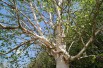
The Himalayan white Birch is renowned for its pure white trunk, exfoliating in fine beige‑to‑cream plates, becoming spectacular from the third year onward. Its deciduous foliage consists of large, dark green leaves, slightly downy with a paler underside, turning a beautiful golden yellow in autumn.

  • Adult height: 12–15 m (sometimes more depending on soil and exposure)
  • Spread: 6–8 m
  • Habit: Upright, becoming slightly spreading with age
  • Bark: Pure white, highly ornamental, exfoliating
  • Foliage: Deciduous, oval, glossy green, golden yellow in autumn
  • Growth: Medium (15–25 cm/year)
  • Hardiness: Excellent (down to –25 °C)

Flowering and Fruiting

  • Flowering: April to May
  • Flowers: Yellow hanging male catkins and upright female catkins, discreet
  • Fruits: Winged samaras, wind‑dispersed at the end of summer
  • Main interest: Autumn foliage + white bark year‑round

Exposure and Soil

  • Exposure: Full sun or light partial shade
  • Soil: Humus‑rich, deep, fresh to moist, well‑drained
  • Tolerates: Slightly acidic to neutral soil
  • Dislikes: Prolonged drought or very calcareous soil
  • Appreciates consistently fresh soil, especially in summer

Planting

  • Best planting time: autumn or early spring
  • Recommended spacing: 5–6 m between trees in groups or alignments
  • Regular watering required during the first 2 years
  • Organic mulch recommended to maintain soil moisture

Watering

  • Regular watering in hot periods (sensitive to drought)
  • Mulching recommended to keep soil cool
  • Moderate but consistent watering during establishment

Pruning

  • No mandatory pruning
  • Light cleaning or formative pruning in winter
  • Avoid pruning during sap rise (heavy sap bleeding)

Propagation

  • By natural seed after stratification
  • By grafting to preserve the qualities of the ‘Jacquemontii’ variety
  • Rarely self‑seeds in gardens

Garden Uses

The Himalayan Birch is ideal for:

  • Specimen planting: highlighting trunk and silhouette
  • Groups of 3 trees for an elegant grove effect
  • Avenues or woodland edges
  • Contemporary, zen or Nordic gardens
  • Excellent companion to: Japanese maples, coloured‑stem dogwoods, grasses, hostas, ferns

Disease Protection

  • Generally very healthy in well‑drained soil
  • Watch for:
  • Powdery mildew (late summer, if too humid)
  • Aphids or scale insects occasionally
  • Prevention: good air circulation, proper watering

Tips for Best Effect

  • Plant in groups of 3 to enhance the white bark
  • Highlight the trunk with light mineral mulch or a dark plant background
  • Combine with moist partial‑shade plants for a refined garden
  • Careful watering in summer, especially in light soil

Betula utilis ‘Jacquemontii’, or Himalayan white Birch, is an exceptional tree for those seeking winter elegance, summer lightness and autumn colour. Its slender silhouette, unique white bark and adaptability make it a must‑have in naturalistic, modern or landscaped gardens.

Features

  • Common name : Himalayan White Birch - White-barked Himalayan birch
  • Family : Betulaceae
  • Category : tree
  • Spread : 6/8M
  • Foliage : deciduous
  • Color of flowers : catkins
  • Use : isolated - group - hedge - alignment - banks
  • Soil : all
  • Habit : upright
  • Earth to use : universal potting soil/garden soil/compost
  • Enemies : hoplocampus - aphid - bark beetle
  • Possible diseases : armillary - powdery mildew - rust disease
  • Reproduction : monoecious

Expédition & livraison

How does the delivery work?

  • Step 1 As soon as you place your order your plants are selected
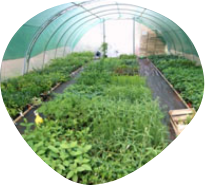
  • Step 2 Each order is processed individually.
  • Step 3 Plants are packed, staked and labeled.
  • Step 4 Packaging is carefully implemented to avoid any problems.

  • Step 5 Packages are ready to be shipped.

Customer reviews

5 /5
Excellent
100.00 %
Bien
0.00 %
Moyen
0.00 %
Bas
0.00 %
Mauvais
0.00 %
By (Tallinn, Estonia) on  12 June 2022 Himalayan White Birch
The customer has rated the product but has not posted a review, or the review is pending moderation