
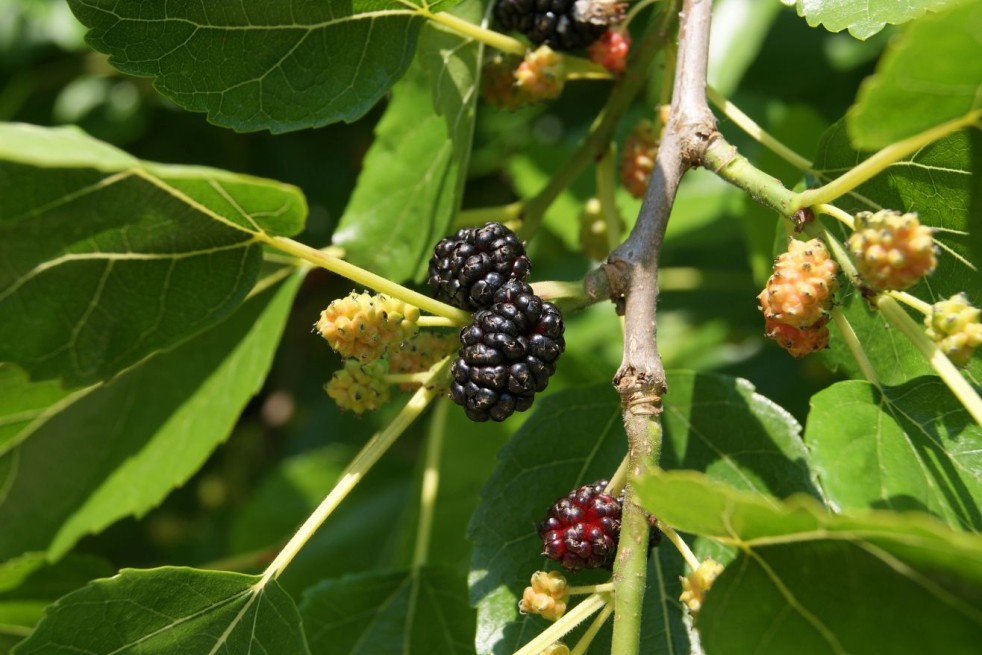
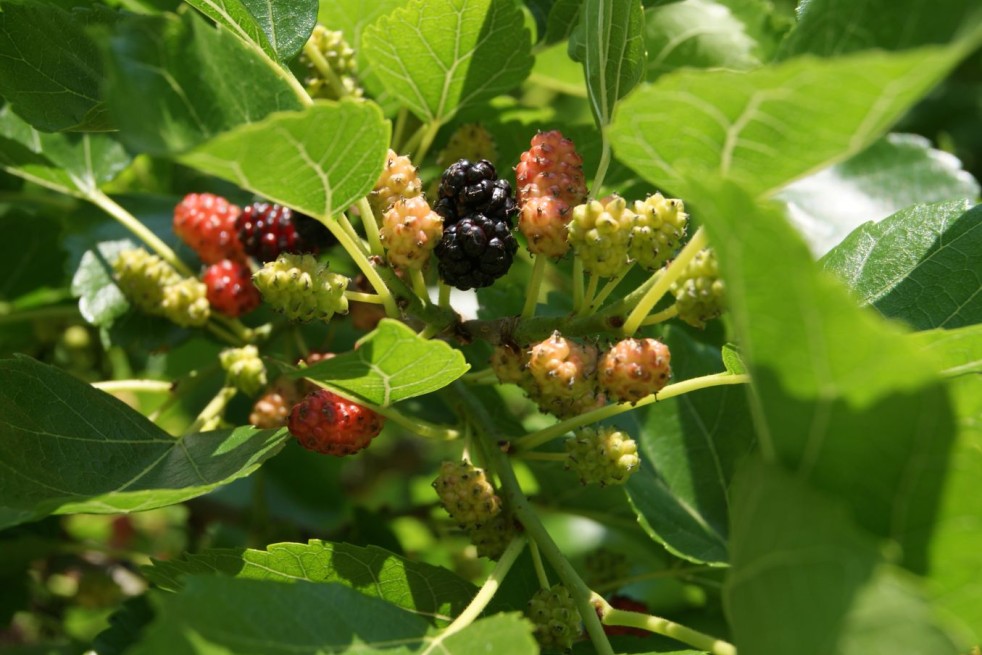
White mulberry tree
Morus Alba
The White Mulberry (Morus alba) is a fast-growing tree, ideal for creating cool shade quickly. Hardy and adaptable, it produces mild sweet fruits. Perfect for family and urban gardens.
Description
Height at maturity
8 - 12M
Wingspan at maturity
6 - 8M
Exposure
Sun, partial shade
Flowering
May - June
Hardiness
-20°C
Origin
China
White Mulberry, Morus alba
Main Interest
The White Mulberry (or Morus alba) is a tree with a rich heritage, inseparable from the history of silk, but possessing undeniable ornamental and fruit-bearing assets for our contemporary gardens. Unlike its cousin the Black Mulberry (Morus nigra), Morus alba stands out for its exceptional vigor and remarkable adaptability, capable of thriving in both urban and rural settings. It is the shade tree par excellence for those who do not want to wait decades: its growth is rapid, and it quickly forms a wide and dense crown.
Its interest also lies in its versatility. It is very tolerant of atmospheric pollution, poor soils, and drought once established. Fruit-wise, although its mulberries are less complex in flavor than those of the black mulberry, they offer a mild, honeyed sweet taste without acidity, very popular with children and ideal for drying (like raisins). In permaculture, it is a major resource plant: its deciduous foliage decomposes quickly to enrich the soil, its fruits feed poultry and wild birds, and its wood is excellent for heating. Planting a Morus alba means choosing an easy, generous, and historical tree.
Origins and Characteristics
Geographical Origin:
This species originates from Central and Eastern China, where it has been cultivated for over 4000 years for rearing silkworms (Bombyx mori). It has since naturalized in many temperate and subtropical regions of the world, including the Mediterranean basin.
Botanical Family:
It belongs to the Moraceae family, just like figs and Osage oranges. It is an economically and ecologically important family, characterized by particular inflorescences and often latex production.
Notable Features:
Its most famous feature is the exclusive use of its leaves to feed silkworms, which made its fortune along the Silk Road. Botanically, it is known for the heterophylly of its foliage: on the same tree, and sometimes on the same branch, one can find leaves of very different shapes (entire or lobed).
Description and Particularities:
Mature Height
The White Mulberry is a medium to large-sized tree. At full maturity, if unpruned, it can reach 10 meters in height. In ornamental culture, it is often kept lower by pruning to densify its shade.
Mature Width
It is a tree that takes up space. Its crown spreads widely with age, potentially reaching a span of 8 meters. This width makes it an extremely efficient natural parasol for covering a terrace or resting area.
Habit (General Shape)
When young, Morus alba has an upright and vigorous habit. Over time, it rounds out to form a wide and spreading dome. The main branches spread apart and can sometimes droop slightly at the ends, giving an elegant and enveloping silhouette.
Bark (characteristics, color, particularities)
The bark is initially smooth and orange-gray on young twigs, which is quite decorative. On the trunk and old branches, it becomes grayish-brown and fissures vertically, forming rough ridges that testify to the tree's maturity.
Foliage (type of foliage, color, seasonal changes)
The leaves are deciduous, alternate, and a glossy light green. Unlike the black mulberry, they are smooth and hairless on top. In autumn, the foliage takes on a beautiful luminous golden yellow hue before falling quite quickly with the first frosts.
Growth (growth rate)
The growth of Morus alba is rapid, especially in its youth (the first 10 years). It can grow more than a meter per year if well watered and fed, allowing for a visual impact and shade in a short time.
Hardiness (temperature tolerance)
It is a very hardy tree, often more cold-resistant than the black mulberry. It withstands temperatures down to -20°C to -25°C. Its early flowering can sometimes be affected by frost, but the tree itself perfectly resists harsh winters.
Flowering and Fruiting:
Flowering Period
Flowering occurs in spring, usually in April or May, at the same time as leafing out. The flowers are grouped in small yellowish-green cylindrical catkins, visually quite discreet but important for future fruit production.
Detailed Description of Flowers
There are male and female trees, but many cultivated varieties are monoecious (both sexes on the same tree). The flowers are anemophilous (wind-pollinated). They do not present major ornamental interest but announce the harvest.
Fruits (type and dispersal, taste and pollinator)
The fruit is a fleshy mulberry, white, pinkish, or even dark purple to black depending on the varieties (the name alba comes from the color of the buds or fruits of the type species, but is not an absolute rule). The taste is very mild, sweet, reminiscent of honey, but without the characteristic acidity of red fruits, which may seem bland to some palates.
Melliferous Characteristics or Wildlife Attraction
The fruits are a real boon for biodiversity. They massively attract seed-eating and fruit-eating birds in early summer. Planting a white mulberry is an excellent way to establish a bird population in the garden, which will then regulate pest insects.
Exposure and Soil
Ideal Exposure:
Morus alba requires a sunny exposure (full sun) to develop well and sweeten its fruits. It tolerates light partial shade, but its growth will be less vigorous and its fruiting less abundant. It withstands wind well.
Adapted Soil Type :
It is remarkably tolerant regarding soil type. It prefers deep and well-drained soils, even sandy or stony ones. It supports limestone and even slightly saline soils (seaside). However, it dreads asphyxiating soils, too heavy and permanently waterlogged.
Planting
Tips for Soil Preparation:
Prepare a wide and deep planting pit. Loosen the earth well to break the "plough pan" and allow roots to descend rapidly. Mix the original soil with planting soil and an organic amendment (compost) to give a boost at the start.
Spacing Between Plants:
If planting in a row or windbreak, space the plants 3 to 5 meters apart. For an isolated specimen intended to provide shade, provide a free space of 8 to 10 meters around the trunk so it can deploy its branches without hindrance.
Nature of the Soil:
The soil must be draining. If your earth is very clayey, it is advisable to plant on a slight mound or incorporate gravel at the bottom of the hole. The ideal pH is neutral, but the mulberry accommodates slightly acidic or basic soils.
How to Plant:
Planting is possible all year round for our container-grown subjects (excluding frost and heatwaves). Soak the root ball in a bucket of water. Install the plant without burying the root collar. Backfill with the soil mix, tamp firmly by hand, and water abundantly (20L) to settle the soil around the roots.
Watering
Water Needs at Planting:
The White Mulberry needs rigorous water monitoring the first year. Water once or twice a week from spring to autumn following planting. A lack of water at the start can stop its growth and cause the foliage to yellow prematurely.
Water Needs at Maturity:
Once its powerful root system is installed (taproot and surface roots), it becomes very drought-resistant. It can go without watering. However, in case of severe summer drought, occasional watering will keep the foliage green and promote fruit sizing.
Pruning
When and How to Prune:
Pruning is done in late winter (February), during complete vegetative rest to avoid sap bleeding. The White Mulberry supports pruning very well, even severe (it can be pollarded or pruned up for shade). Remove dead wood, suckers at the base, and aerate the center of the tree. For a fruit form, simply thin out.
Multiplication
Possible Propagation Methods:
Sowing is easy but gives variable results. Cuttings of semi-ripe wood (in late summer) or hardwood cuttings in winter work well. Grafting (often on Morus alba seedlings) is used to propagate specific cultivars (weeping, sterile, or large-fruited forms).
Uses in the Garden
Ideal Location for the Plant:
It is the ideal tree to create a shaded corner near the house or in the middle of a lawn. However, beware of falling fruits that stain: avoid the immediate vicinity of a tiled terrace, a swimming pool, or a parking area. Prefer a location over a grassy area or mulch.
Recommended Plant Associations:
Under its light to dense shade, you can install dry shade plants like Vinca minor (Periwinkle), Geranium macrorrhizum, or variegated ivy. These ground covers will withstand the mulberry's root competition and dress its base neatly (reference to vegetation layers from jardins-du-monde.be).
Traditional Uses
Description of Historical or Cultural Uses:
Besides sericulture (silk), the White Mulberry is used in Traditional Chinese Medicine (root bark, leaves, fruits). Its flexible and resistant wood served to make bows, musical instruments, and sports equipment (hockey sticks, tennis rackets) before the arrival of composite materials.
Protection Against Diseases and Pests
Potential Sensitivities:
Morus alba is hardy and not very sensitive. It can sometimes be subject to canker or bacterial attacks (Pseudomonas) which cause black spots on leaves in humid springs. Scale insects can sometimes settle on branches, but rarely endanger the tree's life.
Prevention Tips and Natural Treatments:
Avoid trunk injuries (lawnmower, brush cutter) which are entry points for diseases. As prevention, whitewashing the trunk with lime or clay in winter can sanitize the bark. Collect fallen leaves if you observed leaf spots the previous year.
Tips for Good Development
Practical Tips to Favor Good Development:
To obtain a beautiful shade tree quickly, guide the main leader in the first few years by staking it, and gradually remove low branches to raise the canopy to human height (2m - 2.50m). A supply of mature compost in autumn will suffice to nourish this undemanding tree.
Differences and Specifics of the Cultivar
Morus alba (type species) differs fundamentally from Morus nigra on several crucial points for the gardener:
-
The Foliage: The leaves of alba are smooth, glossy, and hairless, whereas those of nigra are rough and hairy. This is the surest way to differentiate them.
-
The Flavor: The fruits of Morus alba are purely sweet, sometimes described as bland because they lack the acidity that lifts the taste of Morus nigra.
-
Growth: Morus alba grows much faster and becomes larger, making it a better candidate for avenues or rapid shade.
-
Fruit Color: Warning, a Morus alba can yield black fruits! Color is not an absolute criterion for species identification, unlike leaf texture.
Features
- Common name : White mulberry tree
- Family : Moraceae
- Category : fruit tree
- Spread : 6 - 8M
- Foliage : deciduous
- Color of flowers : white
- Fruit : edible
- Harvest : August - September
- Use : isolated - bonsai - orchard
- Soil : rich and well-drained
- Habit : upright
- Earth to use : universal potting soil/garden soil/compost
- Enemies : nothing to report
- Possible diseases : powdery mildew - dieback - coral disease - chancre
Expédition & livraison
How does the delivery work?
 As soon as you place your order your plants are selected
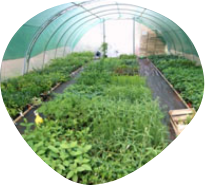 Each order is processed individually.
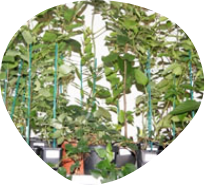 Plants are packed, staked and labeled.
 Packaging is carefully implemented to avoid any problems.
 Packages are ready to be shipped.
Our delivery methods
Shipping of our plants throughout Europe (except overseas and islands).





Customer reviews
Nobody has posted a review yet
in this language
16 other products in the same category:
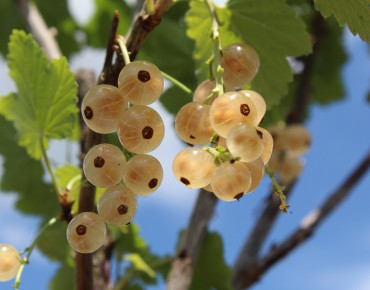
White currant Versaillaise Blanche (in 2 liter pot)
Ribes rubrum Versaillaise Blanche
Plant height
30/40 cm in 2 liter pot (only in Click and collect)
- -10%
- Pick up on site
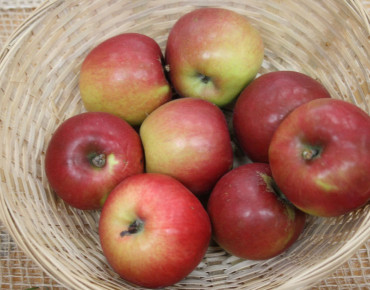
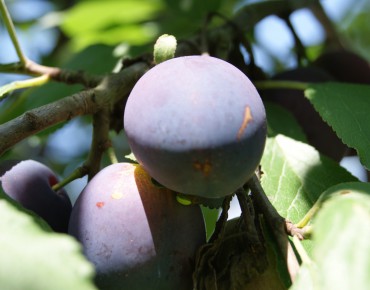
Plum tree Reine Claude d'Althan
Prunus domestica Reine Claude d'Althan
Plant height
30/40 cm in 1 liter pot (Grafted plant)
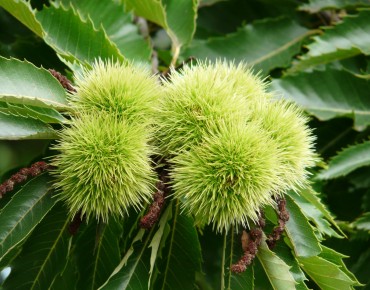
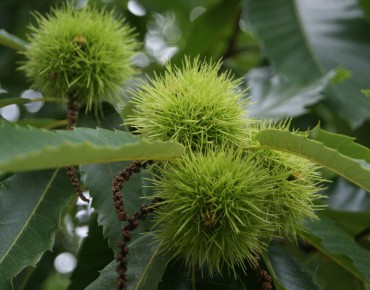
Sweet chestnut Marigoule
Castanea sativa Marigoule
Plant height
30/40 cm in 1 liter pot (Grafted plant)
- Out-of-Stock
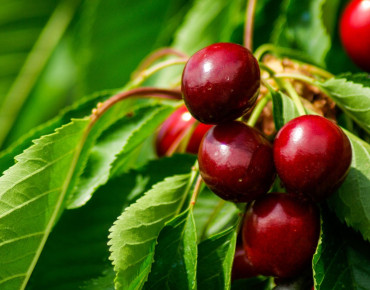
Cherry tree Butter Späte Knorpelkirsche
Prunus avium Butter Späte Knorpelkirsche
Plant height
50/60 cm in 1 liter pot (Grafted plant)
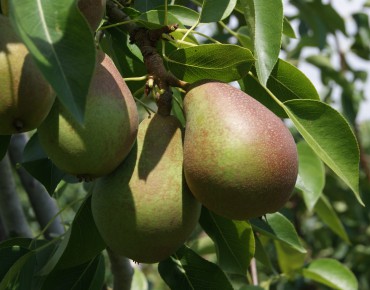
Pear tree Obelisk® « columnar »
Pyrus communis Obelisk®
Plant height
40/50 cm in 1 liter pot (Grafted plant)
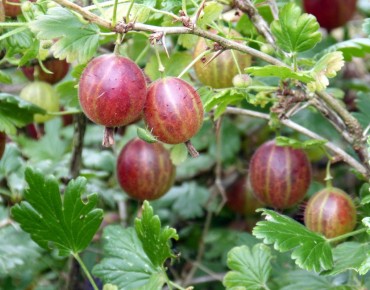
Red Gooseberry (in 2 liter pot)
Ribes uva-crispa Hinnonmaki red
Plant height
30/40 cm pot 2L
- -10%
- Pick up on site
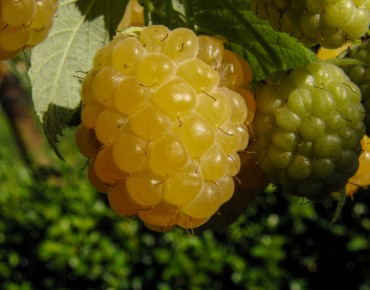
- -10%
- Pick up on site
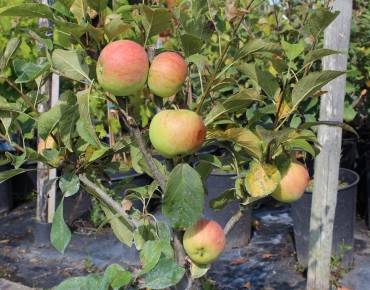
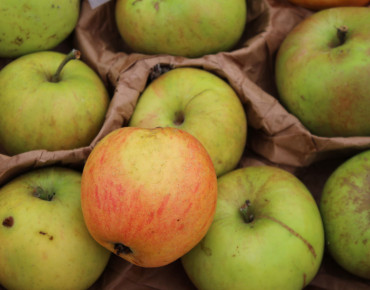
Reinette des Capucins apple tree
Malus domestica Reinette des Capucins
Plant height
40/50 cm in 1 liter pot (Grafted plant)

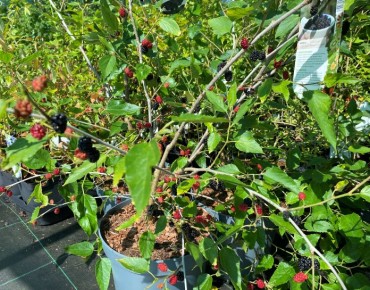
Dwarf Mulberry ‘Mojo Berry’
Morus rotundiloba ‘Mojo Berry’®
Plant height
30/40 cm in 1 liter pot (Grafted plant)
- novelty
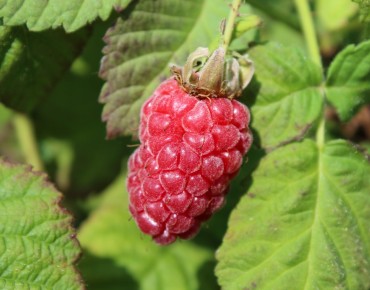
Loganberry
Rubus Tayberry
Plant height
50/60 cm in 3 liter pot (only in Click and collect)
- -10%
- Pick up on site
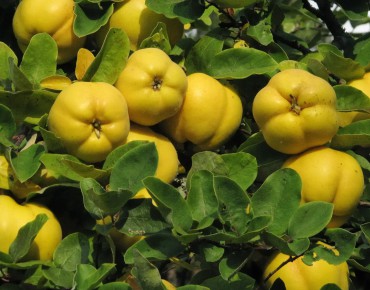
Quince tree Rea's Mammoth
Cydonia oblonga Rea's Mammoth
Plant height
40/50 cm in 1 liter pot (Grafted plant)
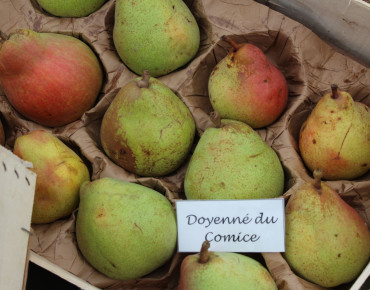
Doyenné du Comice Pear Tree
Pyrus communis Doyenné du Comice
Plant height
40/50 cm in 1 liter pot (Grafted plant)
- Out-of-Stock