- New
- Out of stock




Diamond‑leaf Persimmon (Diospyros rhombifolia): rare compact fruiting shrub with glossy foliage, orange mini‑persimmons, hardy to –15 °C, ideal in pots, open ground or as bonsai for a refined and original garden.
Description
The Diamond‑leaf Persimmon (Diospyros rhombifolia) is a rare and highly sought‑after fruiting shrub with a naturally compact habit and an elegant, refined appearance. Native to China, it adapts remarkably well to different cultivation styles, thriving both in open ground and in containers, and is especially prized for bonsai training thanks to its fine foliage and miniature fruits. Its glossy green leaves give it year‑round ornamental value, while its small edible fruits add an exotic and appealing touch. With a hardiness of –12 to –15 °C, it can be grown in many temperate regions, even in cooler climates. Its slow growth and modest size make it ideal for urban gardens, terraces and small spaces.
Diospyros rhombifolia originates from China, where it naturally grows in lightly wooded, humid areas. This background gives it good tolerance for humus‑rich, fresh soils and excellent adaptability in ornamental cultivation. Its introduction into Europe is relatively recent, which explains its rarity in gardens.
Ebenaceae.
The Diamond‑leaf Persimmon is a dioecious species, meaning male and female plants are separate. Only female plants bear fruit, although some lines may fruit even without a male nearby. Its short spines on the branches are characteristic of the species and make it especially interesting for bonsai enthusiasts.
The shrub reaches 2 to 3 m at maturity, making it easy to integrate into modern gardens. Its slow growth allows for effortless shape control without heavy pruning. This moderate height also makes it ideal for container cultivation.
It spreads 1 to 1.50 m, forming a balanced and well‑proportioned shrub. This compact width makes it suitable as a specimen plant, in borders or in decorative pots. Its natural silhouette remains stable over the years.
The plant has an upright, slightly spreading habit, with short, sturdy branches that create a dense structure. Young shoots are flexible but quickly become woody, which is advantageous for bonsai shaping. The natural form remains harmonious without major intervention.
The bark is grey‑brown and becomes more textured with age. It provides subtle winter interest, especially when the fruits remain on the bare branches. Young shoots are lighter and smoother.
The foliage is deciduous, small, glossy green, and diamond‑shaped. In autumn, it turns golden and then bright red, creating a striking seasonal display. This autumn colouration is one of the species’ greatest assets.
Growth is slow, allowing easy control of the plant’s shape and size. This is an advantage for container growing and bonsai, as it requires little intervention. Despite its slow development, the shrub remains vigorous.
The Diamond‑leaf Persimmon is hardy to –12 to –15 °C, making it suitable for many temperate gardens. In well‑drained soil, it withstands cold winters more easily. Its hardiness makes it reliable in sheltered outdoor plantings.
Flowering occurs in spring, producing small cream‑coloured flowers that are discreet yet elegant. They attract pollinating insects and signal the beginning of fruit formation. Their presence is subtle but essential.
The flowers are bell‑shaped, cream‑coloured and appear in the leaf axils. They are small but finely formed, contrasting nicely with the dark foliage. Their light fragrance attracts beneficial insects.
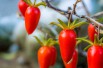
The fruits are small orange pear‑shaped berries, about 2 cm long, sweet with a pleasant astringent note. They ripen in autumn and often remain on the branches after the leaves have fallen, creating a striking winter display. These miniature persimmons are highly appreciated for their unique flavour.
The fruits attract birds and small mammals, enhancing garden biodiversity. The flowers also support pollinators in spring.
The Diamond‑leaf Persimmon prefers a sunny location, which enhances fruiting and autumn colouration. It tolerates partial shade, though fruit production may decrease slightly. A bright, sheltered spot ensures harmonious growth.
The soil should be neutral, humus‑rich and fresh, with good drainage. Adding mature compost improves soil structure and root development. Heavy soils should be lightened with sand or organic matter.
Allow 1.50 m between plants to ensure proper crown development. In containers, choose a wide and deep pot.
The plant prefers rich, slightly acidic to neutral soils but also tolerates poorer soils if well drained. Standing water must be avoided.
Place the rootball at collar height, firm lightly and water generously. Mulching helps retain moisture and protects the roots. In pots, use a light, well‑drained substrate and refresh the top layer annually.
Regular watering during the first year promotes deep rooting. Constant but not excessive moisture is ideal. Mulching reduces evaporation.
Once established, the shrub tolerates moderate dry periods. Occasional watering in summer improves fruit quality. Overwatering should be avoided to prevent root diseases.
A light maintenance pruning before spring is sufficient to remove dead wood and maintain shape. Its slow growth limits the need for heavy pruning. For bonsai, more frequent small cuts help maintain a compact form.
Semi‑ripe cuttings root well, although the process may be slow. Seed propagation is possible but does not guarantee true‑to‑type plants. Air‑layering is also effective and produces vigorous young plants.
The Diamond‑leaf Persimmon is excellent as a specimen plant, in borders, in containers or as a bonsai. Its compact silhouette and glossy foliage make it highly decorative. It brings a refined and exotic touch to small gardens.
It pairs well with dwarf maples, camellias, hostas and light ornamental grasses. Plants with dark or variegated foliage highlight its orange fruits beautifully.
In Asia, Diospyros rhombifolia is valued for its miniature fruits and ornamental qualities. It is also widely used in bonsai culture due to its fine structure and elegant branching. Its rarity makes it particularly appealing to collectors.
The plant may be susceptible to scale insects and leaf spot in humid conditions. Good air circulation and drainage reduce these risks. Serious diseases are rare.
Black soap is effective against scale insects, and a healthy mulch layer protects the roots. Avoid overwatering and prune lightly to improve air circulation. Plant extracts help strengthen natural resistance.
A sunny location, humus‑rich soil and regular watering during the first year ensure optimal growth. Light annual pruning maintains a balanced shape. Mulching protects the roots and limits weed competition.
The Diamond‑leaf Persimmon stands out for its small size, glossy foliage, miniature fruits and surprising hardiness. Its suitability for container growing and bonsai makes it versatile and decorative. Its rarity increases its appeal among enthusiasts.
Shipping & delivery
 As soon as you place your order your plants are selected
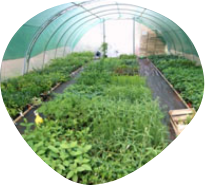 Each order is processed individually.
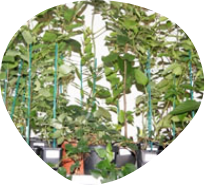 Plants are packed, staked and labeled.
 Packaging is carefully implemented to avoid any problems.
 Packages are ready to be shipped.
Expédition de nos plantes dans toute l'Europe (sauf en outre mer et les îles).
Avis clients


Diamond‑leaf Persimmon (Diospyros rhombifolia): rare compact fruiting shrub with glossy foliage, orange mini‑persimmons, hardy to –15 °C, ideal in pots, open ground or as bonsai for a refined and original garden.
Your cart is empty
Continue shopping