Elaeagnus umbellata – Japanese silverberry
Origins and characteristics
Native to East Asia (China, Korea, Japan), Elaeagnus umbellata belongs to the Elaeagnaceae family. It is used to restore poor soils thanks to its ability to fix atmospheric nitrogen through root nodules. Its value is ecological, culinary and ornamental.
Description and particularities
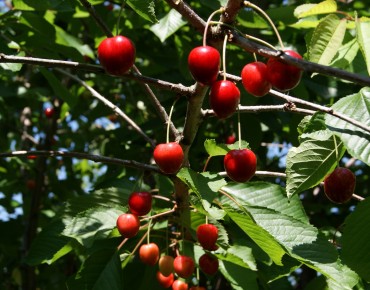
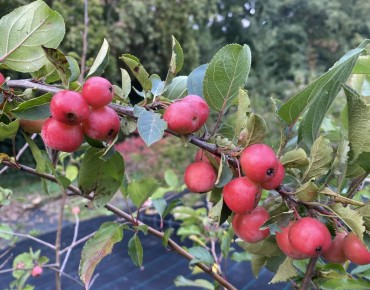
The Japanese silverberry forms a vigorous, bushy shrub with a flexible, rounded habit and blue‑green foliage with a silvery underside. In spring, it produces creamy, honey‑scented flowers that attract many pollinators. In autumn, it bears red berries speckled with silver: round, juicy, sweet and slightly tart, edible raw or cooked.
- Adult height: 3 to 4 m
- Spread: 2.5 to 3 m
- Habit: Spreading, flexible, slightly arching
- Foliage: Deciduous to semi‑evergreen, silvery green, golden yellow in autumn
- Growth: Fast
- Hardiness: Very good (down to –25 °C)
Flowering and fruiting
- Flowering: May to June
- Flowers: Cream, small, tubular, very fragrant, nectar‑rich
- Fruits: Small red berries with silvery sheen, fleshy and juicy
- Ripening: September to October
- Flavour: Sweet, tart, slightly astringent when fully ripe
- Uses: Fresh fruit, jams, jellies, compotes, dried fruit
Exposure and soil
- Exposure: Full sun or partial shade (best production in full sun)
- Soil: Light, well‑drained, even dry or poor
- Tolerates calcareous, acidic or neutral soils
- Excellent adaptation to difficult sites, slopes, arid areas
Planting
Plant in spring or autumn. Recommended spacing: 2 to 3 metres. Adding compost at planting helps establishment, but the shrub thrives even in poor soils.
- Mulching recommended to keep soil cool
- No staking needed except in very windy areas
Watering
- Regular watering during the first year to promote rooting
- Very drought‑tolerant once established
- Organic mulch reduces water needs during hot periods
Pruning
- Optional pruning: tolerates shaping well
- Light pruning after fruiting or in late winter to open the crown
- Can be grown as a free hedge, specimen or natural clump
Propagation
- Possible from seed (stratification required)
- Semi‑ripe cuttings in summer
- Also propagated by suckers at the base
Garden uses
- Country fruit hedges
- Decorative shrub borders
- Biodiversity or permaculture gardens
- Windbreak or woodland edge plant
- Soil stabilisation on slopes and dry areas
Disease protection
- No notable diseases or pests
- Extremely robust in temperate climates
- No treatment required, even organic
Tips for good fruiting
- Plant in full sun to enhance flowering and fruit ripening
- Avoid over‑fertilising (the plant improves soil fertility itself)
- Mulch to reduce weed competition and retain moisture
- May fruit from the second or third year after planting
Elaeagnus umbellata, or Japanese silverberry, is a complete plant: beautiful, fragrant, useful, edible and resilient. Ideal for gardeners seeking durable, low‑maintenance and productive plants, it brings ecological, ornamental and culinary value to any natural or cultivated space.



 As soon as you place your order your plants are selected
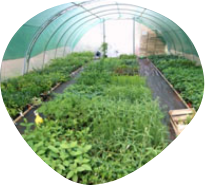 Each order is processed individually.
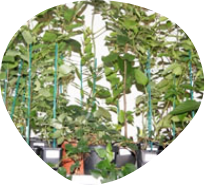 Plants are packed, staked and labeled.
 Packaging is carefully implemented to avoid any problems.
 Packages are ready to be shipped.