- New
- Pickup at nursery



The Fernor English Walnut, an exceptional, partially self-fertile variety developed through French research, is renowned for its abundant lateral fruiting of large walnuts and its late bud break. A majestic tree offering incomparably fine walnuts for your garden.
Description
The Fernor English Walnut has become an essential reference for modern orchards and large gardens due to its exceptional agronomic performance. This cultivar, a product of French research, brilliantly combines the hardiness of traditional lines with remarkable productivity. Its major asset lies in its late budding, a precious biological characteristic that allows it to protect its buds from late spring frosts, which are often fatal to other varieties. Unlike classic walnut trees, 'Fernor' is distinguished by its particularly rapid fruiting and lateral bearing, which multiplies the harvest potential from the very first years of planting. Beyond its fruit performance, this majestic tree structures the landscape with elegance, offering a dense canopy of greenery that provides life-saving shade during summer heatwaves. The walnuts it produces are of exceptional quality: they are large-sized, with a thin shell that is easy to crack and a blonde, crunchy kernel devoid of bitterness. Planting a Juglans regia 'Fernor' ensures a sustainable source of highly nutritious dry fruits while enriching the biodiversity of its immediate environment. Its natural resistance to common diseases such as bacterial blight or anthracnose makes it a preferred choice for healthy and nature-friendly cultivation. It is the ultimate investment for those wishing to combine landscape aesthetics with long-term food autonomy.
This variety is a recent creation from the INRA in Bordeaux, France, born from a controlled cross between the famous 'Lara' and 'Franquette' varieties. It was selected to meet the constraints of continental and mountain climates.
The walnut belongs to the Juglandaceae family, a group of trees primarily known for their precious wood and nuts.
'Fernor' is one of the first hybrid walnut trees to offer fruiting on lateral buds, which significantly increases yield compared to terminal varieties. Historically, it allowed walnut cultivation to expand into geographic areas previously considered too risky due to frost. Its controlled vigor also facilitates harvesting and maintenance over the years.
This walnut tree shows vigorous development, reaching a height of approximately 7.5 meters after 10 years of planting. At full maturity, it can rise up to 15 meters, proudly dominating the garden.
Its spread is significant, generally spanning 8 to 10 meters wide once adult. It therefore requires an open space to allow its branches to deploy harmoniously.
The tree adopts a semi-upright habit in its youth, which tends to become globular and more spreading over time. This balanced silhouette makes it a magnificent specimen for large properties.
The bark is initially smooth and a very luminous silvery-grey color on young subjects. As it ages, it develops deep longitudinal cracks, offering a textured and protective appearance that is very aesthetic in winter.
The foliage is deciduous, composed of large pinnate leaves of a bright, lustrous green. The leaves release a powerful aromatic scent when crushed and turn golden yellow before falling in autumn.
The growth rate is considered fast during the establishment phase, then becomes moderate once walnut production begins. This allows for a structure-defining tree in just a few years.
It displays excellent hardiness, capable of withstanding winter temperatures down to -25°C. Its resistance is reinforced by its shifted vegetative cycle that avoids spring climatic accidents.
Flowering occurs late, generally during the month of May, which is its greatest strength. This delay ensures natural protection against late temperature drops.
The tree is monoecious, bearing male flowers in the form of greenish pendant catkins and more discreet female flowers in clusters. Pollination is ensured by the wind, carrying pollen over long distances. Partially self-fertile, for effective pollination, use the following varieties: Fernette, Meylanaise, Ronde de Montignac, Parisienne, and Franquette walnuts.
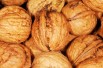
It produces large walnuts, elongated and very regular, housing a very clear and tasty kernel. Harvesting generally takes place in late September or early October, when the husk (the green envelope) splits naturally.
Although not melliferous, the walnut tree is an essential pantry for squirrels, dormice, and certain birds like jays. It also offers a secure nesting habitat thanks to the density of its branches.
To fruit generously, 'Fernor' imperatively requires a full sun exposure. Abundant light guarantees the health of the foliage and an optimal concentration of oils in the kernels.
It is crucial to loosen the soil to a great depth, as the walnut develops a powerful taproot. Adding well-rotted compost or manure at the bottom of the planting hole will boost recovery. Be sure to remove any large stones that could hinder the descent of the main root.
For optimal development without light competition, plan for a spacing of at least 10 to 12 meters between two trees. This space guarantees sufficient air circulation to limit the risk of fungal diseases.
'Fernor' walnuts appreciate deep, rich, and well-drained soils, with a preference for neutral to slightly alkaline lands. It fears above all suffocating soils where water stagnates in winter, as well as too shallow lands.
Dig a wide hole and install the plant, taking care not to bury the tree's collar. Stake firmly to protect the stem from prevailing winds during the first years. Finish with organic mulch to retain moisture and limit the growth of competing weeds.
Copious watering, about 20 to 30 liters, is indispensable immediately after planting to expel air pockets. During the first two summers, maintain constant monitoring and water every week in the absence of rain.
Once adult, its deep root system makes it very drought-resistant. However, occasional watering in July and August will favor the filling of the walnuts and prevent the kernels from drying out.
Pruning should remain minimalist and preferably take place in late summer or early autumn to avoid sap "bleeding." Simply remove dead wood, branches that cross inside the crown, and suckers at the base of the trunk. Light formative pruning during the first 5 years is enough to establish a solid and airy structure.
This cultivar is multiplied exclusively by grafting (budding or cleft grafting) on a vigorous rootstock like the common Juglans regia. Sowing walnuts would not preserve the unique properties of the 'Fernor' variety.
Plant it as a specimen in the center of a lawn or at the back of the property to create a majestic focal point. It can also be integrated into a diversified family orchard, provided planting distances are respected.
It pairs well with woodland edge shrubs such as Hazel, Elderberry, or Dogwood, planted away from its future shade. At the base, prefer plants that tolerate juglone, such as Hostas or Spring Bulbs.
Historically, the walnut is the farm tree par excellence, providing oil, firewood, and cabinet-making wood. Its leaves were once used in infusions for their tonic and astringent properties.
'Fernor' has good natural resistance but can be targeted by the codling moth (walnut worm) or anthracnose in very wet weather. It is also sensitive to bacterial blight if the soil is too heavy.
Promote the presence of natural predators by installing nesting boxes for chickadees or bat shelters to regulate insect populations. In case of a fungal attack, a preventive treatment with Bordeaux mixture at leaf fall and budding is an effective solution.
To maximize your walnut production, ensure the presence of cross-pollination nearby; although partially self-fertile, the yield is much better with a partner. An annual application of organic matter at the base of the tree in spring will support its vigor and the taste quality of the fruit.
The 'Fernor' cultivar is radically distinguished by its ability to fruit laterally, thus offering a yield per cubic meter of canopy far superior to old varieties. Its unique ability to combine very late flowering and an early harvest makes it indispensable in mountain areas or zones at climatic risk. It is one of the few modern walnuts to offer a perfect balance between ease of maintenance, tree health, and gastronomic flavor.
The Fernor English Walnut is the ideal choice for obtaining flavorful large walnuts while avoiding the risks of spring frost. This majestic fruit tree combines rapid fruiting with high natural resistance to common diseases. Growing a Juglans regia 'Fernor' ensures an abundant and sustainable harvest while bringing an elegant structure to your garden.
Shipping & delivery
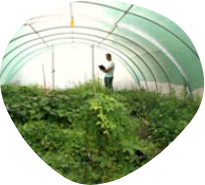 As soon as you place your order your plants are selected
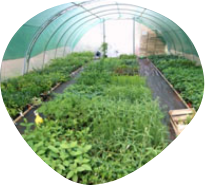 Each order is processed individually.
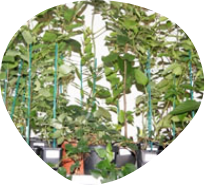 Plants are packed, staked and labeled.
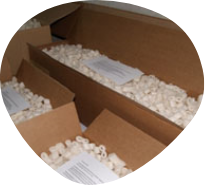 Packaging is carefully implemented to avoid any problems.
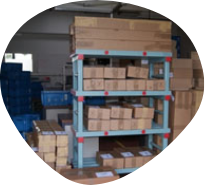 Packages are ready to be shipped.
Expédition de nos plantes dans toute l'Europe (sauf en outre mer et les îles).
Avis clients




The Fernor English Walnut, an exceptional, partially self-fertile variety developed through French research, is renowned for its abundant lateral fruiting of large walnuts and its late bud break. A majestic tree offering incomparably fine walnuts for your garden.
Your cart is empty
Continue shopping