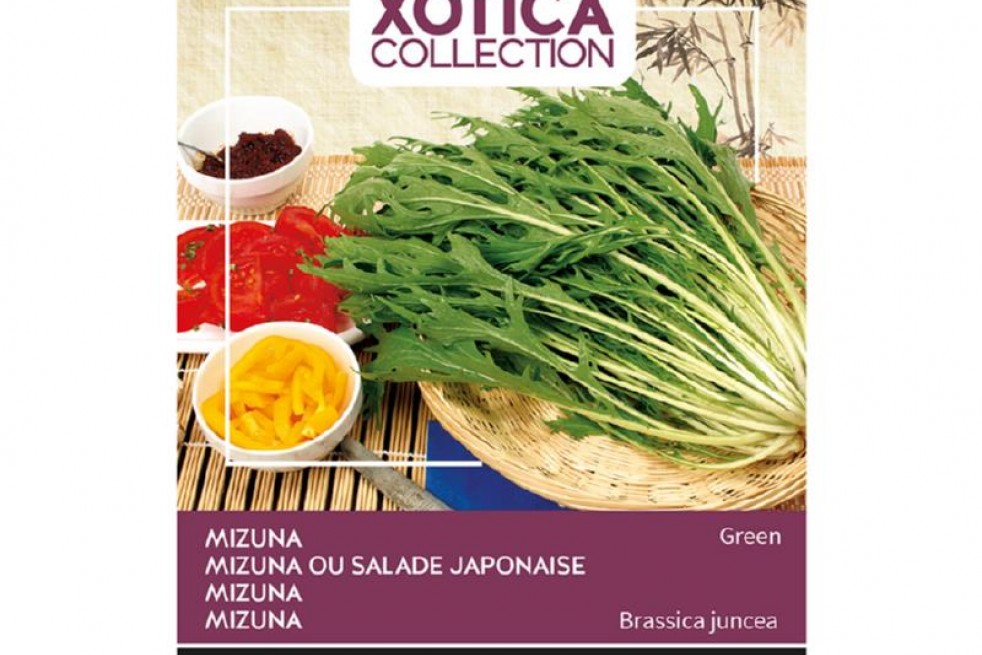

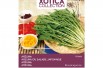
Mizuna - Japanese salad
Brassica rapa subsp. nipposinica
Mizuna – Japanese salad: finely cut leaves, mild peppery flavor, fast growth and repeated harvests. Ideal for salads, stir‑fries and urban gardens. Easy to grow all year long.
Description
Mizuna – Japanese Salad — Brassica rapa subsp. nipposinica
Introductory summary
Mizuna, often referred to as “Japanese mustard greens”, is a highly versatile leafy vegetable valued for its fast growth, cold tolerance and delicate peppery taste. It forms elegant rosettes of deeply cut green leaves that bring both visual appeal and refined flavor to salads and cooked dishes. Mizuna can be harvested as baby leaf or as a mature plant, making it suitable for salads, stir‑fries, soups, noodle dishes and Asian‑inspired cuisine. It is remarkably easy to grow, even for beginners, as it tolerates a wide range of conditions and bolts less readily than many other Brassica crops. Mizuna thrives in open ground, raised beds and containers, making it ideal for urban gardening and intensive production. Its rapid growth allows multiple harvests from the same plant, maximizing yield in small spaces. Nutritionally, Mizuna is rich in vitamins A, C and K, as well as natural antioxidants, making it a healthy addition to everyday meals. Its combination of productivity, flavor and adaptability makes it a must‑have leafy green for gardeners and cooks alike.
Origins and botanical family
Geographic origin
Mizuna originates from Japan, where it has been cultivated for centuries in temperate regions. It is traditionally used in winter dishes and soups.
Botanical family
It belongs to the Brassicaceae family, which includes cabbages, mustards and turnips. This botanical link explains its mild pungency and vigorous growth.
Historical and cultural notes
Mizuna has long been part of Japanese culinary heritage and is now widely grown worldwide. Its resilience and flavor have contributed to its growing popularity.
Botanical description and characteristics
Height and habit
Mizuna typically reaches 20–40 cm in height depending on harvest stage and growing conditions. Its rapid growth makes it suitable for repeated cuttings.
Foliage
The leaves are deeply serrated, slender and bright green, with a tender yet slightly crisp texture. Their feathery appearance adds elegance to salads.
Other morphological traits
When allowed to flower, Mizuna produces small yellow blossoms typical of Brassica species. Its stems are thin but strong, supporting multiple harvest cycles.
Sowing and growing conditions
Ideal sowing period
Sow from March to October outdoors, and year‑round under cover. Autumn sowings are particularly productive due to Mizuna’s cold tolerance.
Germination temperature
Optimal germination occurs between 10–22 °C, allowing a long sowing window. Seeds germinate reliably even in cooler conditions.
Time to emergence
Seedlings emerge within 4–10 days depending on temperature and moisture. Fast emergence ensures quick establishment.
Sowing depth and spacing
Sow at 0.5–1 cm depth, with rows spaced 20–30 cm apart. Dense sowing is ideal for baby leaf, while wider spacing produces larger leaves.
Soil type
Mizuna prefers light, humus‑rich, well‑drained soil but tolerates heavier soils with proper watering. Slightly moist soil promotes steady growth.
Exposure
It thrives in full sun but tolerates partial shade, especially in summer to prevent bolting. This makes it suitable for various garden settings.
Thinning
Thin lightly if plants are overcrowded to improve airflow. Thinnings can be eaten as tender baby leaves.
Water needs
Water regularly to maintain even moisture, especially in warm weather. Consistent watering keeps leaves tender and prevents bitterness.
Maintenance and monitoring
Pruning or pinching
No pruning is required, but regular harvesting encourages regrowth. Frequent cutting prolongs productivity.
Staking
No staking is needed due to its compact growth habit. Even in windy areas, Mizuna remains stable.
Disease and pest prevention
Rotate Brassica crops to avoid soil‑borne diseases. Use insect mesh to protect against flea beetles and aphids.
Harvest
Harvest time
Harvest 25–40 days after sowing depending on desired leaf size. Baby leaf can be harvested as early as 20 days.
Recognizing maturity
Leaves are ready when they are bright green, tender and well serrated. Overgrown leaves become tougher and more pungent.
Yield
Multiple cuts per plant are possible, significantly increasing yield. A well‑managed bed can produce several hundred grams per square meter per cut.
Storage
Store leaves in a perforated bag in the refrigerator for 3–5 days. Wash just before use to maintain freshness.
Garden uses
Placement
Mizuna fits well in borders, raised beds and container gardens. Its fast growth makes it ideal for filling gaps between longer crops.
Companion planting
Pairs well with radish, carrot, onion and herbs. These combinations help reduce pest pressure and make efficient use of space, as root vegetables and leafy greens do not compete directly. Mizuna also benefits from being planted near aromatic herbs, which can deter flea beetles and aphids naturally.
Culinary uses
Flavor
Mizuna has a mild, slightly peppery flavor reminiscent of arugula but softer and more delicate. This makes it suitable for people who enjoy aromatic greens without excessive pungency.
Cooking methods
Use raw in salads, mesclun mixes or as a garnish; add lightly to stir‑fries, soups or noodle dishes at the end of cooking to preserve texture. Mizuna maintains its shape and color well when briefly heated, making it ideal for Asian cuisine.
Tip or typical recipe
Combine Mizuna with toasted sesame seeds, sesame oil and soy sauce for an authentic Japanese salad. Add thinly sliced radishes or cucumbers for extra crunch and freshness.
Ecology, curiosities and strengths
Ecological interest
Mizuna contributes to biodiversity by providing quick ground cover, reducing weed pressure and offering habitat for beneficial insects. When allowed to flower, it attracts pollinators and supports ecological balance in the garden.
Curiosities
It is one of the few Brassica species traditionally eaten raw in Japan. Its exceptional cold tolerance makes it a prime candidate for autumn and winter harvests.
Permaculture, balcony or greenhouse
Mizuna adapts extremely well to container gardening and permaculture systems. In cold frames or unheated greenhouses, it can be harvested nearly year‑round.
Final note
Mizuna is a versatile, fast‑growing and flavorful leafy green that enhances any garden. It combines ease of cultivation with high productivity and a unique taste profile.
Features
- Common name : Mizuna - Japanese salad
- Category : vegetable
- Time to sow seeds : mid-April to the end of August
- Harvest : after 25 to 40 days
Specific References
- EAN13
- 8711117804345
Expédition & livraison
How does the delivery work?
 As soon as you place your order your plants are selected
 Each order is processed individually.
 Plants are packed, staked and labeled.
 Packaging is carefully implemented to avoid any problems.
 Packages are ready to be shipped.
Our delivery methods
Shipping of our plants throughout Europe (except overseas and islands).





Customer reviews
Nobody has posted a review yet
in this language