- In cultivation




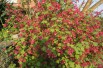
The Flowering currant ‘Pulborough Scarlet’ is an ornamental shrub with striking scarlet-red spring flowers, ideal for shrub borders, flowering hedges and gardens seeking colour and vitality from late winter onwards.
Description
The Flowering currant ‘Pulborough Scarlet’ is a spring-flowering ornamental shrub valued for its abundant, vivid scarlet-red flower clusters. Blooming early in the season, often before the foliage is fully developed, it brings colour and life to the garden at a time when few shrubs are in flower.
This cultivar also offers a naturally balanced, airy habit and reliable growth. Thanks to its excellent hardiness, moderate maintenance requirements and adaptability, it suits a wide range of garden styles. It performs particularly well in flowering hedges, mixed shrub borders, woodland edges or as a standalone specimen.
Ribes sanguineum originates from western North America, where it grows in open landscapes and light woodland areas.
Grossulariaceae
The cultivar ‘Pulborough Scarlet’ is distinguished by its exceptionally intense red flowering, deeper and more striking than many other selections.
Approximately 2 to 2.5 m.
Approximately 1.5 to 2 m.
Bushy and slightly spreading, with gracefully arching branches.
Young branches are light brown to greyish, contributing to the shrub’s structure.
Deciduous, with lobed green leaves appearing shortly after flowering.
Moderate to fairly fast.
Very hardy, down to –25 °C.
April – May.
Flowers are borne in long, pendulous clusters, displaying a rich scarlet-red colour that stands out clearly in the landscape.
Small dark berries may follow, mainly of interest to birds.
Highly attractive to early pollinators, including bees and bumblebees.
Full sun to partial shade.
Well-drained, fertile soil that remains moderately moist.
Loosen the soil deeply and enrich with organic matter.
Allow 1.5 to 2 m between plants.
Neutral to slightly acidic, fresh, well-drained.
Set the root ball level with the soil surface, backfill carefully and water thoroughly.
Regular watering during establishment.
Moderate, avoiding prolonged drought.
Prune after flowering, removing spent flowering shoots and lightly thinning the shrub.
Propagation by semi-hardwood or hardwood cuttings.
Flowering hedges, shrub borders, woodland gardens or as a specimen shrub.
Pairs well with Forsythia, Viburnum, Magnolia and Amelanchier.
Primarily used as an ornamental flowering shrub.
Generally healthy, occasionally susceptible to powdery mildew.
Ensure good air circulation and balanced soil conditions.
Maintain fresh soil, prune annually after flowering and avoid excessive dryness.
‘Pulborough Scarlet’ is valued for its deep red, generous flowering and elegant growth habit.
Shipping & delivery
 As soon as you place your order your plants are selected
 Each order is processed individually.
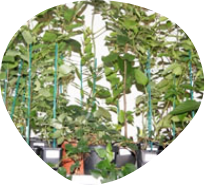 Plants are packed, staked and labeled.
 Packaging is carefully implemented to avoid any problems.
 Packages are ready to be shipped.
Expédition de nos plantes dans toute l'Europe (sauf en outre mer et les îles).
Avis clients


The Flowering currant ‘Pulborough Scarlet’ is an ornamental shrub with striking scarlet-red spring flowers, ideal for shrub borders, flowering hedges and gardens seeking colour and vitality from late winter onwards.
Your cart is empty
Continue shopping