- New




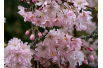
Prunus subhirtella 'Autumnalis Rosea' is an exceptional ornamental tree, celebrated for its unique winter-flowering habit. Unlike the majority of Japanese cherries that bloom in spring, this cultivar brightens the darkest months of the year by producing successive waves of delicate pink blossoms from autumn onwards.
Description
The primary interest of the Pink Winter cherry 'Autumnalis Rosea' lies in its completely inverted and extended flowering calendar. It brings an unprecedented touch of color during the cold season when the rest of the garden is dormant. Its semi-double, soft pink flowers open in successive waves during mild winter weather, providing a renewed display for nearly five months.
This cultivar is derived from the species Prunus subhirtella, native to Japan. The 'Autumnalis Rosea' selection was specifically stabilized for its winter-blooming habit and its richer pink coloration compared to the white form.
It belongs to the Rosaceae family and the genus Prunus. Its biology is characterized by a low requirement for chilling hours to break the dormancy of its flower buds, allowing it to bloom from the first autumn chills in November.
This variety is grafted onto a Colt rootstock. This support provides the tree with a robust root system and good tolerance to varied soils, while regulating its vigor to maintain sizes suitable for medium gardens.
At maturity, its height stabilizes around 5 meters. This moderate development allows it to be easily integrated into various garden layouts without risking excessive shading.
The spread of its canopy reaches approximately 4 meters at maturity. The tree develops a wide, airy crown, offering a balanced and elegant volume over the years.
Its habit is spreading, vase-shaped, and slightly weeping at the branch tips. The main branches rise in a flared manner before the fine secondary twigs cascade softly, creating a very graphic winter silhouette.
The bark is a smooth, shiny grey-brown, typical of decorative cherry trees. It features thin, horizontal copper-colored lenticels and tends to peel slightly on older specimens, increasing winter visual interest.
Its deciduous leaves are alternate, ovate, with finely serrate margins. Mid-green in summer, they turn into beautiful autumn shades of yellow, orange, and bronze just before falling, coinciding with the emergence of the first flower buds.
The growth rate is moderate. The tree establishes its structure during the first few years, then develops a network of fine twigs that lengthen regularly each growing season.
This ornamental cherry shows excellent hardiness, being hardy down to -24 °C. Although open flowers may be damaged during severe frosts below -5 °C, the closed buds remain protected and open as soon as the weather turns milder.
The flowering period extends from November until February-March. It occurs intermittently: the tree blooms richly in late autumn, pauses during hard frosts, and resumes its cycle as soon as the weather softens.
The flowers are semi-double, measuring about 2 cm in diameter, featuring a delicate soft pink color that is deeper pink in bud. They are arranged in light clusters along the bare branches, creating a vaporeux effect.
Fruiting is extremely rare and sporadic in our climate. It occasionally takes the form of tiny, dark, inedible drupes that are of no culinary interest but are written into the winter diet of local birds.
By blooming during mild winter intervals, this tree provides a rare and valuable nectar source for early or overwintering insect pollinators, such as bumblebees and solitary bees.
It requires a position in full sun or light partial shade. A sunny spot is highly recommended, as summer heat helps and maximizes the formation of the upcoming winter flower buds.
The ground must be loosened deeply over a wide perimeter. Incorporating a well-decomposed organic amendment helps lighten heavy soils or enrich sandy grounds, ensuring good permeability.
It is advisable to allow a minimum distance of 4 meters from other trees or buildings. This precaution allows its wide canopy to develop harmoniously without physical restriction.
It prefers deep, moist, fertile, and well-drained soils. It tolerates neutral to slightly calcareous ground but dislikes extremes: purely dry sandy soils and heavy, suffocating clay.
Dig a spacious pit, install a sturdy stake to protect the trunk from winter winds, and position the root ball. Ensure the graft union remains above the soil surface, backfill, firm gently, and complete with a generous watering.
Regular watering during the first spring and summer after planting is essential. The root system needs to establish deeply to guarantee the future resilience of the tree.
Once adult, its water needs are moderate. It handles normal summers well, but supplemental watering during prolonged summer droughts prevents stress that could harm the quality of the subsequent autumn bloom.
Pruning is not structurally necessary and should be kept minimal to preserve its graceful shape. If corrections are needed, intervene at the end of flowering, around April. Simply remove dead wood or crossing branches in the center of the canopy.
Faithful reproduction of this cultivar is achieved solely by grafting (budding in summer or cleft grafting in spring) onto a selected rootstock, guaranteeing the unique winter-flowering traits.
Ideal as a specimen plant highly visible from house windows or along a winter path, allowing full enjoyment of the out-of-season bloom. It also pairs excellently in borders with evergreen plants or shrubs with decorative bark.
While generally robust, it can occasionally be susceptible to blossom wilt (monilia) or aphids in spring. An open, well-ventilated position and clearing fallen leaves in autumn generally limit these risks.
An organic mulch applied under the tree in spring helps maintain soil moisture. Avoid fertilizers rich in nitrogen, as they stimulate leaf growth at the expense of winter flower bud induction.
Shipping & delivery
 As soon as you place your order your plants are selected
 Each order is processed individually.
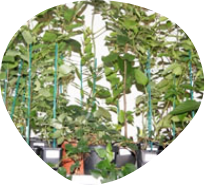 Plants are packed, staked and labeled.
 Packaging is carefully implemented to avoid any problems.
 Packages are ready to be shipped.
We ship our plants throughout Europe (excluding overseas territories and islands).
Avis clients


Prunus subhirtella 'Autumnalis Rosea' is an exceptional ornamental tree, celebrated for its unique winter-flowering habit. Unlike the majority of Japanese cherries that bloom in spring, this cultivar brightens the darkest months of the year by producing successive waves of delicate pink blossoms from autumn onwards.
Your cart is empty
Continue shopping