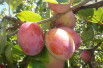
- In cultivation



Victoria: classic plum tree with rosy fruit and sweet golden flesh. Blooms in March, self-fertile but benefits from cross-pollination. Low-stem form.
Description
The Victoria plum tree is one of the most widely planted varieties in gardens due to its reliable crops of rosy-red plums with sweet, juicy yellow flesh. Grafted as a low-stem tree, it blooms early in March and is self-fertile, yet it performs even better with cross-pollination. A perfect choice for both fresh eating and cooking.
Geographical origin: England, Suffolk, introduced around 1840
Botanical family: Rosaceae
Notable features: A British classic named after Queen Victoria
Mature height: 2.5 to 3.5 meters (low-stem)
Mature spread: 2 to 3 meters
Habit: Rounded and compact
Bark: Grey-brown
Foliage: Deciduous, bright green
Growth: Moderate
Hardiness: Down to -20 °C
Flowering time: March (early bloom)
Flowers: Single white blossoms, nectar-rich
Fruits: Medium to large red-pink plums with golden flesh, sweet, melting and juicy. Harvest late August to early September
Wildlife interest: Early nectar source for bees
Ideal light: Full sun
Soil type: Deep, rich, well-drained
Soil preparation tips: Mix in compost or aged manure
Spacing: 3 to 4 meters
Soil nature: Neutral to slightly alkaline
At planting: Regular in the first year
At maturity: Low to moderate needs
When and how to prune: Lightly after harvest, maintain open crown
Method: Grafted onto Saint-Julien or Myrobalan (low-stem)
Best placement: Edible hedges, family orchards, kitchen garden
Companion planting: Apple tree, pear tree, rosemary, bee-friendly herbs
Cultural usage: Excellent for fresh eating, jams, and baking
Vulnerabilities: Can be sensitive to brown rot and aphids
Natural prevention: Good airflow, horsetail decoction, mulching
Practical advice: Full sun, early harvest, remove overripe fruit promptly
Though self-fertile, ‘Victoria’ produces even better yields when cross-pollinated with:
Pollinators: ‘Opal’, ‘Reine Claude d’Oullins’, ‘Czar’, ‘Anna Späth’
Shipping & delivery
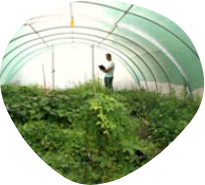 As soon as you place your order your plants are selected
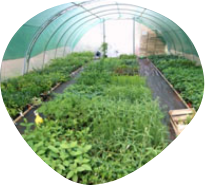 Each order is processed individually.
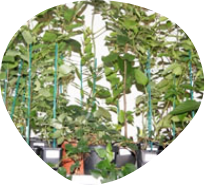 Plants are packed, staked and labeled.
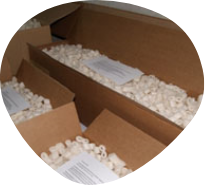 Packaging is carefully implemented to avoid any problems.
 Packages are ready to be shipped.
We ship our plants throughout Europe (excluding overseas territories and islands).
Avis clients


Victoria: classic plum tree with rosy fruit and sweet golden flesh. Blooms in March, self-fertile but benefits from cross-pollination. Low-stem form.
Your cart is empty
Continue shopping