- New
- Pickup at nursery



Fernette English Walnut is an exceptional pollinator, essential for ensuring a successful walnut harvest. Thanks to its late bud break, this robust tree produces superior quality nuts while resisting frost.
Description
The Fernette English Walnut holds a strategic and prestigious position in modern orchards, distinguishing itself primarily as one of the best pollination partners for lateral-bearing varieties. This exceptional fruit tree, a result of French agronomic research, combines the aromatic finesse of ancestral varieties with remarkable vigor and resistance. Its major specificity lies in its very late budding, making it a precious ally for regions prone to unpredictable spring frosts that often destroy the harvests of earlier varieties. Although often planted to ensure the productivity of its neighbors, 'Fernette' itself produces high-quality walnuts, fleshy and with a sweet flavor devoid of bitterness, particularly appreciated by gourmets. Its majestic structure and balanced habit also make it an excellent specimen for large gardens, providing refreshing shade and an imposing presence throughout the year. By choosing this cultivar, the gardener ensures a generous harvest of dry fruits rich in nutritional benefits, while promoting a healthy and productive ecosystem. Its robustness against common walnut diseases, such as bacterial blight, and its adaptation to deep soils guarantee exemplary longevity. It is a tree that combines technical utility with culinary delight, transforming each planting space into a true conservatory of flavors and biodiversity. Investing in a Juglans regia 'Fernette' is choosing climatic security and gustatory excellence for decades to come.
The 'Fernette' cultivar is a French creation from INRA Bordeaux, obtained at the end of the 20th century. It results from a meticulous cross between the renowned varieties 'Franquette' and 'Lara', from which it inherited the best agronomic properties.
This plant belongs to the Juglandaceae family, which groups major woody species appreciated for their nuts and timber.
Its creation met the need for a high-performance pollinator for new high-yielding walnut varieties. Unlike many others, 'Fernette' has male and female flowering very well synchronized with modern cultivars. It is now considered a European standard for securing production in professional and family orchards.
At maturity, this walnut can reach a majestic height of between 12 and 15 meters. Its growth is vigorous during the first years, allowing it to establish itself quickly in its environment.
It develops an imposing branch system that can spread over 8 to 10 meters in diameter. It is therefore essential to provide a vast space so that it can express its full potential without constraint.
The tree has a semi-upright to spreading habit, creating a rounded and well-structured crown. This harmonious silhouette makes it an exceptional shade tree.
The bark is initially smooth and silvery light grey, beautifully catching the winter light. With age, it cracks vertically, revealing a rough and protective texture that testifies to the tree's strength.
The foliage is deciduous, composed of large pinnate leaves of a deep, matte green. In autumn, the leaves turn yellow-orange before falling, enriching the soil with their aromatic decomposition.
The growth rate is sustained, especially if the tree benefits from rich soil and good initial rooting. It reaches its structural size fairly quickly, allowing one to enjoy its landscape benefits without waiting too long.
It shows excellent hardiness, easily withstanding harsh winters down to -20°C. Its late cycle makes it particularly suitable for mountain areas or continental climates.
Flowering takes place in May, thus avoiding the last frosts of spring. This characteristic guarantees a regularity of production, year after year, even in case of a capricious spring.
The tree bears male flowers in pendant catkins and female flowers grouped in small discreet clusters at the end of the shoots. Pollen release is abundant, maximizing the chances of fertilization for the entire orchard.
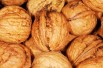
'Fernette' produces large-sized walnuts, with a thin shell and a rather globular shape. The kernel is clear, easy to extract, and offers a sweet flavor with a slight hazelnut aroma, ideal for fresh or dried consumption.
Although pollen is dispersed by the wind, the tree is a sanctuary for many garden helpers. The nuts are a vital energy resource for squirrels and forest birds that become active in late summer.
For quality fruiting, it requires a full sun exposure. Good light also ensures natural drying of the foliage, limiting the development of fungi.
The soil must be worked deeply to accommodate the walnut's imposing taproot. Incorporating quality planting soil and an organic amendment will stimulate vigorous regrowth. Avoid areas where the bedrock is too close to the surface.
Maintain a minimum distance of 10 meters from other trees or buildings. This spacing is crucial to avoid root competition and ensure good ventilation of the canopy.
It prefers deep, fertile, and well-drained soils, with a marked tolerance for slightly alkaline lands. It poorly tolerates compact, clayey, and waterlogged soils that cause root asphyxiation.
Dig a wide hole and install the tree, ensuring that the graft point stays well above ground level. Since this is not a low-stem form, robust staking is indispensable to keep the trunk straight against the wind. Finish with copious watering to pack the soil around the roots.
During the first year, regular watering is vital, especially during summer drought episodes. Count on about 30 liters of water per week to ensure deep establishment of the root system.
Once established, the walnut is capable of drawing water very deep from the ground. However, to guarantee a good walnut size, extra water can be beneficial during particularly dry summers.
Pruning should be done sparingly in late summer or early autumn to minimize sap loss. Primarily remove dead wood and poorly oriented branches to air the center of the tree. Formative pruning is useful in the first years, but the tree naturally takes a beautiful shape without major intervention.
'Fernette' is exclusively multiplied by grafting onto a robust rootstock. This is the only method that guarantees the faithful transmission of the characteristics of this elite cultivar.
It finds its place as a specimen in a large garden or as a pollinator interspersed in a walnut orchard. Its sculptural appearance makes it a centerpiece of the landscape.
It pairs well with tolerant underplanting such as ferns or hostas. One can also plant hedges of hazels or small fruits nearby, provided the planting distance is respected.
Besides the production of table walnuts, this cultivar is sought after for the quality of its kernels in baking. Its wood, although slow to produce, has the fineness and density typical of high-value walnut trees.
Although selected for vigor, it can be sensitive to the codling moth or anthracnose during very rainy springs. Its resistance to bacterial blight is however superior to that of many old cultivars.
The installation of pheromone traps helps limit codling moth damage ecologically. Picking up and burning diseased leaves in autumn is a simple practice to reduce parasite pressure the following year.
For an optimal harvest, ensure cross-pollination by planting varieties such as 'Fernor', 'Lara', 'Franquette', 'Meylannaise', or 'Ronde de Montignac' nearby. An annual application of compost in spring will support the general health and longevity of the tree.
'Fernette' is distinguished by its dual function as a quality producer and universal pollinator. Its parentage with 'Lara' gives it a large fruit size, while its parentage with 'Franquette' brings its cold resistance and delicate taste. It is one of the few walnuts capable of effectively pollinating a wide range of modern varieties while offering a harvest worthy of a main cultivar.
The Fernette English Walnut is an essential fruit tree for effective cross-pollination and securing your walnut harvests. Thanks to its late budding, it perfectly resists spring frosts and produces flavorful large-sized walnuts. This hardy and vigorous cultivar is the perfect ally for a productive orchard and a majestic garden.
Shipping & delivery
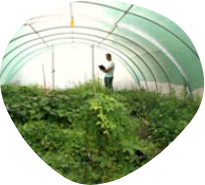 As soon as you place your order your plants are selected
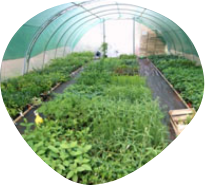 Each order is processed individually.
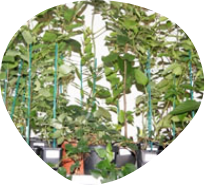 Plants are packed, staked and labeled.
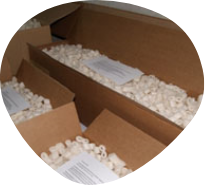 Packaging is carefully implemented to avoid any problems.
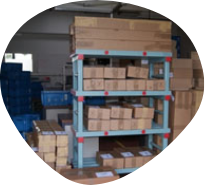 Packages are ready to be shipped.
Expédition de nos plantes dans toute l'Europe (sauf en outre mer et les îles).
Avis clients


Fernette English Walnut is an exceptional pollinator, essential for ensuring a successful walnut harvest. Thanks to its late bud break, this robust tree produces superior quality nuts while resisting frost.