- New




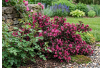
Purple Weigelia Minor Black®: dwarf shrub with very dark purple foliage and abundant rose‑purple flowers, compact, reblooming and nectar‑rich, perfect for borders, beds or pots in small gardens. Elegant and easy to grow.
Description
The Weigelia Minor Black® is a dwarf shrub prized for its intensely dark purple foliage and abundant rose‑purple flowers that create a striking contrast. Its compact, rounded habit makes it ideal for borders, low beds and container culture, providing a decorative accent without occupying much space. The shrub is highly floriferous in spring and often produces a second flush later in the season, attracting bees and butterflies while remaining low maintenance.
This cultivar is a horticultural selection derived from Weigela florida, a species native to East Asia and long cultivated for ornamental use. It belongs to the Caprifoliaceae family, which includes many shrubs valued for their showy flowers and ecological interest. Minor Black® was selected for its compact habit, deep leaf coloration and prolific flowering in clusters.
The shrub remains very compact and rarely exceeds 70 cm under normal garden conditions, making it suitable for small spaces and containers. It quickly forms a dense cushion that requires minimal structural pruning. Its modest height facilitates placement in the front of borders or as a focal container plant.
Width often slightly exceeds height, producing a balanced, rounded form that fills space without overwhelming it. In containers, width stabilizes according to pot size and pruning frequency. This height/width ratio makes it an excellent low shrub for structured plantings.
The compact, bushy habit simplifies design and reduces maintenance needs. Bark remains understated, allowing foliage and flowers to dominate the visual appeal. Arching branches contribute to the soft, rounded silhouette.
Dark foliage highlights the flowers and provides strong contrast with lighter perennials or ornamental grasses. Leaf color intensity can vary with light exposure, offering seasonal nuance. In autumn, leaves may take on browner tones before falling.
The cultivar establishes within a few seasons and tolerates temperate winters, though young plants may need protection in the coldest areas. In sheltered, well‑drained sites, it maintains good vigor without becoming invasive. Moderate growth suits container culture and small gardens.
Main flowering occurs in spring with dense clusters of bell‑shaped flowers. A secondary bloom on new shoots can extend ornamental interest into late summer. Flowers are particularly visible against the dark foliage.
Flowers are attractive to pollinators and provide nectar for bees and butterflies. Their vivid color contrasts strongly with the dark leaves, enhancing the shrub’s visual impact. Corollas persist for several weeks, contributing to seasonal display.
The abundant flowers are an important nectar source for beneficial insects. The bushy structure also offers shelter for small insects and occasionally birds.
Full sun intensifies the purple foliage and maximizes flowering, while light shade can moderate leaf color in very hot climates. Avoid deep shade which reduces flowering and lightens leaf tone. A sheltered position protects shoots and flowers from cold winds.
Organic matter supports root establishment and balanced vigor without excessive growth. Avoid compacted or waterlogged soils that harm roots and increase disease risk. Mulching conserves moisture and protects roots through seasonal extremes.
For continuous hedging, space around 50 cm; for isolated specimens or airy plantings, allow 70–80 cm. In containers, a 20–30 cm pot diameter supports initial development. Proper spacing ensures good air circulation and reduces disease pressure.
The cultivar adapts to a range of textures but performs best in fertile, aerated soils. Heavy soils should be improved with organic matter and coarse sand to enhance drainage. Regular organic feeding benefits long‑term health.
Do not bury the crown to prevent rot and stress. A generous initial watering promotes establishment, followed by moderate moisture maintenance the first year. Mulch reduces weed competition and stabilizes soil temperature.
Consistent moisture supports development of a robust root system. Avoid frequent shallow watering that encourages superficial roots. Mulch reduces watering frequency by limiting evaporation.
Established shrubs withstand occasional drought but benefit from supplemental summer watering to sustain flowering. Prolonged waterlogging should be avoided to prevent root diseases. Adjust irrigation to soil type and local climate.
Cutting back flowering shoots by one‑third to one‑half stimulates new flowering wood for the following season. Avoid heavy pruning that delays bloom and weakens the shrub. Annual light pruning maintains compactness and abundant flowering.
Remove dead or poorly placed branches and thin the center if necessary to improve air flow. After severe pruning, monitor vigorous regrowth and thin to maintain balance. Regular light pruning keeps a neat silhouette and promotes floriferousness.
Semi‑ripe cuttings taken in summer root well when kept moist and shaded. Layering produces robust plants without grafting. Seed propagation does not guarantee cultivar fidelity.
Its compact size makes it an excellent foreground plant or a striking container specimen. In the ground it structures space and provides seasonal color. It is well suited to urban gardens where space is limited.
Light foliage and delicate perennials highlight the purple foliage of the Weigelia. Grasses add movement against the cascading habit while groundcovers reduce evaporation at the base. Avoid thirsty companions if the site tends to be dry.
The Weigela genus has long been cultivated for ornamental purposes and abundant spring flowering. Cultivars with colored foliage, such as Minor Black®, are modern selections aimed at landscape aesthetics rather than utilitarian uses. Their primary role remains decorative, enhancing garden composition.
The shrub is generally resilient when grown in sunny, well‑drained sites. Stress from drought or improper pruning increases susceptibility to pests and pathogens. Regular inspection enables early detection and targeted action.
Sanitary pruning and removal of affected wood limit disease spread. Favor biological control and targeted organic treatments rather than broad chemical use. Promoting biodiversity in the garden supports natural pest regulation.
Provide sunny exposure, fertile well‑drained soil and regular watering during establishment for vigorous growth. Perform light annual pruning after flowering to maintain the weeping cushion and prevent overcrowding. Use mulch and compatible plantings to protect roots and improve soil structure.
Minor Black® is characterized by a very dark purple foliage and markedly reduced size compared with typical Weigela florida forms, offering a strong decorative presence. Its rose‑purple flowers on a dark foliar background create a high‑contrast effect prized in contemporary plantings. The selection emphasizes compactness, leaf color intensity and abundant flowering despite the small stature.
The Purple Weigelia Minor Black® (Weigela florida Minor Black®) is a dwarf shrub with deep purple foliage and abundant rose‑purple flowers, ideal for borders, beds and containers. Its compact habit and reblooming tendency make it decorative and easy to maintain in small gardens and terraces. Hardy and melliferous, it provides color contrast, ecological value and structural interest.
Shipping & delivery
 As soon as you place your order your plants are selected
 Each order is processed individually.
 Plants are packed, staked and labeled.
 Packaging is carefully implemented to avoid any problems.
 Packages are ready to be shipped.
We ship our plants throughout Europe (excluding overseas territories and islands).
Avis clients


Purple Weigelia Minor Black®: dwarf shrub with very dark purple foliage and abundant rose‑purple flowers, compact, reblooming and nectar‑rich, perfect for borders, beds or pots in small gardens. Elegant and easy to grow.
Your cart is empty
Continue shopping