- New




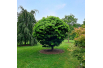
The 'Isabel' Oak, the majesty of the Swamp Spanish Oak in a dwarf version (2,75 m): brilliant autumn foliage and compact habit for your small garden.
Description
The Dwarf Swamp Spanish Oak 'Isabel' is a true feat of nature, offering all the splendor and quiet strength of the traditional oak in a condensed format, ideal for contemporary gardens. This unique cultivar, resulting from a natural mutation called a "witch's broom," is distinguished by its exceptionally dense silhouette and naturally compact and globose habit. Unlike the standard species which can reach dizzying heights, 'Isabel' maintains modest proportions, making it a preferred choice for small urban gardens or sophisticated entryways. Its great strength lies in its flamboyant autumn foliage, turning from a lustrous green to shades of scarlet red and bronze that literally illuminate the landscape at the first sign of cold weather. It is a tree that brings a lasting architectural structure without ever becoming invasive, while retaining the nobility and longevity characteristic of the Quercus genus. Its exceptional hardiness and ability to adapt to varied soils, provided they are not too calcareous, make it a precious ally for gardeners looking for originality and reliability. Adopting an 'Isabel' means inviting an icon of the North American forest into a miniature setting, guaranteeing a renewed visual spectacle each season.
The original Swamp Spanish Oak is native to Eastern North America, stretching from Canada to the central United States. The 'Isabel' cultivar is a more recent horticultural selection, discovered by botanical enthusiasts who were able to isolate and propagate this dwarf form. Its robustness inherited from its wild ancestors allows it to withstand harsh climatic conditions, typical of continental zones.
It belongs to the prestigious Fagaceae family, just like the beech and the chestnut. The Quercus genus includes species that have shaped human history through the quality of their wood and their majestic silhouettes. This dwarf variety retains all the botanical characteristics of its peers but expresses its vigor in a more contained and dense manner.
The uniqueness of this variety lies in its discovery as a "witch's broom," an abnormal growth on a branch of the parent tree. Nurserymen then stabilized this mutation through grafting to create a dwarf and highly branched subject. It is a plant that proves the greatness of a tree is measured not only by its size but also by its ability to transform a restricted space.
At maturity, the 'Isabel' oak reaches a moderate height of approximately 2.75 meters. This slow and limited growth is a major asset for owners who want a tree without concerns about neighbors or power lines. It will take several years to reach this size, allowing it to evolve serenely over time.
Its spread is almost identical to its height, about 2.75 meters, giving it an almost perfectly spherical shape. This generous width allows for the creation of a significant plant volume without suffocating neighboring plantings. It occupies the space harmoniously, perfectly fulfilling its role as a focal point in a flowerbed.
The habit of this oak is globose and extremely compact, with branches very close to each other. Its structure is naturally orderly, requiring no pruning to maintain its beautiful rounded shape. It is a silhouette that brings a touch of order and serenity to the garden, even during the winter period.
The bark is a bright silvery gray and quite smooth on young subjects, becoming slightly more textured and darker with age. However, it remains much finer and more delicate than that of large oaks. This neutral and elegant shade particularly highlights the bright colors of its foliage throughout the seasons.
The leaves are deeply lobed and cut, typical of the Swamp Spanish Oak, with tapered tips and a leathery texture. Bright and shiny green throughout the summer, they turn purple-red and burnt orange in autumn. An interesting feature is the persistence of some dry leaves (marcescence) which can remain on the tree for part of the winter, prolonging visual interest.
The growth of 'Isabel' is slow, which ensures the density of its branches and the strength of its wood. This slowness is a mark of quality, as the tree does not weaken through excessive shoot elongation. It is a long-term investment that requires little intervention to remain magnificent.
This is a tree of exemplary robustness, capable of withstanding winter temperatures dropping to -29°C. This high hardiness allows it to be planted in almost all regions, including at high altitudes or in areas exposed to cold winds. It does not fear harsh winters and restarts vigorously every spring.
The flowering of the 'Isabel' oak occurs in the spring, generally in May, at the same time as the leaves emerge. Although discreet, it marks the awakening of the tree after winter dormancy. It is a crucial biological stage that integrates perfectly into the natural cycle of the garden.
Male flowers appear as yellowish hanging catkins that release their pollen to the wind. Female flowers are small, isolated structures almost invisible to the naked eye, located in the axils of the new leaves. This flowering is typical of wind-pollinated species and does not require specific pollinators.
Like all oaks, it produces acorns, although these are rarer and smaller on this dwarf variety than on the type species. The acorns are housed in a scaly and flat cupule, often taking two years to ripen completely. They bring a small wild and natural touch to the tree once the summer season is over.
Being a wind-pollinated tree, it does not need insects for the formation of its fruits. It is considered self-sufficient in this regard, meaning an isolated subject can theoretically produce acorns. However, its primary interest remains aesthetic rather than productive.
Even though its flowers are not nectar-bearing, the oak is a precious host for many beneficial insects that find refuge in its dense foliage. Birds also appreciate its branched structure for nesting or protection from predators. The acorns, though few, can feed small mammals passing through your garden.
The 'Isabel' oak thrives in full sun or, at most, light partial shade. A very bright exposure is essential to guarantee intense and brilliant autumn coloration. Too much shade could result in a less compact habit and sparser foliage.
Deep soil preparation is recommended to facilitate the establishment of the root system, even if it is less powerful than that of large oaks. Incorporate leaf mold or ericaceous soil if your soil is a bit too heavy to improve acidity and drainage. Since our plants are grown in pots, they have a root system ready to explore their new environment.
Due to its contained development, allow a spacing of 2.50 to 3 meters between 'Isabel' and other large plants. In a border, it can be planted about 1.50 meters from perennials or small shrubs that will cover its base. This spacing ensures good aeration, thus avoiding diseases related to stagnant humidity.
This variety prefers acidic to neutral soils; it dreads active limestone which can cause iron chlorosis (yellowing of the leaves). The soil must be fresh, meaning capable of keeping some moisture, but without being permanently waterlogged. This is a tree that tolerates wet soils better than most other oaks, hence its name "Swamp Oak."
Dig a hole twice as large as the pot and hydrate the root ball well before planting. Place the tree ensuring the collar is just at ground level, then fill with a mixture of original soil and acidic potting soil. Tamp down gently and finish with a copious watering to eliminate air pockets around the roots.
During the first two years, regular watering is vital, especially during summer dry spells. Provide about 15 to 20 liters of water once or twice a week to keep the soil fresh. As we sell pot-grown plants, they can be planted all year round, but special attention to watering is required if you plant outside of autumn or winter.
Once well-established, the 'Isabel' oak is more resistant, but it will always appreciate a soil that does not dry out completely. In case of prolonged high heat, occasional watering will help maintain the beauty of the foliage and avoid premature leaf drop. An organic mulch at the base is an excellent solution to limit evaporation.
Pruning is generally not necessary as the tree naturally maintains its compact habit. If you must intervene to remove a dead or misplaced branch, do so during the winter, during the dormant period. Always use well-disinfected tools to prevent the spread of diseases.
The 'Isabel' cultivar is mainly multiplied by grafting onto a Quercus palustris rootstock. This is the only method that guarantees the strict conservation of the dwarf and compact characteristics. Sowing its acorns would not necessarily yield an identical tree, hence the importance of professional horticultural methods.
Its modest size makes it the perfect candidate for small gardens, rock gardens, or even for growing in a large container on a spacious terrace. It excels as a structural element in a bed of ericaceous plants or as a specimen on a lawn. It is also an excellent choice for creating a low and regular alignment along a path.
It pairs wonderfully with plants that share its taste for acidic soils, such as Azaleas, Rhododendrons, or Camellias. For the base of the tree, consider carpets of Heuchera or ferns that will appreciate its light shade. These associations create striking contrasts in textures and colors, especially in autumn.
Although this version is dwarf, the Swamp Spanish Oak was traditionally used for its strong wood and for making fence posts. Today, 'Isabel' is purely ornamental, representing the evolution of modern nurseries towards subjects adapted to increasing urbanization. It symbolizes the strength and durability of the oak, accessible even in the smallest gardens.
The 'Isabel' oak can sometimes be subject to powdery mildew (white coating on the leaves) if the air is too humid and stagnant. It can also attract some aphids in the spring, but these generally do not compromise the tree's health. Its branch density simply requires ensuring that air circulates well around it.
To prevent powdery mildew, avoid wetting the foliage when watering and favor planting in a well-ventilated area. In case of an aphid attack, a simple spray of water or a spray of diluted black soap is often enough to solve the problem ecologically. Encouraging biodiversity in the garden remains the best natural protection.
An application of organic matter (well-decomposed compost) each spring will help maintain soil fertility and acidity. Closely monitor leaf color: if they turn yellow while keeping green veins, it is a sign of chlorosis that must be treated with iron. Finally, do not compact the soil too much around the base to allow superficial roots to breathe.
'Isabel' differs radically from the classic Quercus palustris by its size, which is ten times smaller, and its dense globose habit. Unlike other dwarf oaks that may have a spreading habit, 'Isabel' remains upright and spherical. It is the ideal cultivar for those who love the aesthetic of the oak but do not have the space for a forest giant.
The Dwarf Swamp Spanish Oak 'Isabel' (Quercus palustris 'Isabel') is an exceptional shrub with a compact and globose habit, reaching 2.75 m at maturity. Very hardy (-29°C), it is famous for its cut foliage that offers a flamboyant red show in autumn. Perfect for small gardens and acidic soils, this dwarf oak combines elegance, structure, and ease of maintenance.
Shipping & delivery
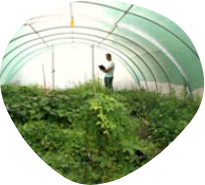 As soon as you place your order your plants are selected
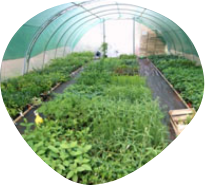 Each order is processed individually.
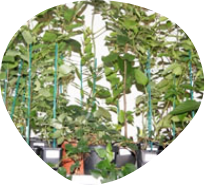 Plants are packed, staked and labeled.
 Packaging is carefully implemented to avoid any problems.
 Packages are ready to be shipped.
Expédition de nos plantes dans toute l'Europe (sauf en outre mer et les îles).
Avis clients


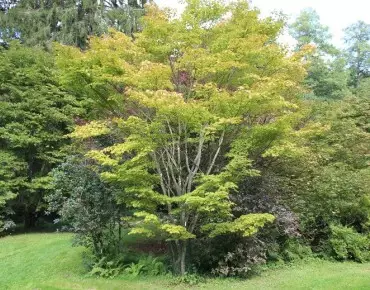


The 'Isabel' Oak, the majesty of the Swamp Spanish Oak in a dwarf version (2,75 m): brilliant autumn foliage and compact habit for your small garden.
Your cart is empty
Continue shopping