- New
- In cultivation



The 'Panaché' Fig Tree, a horticultural variety as spectacular to the eyes as it is delicious to the palate. Its bicolor fruits and intensely sweet flesh make it the indispensable jewel of gourmet gardens.
Description
The major interest of the 'Panaché' Fig Tree (also known by the historical name 'Bourjassotte Rayée') lies in its incredible aesthetic and taste value. It is a highly original fruit tree that breaks the monotony of classic orchards thanks to its decorative, bicolor fruits. Beyond its striking visual appearance, it stands out as a premier choice for gourmets due to the superior quality of its pulp. Its concentrated fruiting at the end of summer ensures fruits gorged with sunshine, perfect for closing the summer season on an intensely sweet note.
This ancient and traditional variety has been cultivated for several centuries in the Mediterranean basin and has been documented in major French botanical collections since the 17th century. It has been selected and preserved over generations for the singularity of its bark and fruits, as well as its perfect adequacy with hot summers that allow its aromas to sublimely develop.
The fig tree belongs to the Moraceae family, which groups plants sharing the characteristic of containing protective laticiferous ducts. As with other members of the species, the fig of the 'Panaché' cultivar is not a single fruit but a syconium: a fleshy and protective envelope enclosing a multitude of tiny flowers that develop out of sight.
The 'Panaché' Fig Tree is a strictly uniferous variety (single-bearing). Unlike biferous varieties that produce two waves of fruits, this cultivar concentrates all its energy and nutrients on a single production per year. This feature guarantees maximum aromatic density and sugar content in each fruit, as the tree does not exhaust itself bearing two separate harvests.
At maturity, this fig tree reaches an average height between 3 and 4 meters. Its growth is well-balanced, allowing it to be easily integrated into most gardens and maintaining the canopy at a height convenient for easy picking.
The spread of its canopy extends over approximately 3 to 4 meters at adulthood. It develops a generous branch structure that offers beautiful shade in summer and draws an imposing silhouette in the landscape.
The habit is rounded, spreading and bushy. If left free, it forms a magnificent multi-trunk clump with winding branches. It can also be trained on a single trunk to accentuate its appearance as an ornamental tree and highlight the originality of its wood.
The bark offers a remarkable botanical curiosity: during the youth of the branches, it presents subtle yellow and green longitudinal stripes that echo the graphic patterns of the future fruits. As it ages, the main trunk takes on a more traditional light, smooth and bright grey.
The deciduous foliage is made up of very large palmatilobate leaves, of a deep and matte dark green. They generally have 3 to 5 well-marked lobes and release, under the action of heat, that sweet and wild scent so characteristic of sun-drenched gardens.
Its growth rate is moderate. The tree takes time to consolidate its structural framework before stabilizing its development to privilege fruiting, which generally occurs after 3 to 4 years of installation.
The 'Panaché' Fig Tree displays a quite honorable hardiness, tolerating winter temperatures of the order of -12 °C to -15 °C provided it is planted in well-drained soil. In case of an exceptionally harsh winter, the rootstock shows an excellent regeneration capacity.
The flowering of this uniferous cultivar occurs during the month of August. Completely invisible from the outside, it takes place at the very heart of the young figs in formation.
Infinitely small flowers line the inner wall of the syconium. The 'Panaché' variety is parthenocarpic: it has no need for the intervention of the blastophaga for its fruits to develop, swell with juice and reach full maturity.
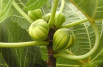
The fig of this cultivar is a visual masterpiece: its thin skin boasts a superb yellow coat variegated with green, drawing regular and bright vertical stripes. The taste of the fruit is exceptional: under this bicolor envelope hides a red-pink flesh, particularly dense, melting and juicy. It is distinguished by a pronounced perfume and a decidedly sweet flavor, which offers a perfect balance between notes of stewed red fruits and fine jam. The harvest period extends from August to September, offering fruits of irreproachable taste quality at the time when sunshine is maximal.
The ripe fruits release sweet scents that constitute an open invitation for local wildlife. It is a saving late-summer food source for birds as well as for foraging insects that benefit from the sugars available before autumn.
To express its full visual and taste potential, the 'Panaché' Fig Tree requires an exposure in full sun. A warm location, ideally sheltered from north winds by a wall or a dense hedge, is essential to ensure the perfect ripening of its bicolor fruits and maximize their sugar level.
The soil must be loosened in depth over at least 60 cm to allow the deployment of the root system. An input of well-rotted compost on the surface promotes good recovery. Since our plants are raised in pots in an optimal manner, planting can be envisaged throughout the year, excluding periods of intense frost or extreme drought.
In order to leave it the space necessary to flourish and capture light evenly on all its fruiting branches, observe a distance of 4 meters relative to other trees or infrastructures.
It tolerates a wide variety of substrates but flourishes fully in light, deep, limestone and perfectly drained soils. It fears above all heavy soils that accumulate water in winter, which harms its hardiness.
Make a hole twice the volume of the root ball. Arrange gravel at the bottom of the hole to optimize drainage if your soil retains water. Position the root ball burying the collar by a few centimeters, fill with garden soil possibly lightened with coarse sand, pack gently, arrange a watering basin and apply a generous mulching.
Generous and regular waterings are required during the first summer (every 8 to 10 days in dry periods). The use of the planting basin allows water to be directed straight to the forming roots to ensure solid anchoring.
Once solidly installed, its root system gives it excellent resistance to drought. However, to preserve the size of the figs and their juiciness in August and September, a support watering during periods of high heat is greatly beneficial.
Pruning operates at the end of winter, ideally in March, as soon as the severe cold recedes. Being a uniferous variety, pruning is simple: it aims to remove dead wood, eliminate branches that cross inside to let light in, and harmonize the overall silhouette of the tree.
The most reliable method to multiply this cultivar while scrupulously conserving the unique variegation of its fruits and branches is hardwood cuttings in winter, or layering during the growing season.
The 'Panaché' Fig Tree deserves a prime location as a specimen plant on a lawn or near a terrace where one can admire up close the graphic design of its fruits. It also integrates wonderfully into a collection orchard or trained against a south-facing wall.
It is a healthy and vigorous tree. Its main sensitivity lies in the attraction that its very sweet fruits exert on birds, wasps and hornets at the end of summer. The installation of protection nets or adapted traps may be necessary as the harvest approaches.
Avoid the use of fertilizers too rich in nitrogen, which would stimulate the production of leaves at the expense of fruits and weaken the resistance of the wood against frost. An input of natural potash (such as wood ash) in early spring fortifies the branches and improves the sweet flavor of the figs. A regular organic mulching maintains soil freshness, thus avoiding the hydric stress that could compromise the harvest.
Shipping & delivery
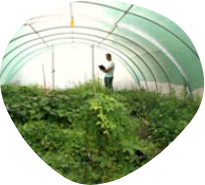 As soon as you place your order your plants are selected
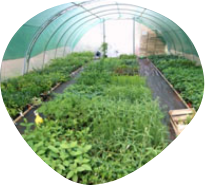 Each order is processed individually.
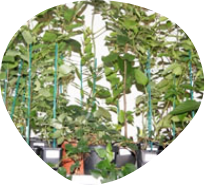 Plants are packed, staked and labeled.
 Packaging is carefully implemented to avoid any problems.
 Packages are ready to be shipped.
We ship our plants throughout Europe (excluding overseas territories and islands).
Avis clients


The 'Panaché' Fig Tree, a horticultural variety as spectacular to the eyes as it is delicious to the palate. Its bicolor fruits and intensely sweet flesh make it the indispensable jewel of gourmet gardens.
Your cart is empty
Continue shopping