- New



The 'Pastilière' Fig tree, also known as 'Rouge de Bordeaux', is a remarkable uniferous variety valued for its precocity and naturally compact growth. Its dark fruits with exceptional flavor and its rapid fruiting make it one of the best choices for small spaces and northern climates.
Description
The major interest of the 'Pastilière' Fig tree lies in its excellent adaptation to northern regions thanks to its very short and early fruiting cycle. Unlike biferous varieties whose first harvest often fails due to spring frosts, this uniferous fig tree concentrates all its energy on a single abundant and secure summer production. Its development remains naturally limited, which avoids heavy pruning operations and allows an ideal management of space.
This ancient and traditional variety originates from the Bordeaux region in France, where it was selected for its ability to ripen quickly despite shorter summers. It was widely distributed under the name 'Rouge de Bordeaux' due to the intense internal and external coloration of its figs.
It belongs to the Moraceae family and the genus Ficus, characterized by the production of a unique inverted floral system called syconium. Its stems and leaves contain a white latex, rich in proteolytic enzymes, which serves as a natural defense against plant herbivores.
The 'Pastilière' displays the particularity of having a more fibrous and less invasive root system than the average of other fig trees, which reduces the risk for garden infrastructures. Moreover, its fruiting is extremely fast, often occurring from the first or second year after planting.
At maturity, its height naturally stabilizes between 2.50 meters and 3 meters without requiring constant regulation by pruning. This modest size makes it particularly suitable for small ornamental gardens, courtyards and limited spaces.
The spread of its branches reaches about 3.50 meters at adult age, developing a silhouette that is wider than it is tall. This stocky configuration allows it to capture a maximum of thermal radiation from the ground.
Its habit is bushy, spreading and naturally low, with a dense branching that starts close to the ground if the plant is not trained as a high standard. Its branches are thick, robust and develop short internodes that densify the general aspect of the tree.
The bark is light grey and smooth, typical of the species, becoming slightly rough and sinuous on the oldest trunks. It reflects sunlight effectively, protecting the cambium from sunburn and winter thermal shocks.
Its deciduous leaves are large, deeply lobed (usually 3 to 5 distinct lobes) and of a matte dark green with a rough texture. Their lower side is covered with fine hairs that limit evapotranspiration during the hottest summer days.
The growth rate is moderate to slow, which explains why its global volume remains easily contained over the years. The tree prioritizes the building of its fruiting structures rather than an excessive elongation of its branches.
This fig tree proves hardy down to -15 °C when placed in correctly drained soil and sheltered from freezing air currents. In case of historical frost damaging the aerial parts, its base possesses an excellent capacity to resprout from the stump the following spring.
Flowering, which is completely invisible because it is located inside the young green figs, develops in summer.
This cultivar is self-fertile and of the "common" type, meaning that the development of its fruits does not require the intervention of the blastophaga, the small pollinating wasp absent from Northern Europe. Each syconium develops autonomously into a fruit.
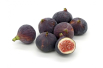
The harvest period extends from August to September (October), offering fruits with a blue, almost black skin covered with a velvety bloom. Their flesh is sweet and fragrant, of an intense wine-red, offering a melting texture with few seeds and a very high taste value.
The ripening of figs at the end of summer attracts useful predatory insects and birds, which should be monitored to preserve the integrity of the harvest.
The 'Pastilière' requires exposure in full sun, preferably facing south or southwest to accumulate a maximum of heat. A place along a brick or stone wall that releases heat at night is the perfect location in a cool climate.
The planting hole must be loosened deeply, mixing the garden soil with well-decomposed compost and coarse sand. Adding gravel at the bottom of the hole improves drainage, a key factor for the survival of the root system in winter.
Respect a free space of at least 3.50 to 4 meters relative to other plants or buildings to allow it to develop its spread form. This also guarantees that all the foliage receives a homogeneous light.
It likes light, fertile, deep and perfectly drained soils, with a clear tolerance for calcaro-siliceous soils. It fears heavy and compact clays that retain stagnant water and cause rotting of the rootlets.
Dig a hole twice as large as the root ball, place the plant slightly at an angle to bury the first centimeters of the branches (promoting bushy regrowth), fill, pack moderately and water abundantly.
Regular but not excessive waterings are essential during the first summer to support the anchoring of the fibrous roots in their new environment. An input of 10 liters of water every 8 to 10 days is sufficient in dry periods.
Once adult, its root system gives it excellent resistance to summer drought. However, a targeted watering at the beginning of August supports the swelling of the figs and prevents their skin from hardening before maturity.
Pruning takes place at the end of winter, in February-March, before the resumption of sap circulation. Being a uniferous variety, this simply consists of removing dead wood, thinning out the center of the canopy and pinching branches to stimulate low ramification.
The most faithful and simple propagation method is taking hardwood cuttings at the end of winter or layering by bending in spring. These techniques make it possible to obtain plants strictly identical to the mother plant without losing their compact characteristics.
Due to its maximum height of 3 meters, it is ideal as a specimen plant in a small urban garden, on a well-exposed lawn or at the back of a rock garden. Its graphic silhouette and the beauty of its lobed leaves also give it great architectural value.
The 'Pastilière' shows itself particularly robust against classic diseases in the orchard, requiring no regular chemical treatments. Its main sensitivity lies in the bursting of fruits during heavy and continuous autumn rains, as well as the attacks of hornets on ripe figs.
An annual input of organic matter (compost or matured manure) on the surface in autumn is sufficient to maintain the fertility of the soil. Absolutely avoid chemical fertilizers rich in nitrogen, as these cause excessive growth of leaves and latex at the expense of sugar production in the fruits.
Shipping & delivery
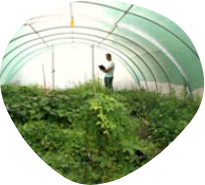 As soon as you place your order your plants are selected
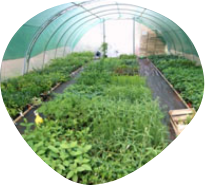 Each order is processed individually.
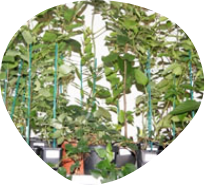 Plants are packed, staked and labeled.
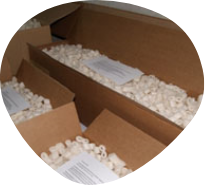 Packaging is carefully implemented to avoid any problems.
 Packages are ready to be shipped.
We ship our plants throughout Europe (excluding overseas territories and islands).
Avis clients


The 'Pastilière' Fig tree, also known as 'Rouge de Bordeaux', is a remarkable uniferous variety valued for its precocity and naturally compact growth. Its dark fruits with exceptional flavor and its rapid fruiting make it one of the best choices for small spaces and northern climates.
Your cart is empty
Continue shopping