- New



The 'Stanley' Plum tree is an essential prune variety, globally recognized for its remarkable productivity and the versatile quality of its fruits. Its early fruiting and very high hardiness make it a premier choice for orchards in northern regions.
Description
The major interest of the 'Stanley' Plum tree lies in its consistency of production and its exceptionally rapid fruiting after planting. It is a self-fertile variety that also serves as an excellent pollinator for many other plum trees in the orchard. Its dense fruits, rich in dry matter and highly aromatic, are equally suited for fresh consumption, processing, or drying into prunes.
This renowned cultivar was selected in the United States in 1926 by the Geneva Experimental Station (New York). It is the result of a controlled cross between the famous 'Prune d'Ente' (the basis of the Agen prune) and the robust variety 'Grand Duke'.
It belongs to the Rosaceae family and the genus Prunus, subgenus Prunophora, which groups European plum trees. Its floral biology is characterized by the formation of fruit buds on two-year-old wood and mixed branches that carry the harvest.
This cultivar is grafted onto a Colt rootstock, which provides a solid anchoring and excellent adaptation to cool soils. This support helps stabilize the tree's vigor while optimizing the water supply necessary for the proper development of the plums' size.
At maturity, its height stabilizes between 3 meters and 5 meters depending on pruning interventions and the deep nature of the soil. This medium size greatly facilitates manual fruit thinning and the eventual harvest of the fruits.
The spread of its canopy also varies from 3 meters to 5 meters, developing a rounded and well-balanced crown over the seasons. This width requires anticipating sufficient free space during the layout of the planting plan.
Its habit is initially upright, then naturally spreads under the weight of successive fruit loads to become rounded. Its branching is moderately dense, which allows good light penetration to the center of the tree.
The bark of young twigs is smooth and purplish-brown, transforming with age into a dark grey, fissured and rough trunk. It develops typical horizontal lenticels that participate in the gas exchanges of the stem.
Its deciduous leaves are oval, finely crenate, shiny dark green on the upper side and paler on the lower side. Their texture is firm and they feature basal stipules that drop quickly after bud break.
The growth rate is vigorous during the formation phase, then slows down significantly as soon as the tree enters its fruiting phase. This natural self-regulation simplifies the management of the canopy volume over the years.
This plum tree manifests exceptional resistance to cold, being hardy down to -29 °C. This thermal tolerance guarantees the survival of woody structures even during the severest continental winters.
The spring flowering unfolds during the month of April, a moderately late date that allows it to evade the majority of destructive spring frosts.
The white, fragrant flowers are grouped in pairs or threes along the branches of the previous year. The variety is fully self-fertile, ensuring a regular harvest even in the absence of other nearby plum trees.
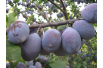
The harvest takes place in early September, offering large elongated dark purple-red fruits, turning black at full maturity. Their flesh is green, firm, sweet and highly aromatic, detaching easily from the stone and perfectly suited for making prunes.
The profusion of white flowers in April constitutes a valuable food source for early pollinators, particularly bumblebees and solitary bees.
The 'Stanley' Plum tree requires an exposure in full sun to guarantee the transformation of acids into sugars within the pulp. Good light is also essential to obtain the characteristic black coloration of the skin.
The soil must be deeply loosened to break any plow pans and facilitate root penetration. An input of mature organic amendment in the mixture improves the overall structure of the implantation zone.
It is advisable to respect a minimum spacing of 5 meters between trees to prevent the intertwining of the main branches at adult age. This also prevents shadow zones conducive to fungal development.
It adapts to a wide range of terrains but prefers deep, loose, silico-clayey and well-drained soils. It tolerates slightly compact soils but fears extremes, such as infertile sands or pure chalk.
Make a spacious, cubic pit, stake the trunk below the crown and install the tree, taking care not to bury the graft union. Fill carefully, pack to eliminate air pockets and finalize with a contact watering.
Regular watering during the first two years is essential to ensure the establishment of the root system. A generous watering every two weeks in dry periods proves optimal for recovery.
At adult age, the tree tolerates temporary droughts well thanks to its extended root system. Too much drought stress in August can nevertheless cause premature dropping of the plums or reduce their size.
Maintenance pruning is carried out in autumn after leaf fall, or in late winter outside frost periods. It aims solely at removing dead wood, water sprouts and thinning the center for optimal sun exposure.
The preservation of this cultivar is carried out exclusively by budding in July-August or by cleft grafting in early spring. This is the only method guaranteeing the full transmission of the fruit characteristics of the 'Stanley' variety.
With its managed development, it fits perfectly as a specimen tree in medium-sized gardens or within a diversified orchard. Its dense white flowering also offers a significant ornamental asset in early spring.
Although vigorous, it can be targeted by the plum fruit moth, whose larvae bore into the fruit, or by monilia during prolonged humidity. The use of pheromone traps and the systematic clearing of fallen fruits effectively limit these risks.
An annual input of compost or well-decomposed manure under the canopy in autumn keeps the soil fertile. Avoid excessive nitrogen inputs, as these stimulate exaggerated vegetative growth at the expense of flesh firmness.
Shipping & delivery
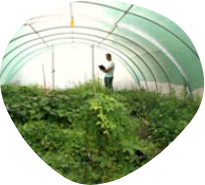 As soon as you place your order your plants are selected
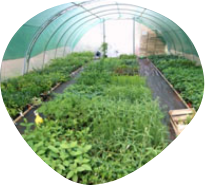 Each order is processed individually.
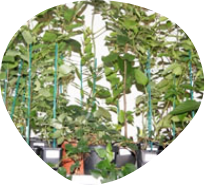 Plants are packed, staked and labeled.
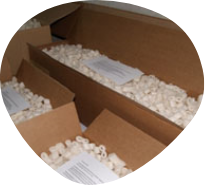 Packaging is carefully implemented to avoid any problems.
 Packages are ready to be shipped.
We ship our plants throughout Europe (excluding overseas territories and islands).
Avis clients


The 'Stanley' Plum tree is an essential prune variety, globally recognized for its remarkable productivity and the versatile quality of its fruits. Its early fruiting and very high hardiness make it a premier choice for orchards in northern regions.
Your cart is empty
Continue shopping