Peach Bénédicte - Prunus persica 'Bénédicte'
Main Interest
The major interest of the 'Bénédicte' Peach lies in its unique combination of great hardiness and ultra-fast fruiting. Its capacity to produce from the second year of planting makes it a particularly rewarding variety for the amateur gardener. Its compact size induced by its low-stem form allows easy integration into all types of gardens, while simplifying maintenance.
Origins and Characteristics
Geographical Origin :
The 'Bénédicte' is a horticultural selection of French origin, developed to adapt to the production constraints of cool temperate zones. It was retained for the regularity of its yields and the superior quality of its fruits under changing weather conditions.
Family Botany :
It belongs to the Rosaceae family and the genus Prunus, grouping stone fruit trees sensitive to severe geometric pruning. Its woody structure requires careful management to optimize sap circulation towards the fruit buds.
Specifics of the Rootstock :
This cultivar is grafted onto a Saint-Julien rootstock trained as a low-stem, selected for its excellent adaptation to heavy, compact or clayey soils. This support limits the development of the tree while inducing fast fruiting and increased resistance to winter root asphyxiation.
Description and Specifications
Adult Height :
Thanks to the vigor control of the rootstock, the height at maturity is perfectly mastered and will not exceed 3 to 4 meters. This reduced size puts the entirety of the production at hand's reach for picking.
Adult Width :
The spread of the canopy is generally between 2.50 and 3.50 meters in diameter. Its volume remains proportionate, which allows maximizing the available space within the orchard.
Growth Habit :
Its habit is naturally spreading and bushy, with main branches opening easily to form a goblet structure. This airy silhouette is ideal for letting sun rays penetrate to the heart of the branches.
Bark :
The bark is a smooth purplish to greyish brown during its youth, marking with typical horizontal lenticels with age. It tends to crack slightly on older specimens without affecting the vigor of the tree.
Foliage :
The deciduous foliage is composed of long, lanceolate and finely serrated leaves, displaying a clear and shiny green color. They are tightly placed along the branches and exhale a light almond scent when crushed.
Growth Rate :
Growth is generous during installation, allowing the low-stem structure to balance well during the first season. It channels quickly as soon as the first flower buds appear to stabilize the size of the tree.
Hardiness :
The 'Bénédicte' Peach resists cold very well and adapts to the coldest regions down to -20 °C. It is a variety of exemplary solidity against prolonged winter frosts.
Flowering and Fruiting
Flowering Period :
Its pretty pink flowering appears decoratively in early spring, during the months of March and April.
Description of the Flowers :
The soft pink flowers bloom directly on the branches of the previous year. This flowering is self-fertile, ensuring a generous fruiting without requiring the proximity of another pollinating peach tree.
Fruits and Taste :
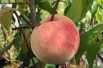
The harvest takes place at the end of August, ensuring you large fruits of almost 200 g at maturity. They have white, juicy and sweet flesh of good taste value, protected by a velvety skin colored with pink and red.
Wildlife Attractive Features :
Its early flowering in March constitutes a valuable source of nectar for the first pollinating insects awakening at the end of winter.
Exposure
The 'Bénédicte' Peach requires exposure in full sun to guarantee the sweetness and coloration of its fruits. A situation sheltered from northern winds is recommended to protect its early flowering from late frosts.
Planting
Advice for Preparing the Soil :
The planting hole must be loosened deeply over a width of about 60 to 80 cm. An input of well-decomposed compost mixed with the original soil will favor a good start of the root system.
Plant Spacing :
Respect a minimum spacing of 3 to 4 meters relative to other trees or infrastructures. This distance guarantees homogeneous sun exposure on all faces of its low-stem structure.
Soil Type :
It appreciates deep, fertile and fresh soils, but imperatively well-drained to avoid stagnant water. The Saint-Julien rootstock allows it to tolerate heavier and more clayey soils than peach seedlings.
How to Plant :
Dig a hole equivalent to twice the size of the root ball and install a solid stake. Position the plant, taking scrupulous care to keep the graft union above ground level, then pack and water.
Watering
Water Requirements at Planting :
Regular and generous waterings are essential during the first spring and summer following planting. An input of 15 liters of water every ten days is recommended in dry weather to ensure recovery.
Water Requirements at Maturity :
Once installed, the tree manages normal summer periods well. However, to guarantee the generous weight of 200 g and the juiciness of the white flesh in August, a supportive watering is necessary during fruit growth in July.
Pruning
When and How to Prune :
Production pruning is carried out in late winter, ideally in February-March, when the buds swell. It consists of removing dead wood, cutting back branches that have already produced and favoring branches bearing flower buds.
Propagation
This cultivar multiplies exclusively by grafting (budding at the end of summer or cleft graft in spring). The use of the Saint-Julien rootstock is mandatory to preserve its dwarf characteristics and its adaptation to heavy soils.
Uses in the Garden
Due to its limited height of 3 to 4 meters, it is ideal as a specimen plant on a lawn or integrated into a small hobby orchard. Its low-stem form is also suitable for integration at the back of the vegetable garden or along a fruit alignment.
Protection against Diseases and Pests
Although known for its tolerance to peach leaf curl, the 'Bénédicte' remains sensitive to attacks during very wet springs. A preventive treatment with Bordeaux mixture during budding and monitoring for aphids in spring are required to keep the tree healthy.
Advice for a Good Development
An annual input of matured compost or well-decomposed manure in autumn maintains the fertility necessary for its high productivity. The application of an organic mulching at the base of the tree preserves the soil coolness essential for the swelling of the peaches.



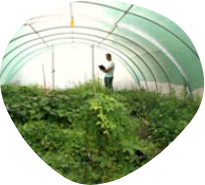 As soon as you place your order your plants are selected
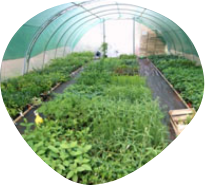 Each order is processed individually.
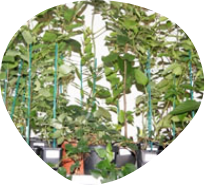 Plants are packed, staked and labeled.
 Packaging is carefully implemented to avoid any problems.
 Packages are ready to be shipped.