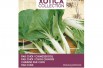








Chinese Pak Choi is a crisp, fast-growing Asian green ideal for small spaces and late-summer sowing. Easy to grow and highly versatile in the kitchen, it brings freshness and flavour to stir-fries, soups and salads. A perfect crop for modern gardens.
Description
Pak Choi, also known as Chinese cabbage with white petioles, is a fast‑growing annual leafy vegetable appreciated for its crisp texture and mild, slightly peppery flavour. Its thick stems and deep‑green leaves bring elegance to the vegetable garden. Widely used in Asian cuisine, it is perfect for quick wok cooking or raw dishes thanks to its tender, juicy heart. Easy to grow, ideal for beginners and urban gardens, it takes little space and produces generously in a short time. Its relative cold tolerance makes it excellent for late‑summer sowing without risk of bolting. With ancient roots in Asian agriculture, it is now valued for its versatility and reliable yields.
Pak Choi originates from East Asia, where it has been cultivated for thousands of years. It is central to Chinese, Korean and Japanese cuisine. Its arrival in Europe is recent, but it quickly became popular.
It belongs to the Brassicaceae family, which includes cabbages, turnips and mustards. This explains its rapid growth and slightly spicy flavour.
Pak Choi is one of the oldest leafy vegetables cultivated in China. Traditionally used in soups, stir‑fries and as a medicinal plant, it now represents modern Asian cuisine and fits perfectly into Western diets.
Pak Choi reaches 25–35 cm, ideal for small spaces or containers.
It forms an open rosette with thick petioles forming a compact cluster.
Broad, smooth, deep‑green leaves with crisp white or pale‑green stems.
Its fleshy stems store water, giving good drought tolerance. Growth is rapid, allowing harvest within weeks.
Sow mid‑July to late August directly outdoors. Early sowing increases bolting risk.
Optimal germination at 18–22°C.
Seeds sprout in 5–10 days.
Sow at 1 cm depth, rows spaced 30–40 cm. Thin to 20–25 cm between plants.
Prefers rich, fresh, humus‑based, well‑drained soil, slightly acidic to neutral.
Full sun or light partial shade, especially in late summer.
Thin at 4–5 leaves, removing excess plants gently.
Water regularly to maintain fresh soil. Drought makes leaves tougher.
No pruning needed; remove damaged leaves.
To limit slugs and flea beetles: water in the morning, use natural barriers or insect netting, and rotate crops.
Harvest 45–60 days after sowing.
Ready when stems are thick and the rosette compact.
1 m² yields 3–5 kg.
Keeps a few days in the fridge wrapped in a damp cloth. Can be blanched and frozen.
Ideal for fast crops or late‑season beds.
Pairs well with carrots, leeks, beetroot and lettuce.
Avoid planting after other Brassicas. Wait 3–4 years before replanting.
Mild, slightly sweet and peppery.
Best stir‑fried; the heart can be eaten raw, leaves suit soups and fillings.
Stir‑fry with garlic, ginger and soy sauce for a classic dish.
Attracts beneficial insects and enriches late‑summer crops.
Often grown on rooftops and in small urban gardens in Asia.
Thrives in containers, cold frames and permaculture.
Pak Choi is productive, fast, easy and delicious. Perfect for extending autumn harvests and enriching everyday cooking.
Shipping & delivery
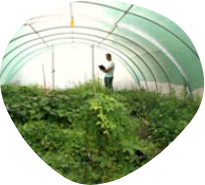 As soon as you place your order your plants are selected
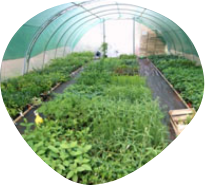 Each order is processed individually.
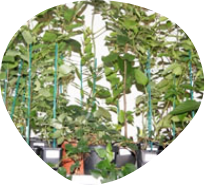 Plants are packed, staked and labeled.
 Packaging is carefully implemented to avoid any problems.
 Packages are ready to be shipped.
We ship our plants throughout Europe (excluding overseas territories and islands).
Avis clients





Chinese Pak Choi is a crisp, fast-growing Asian green ideal for small spaces and late-summer sowing. Easy to grow and highly versatile in the kitchen, it brings freshness and flavour to stir-fries, soups and salads. A perfect crop for modern gardens.
Your cart is empty
Continue shopping