Crab Apple John Downie – Malus 'John Downie'
Main interest
The Malus 'John Downie' crab apple is a compact ornamental tree highly appreciated for its abundant spring blossoms and decorative autumn fruits. This cultivar, a hybrid between Malus baccata and Malus 'Tower of Glamis', is known for its white to pale pink flowers in April and its orange-red, egg-shaped fruits that brighten up the garden from late summer into autumn. Its balanced growth habit, strong disease resistance, and cold hardiness make it ideal for small gardens, ornamental orchards, and urban planting. The nectar-rich flowers attract a wide range of pollinators, especially bees. Although the small apples are not eaten raw, they are rich in pectin and excellent for making jellies or preserves. 'John Downie' is self-fertile and can also act as a pollinator for other apple trees. Its mix of aesthetic value, ecological interest, and practical utility makes it one of the most planted crab apple cultivars in Europe.
Origins and characteristics
Geographical origin: England, horticultural selection from 1875
Botanical family: Rosaceae
Notable features: Selected by Edward Holmes, this cultivar is famous for its jelly-quality fruits and ornamental bloom. It has contributed significantly to the development of modern ornamental crab apples.
Description and particulars
Mature height: 4 to 6 metres
Mature width: 3 to 4 metres
Habit (general shape): Rounded, slightly spreading crown with dense branching
Bark: Smooth and light brown on young trees, becoming slightly fissured with age
Foliage: Deciduous, dark green, oval-shaped, turning golden yellow in autumn
Growth rate: Moderate and even, not overly vigorous
Hardiness: Very hardy, tolerates temperatures down to -25°C
Flowering and fruiting
Flowering period: April to early May
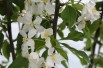
Detailed flower description: Simple flowers, white with a pink tint, grouped in small clusters. Rich in nectar and highly attractive to bees and pollinators.
Fruits: Egg-shaped crab apples (2–3 cm), bright orange-red, firm flesh, tart, high in pectin. Excellent for jelly making. Ripe from September. Self-fertile but also suitable as a cross-pollinator.
Wildlife value: Pollinator-friendly blossoms, fruits are appreciated by birds in winter.
Sun exposure and soil
Ideal exposure: Full sun preferred, light partial shade tolerated
Soil type: Fertile, moist but well-drained soil. Tolerates slightly calcareous soils
Planting
Soil preparation tips: Loosen the soil deeply, mix in well-decomposed compost. Avoid compacted or waterlogged soils.
Spacing between trees: 4 to 5 metres for proper crown development
Soil nature: Neutral to slightly acidic, humus-rich, fresh but not soggy. Avoid stagnant moisture.
Watering
Water needs at planting: Regular watering during the first year, especially in dry periods
Water needs when mature: Moderate; tolerates brief drought once established, prefers slightly moist soil
Pruning
When and how to prune (if needed): Structural pruning in late winter to shape the tree. Later, only light maintenance pruning to remove dead or crossing branches. Avoid heavy pruning; it's rarely needed.
Propagation
Possible propagation methods: Grafting onto apple rootstocks (e.g. M9, MM111). Not true to type from seed.
Uses in the garden
Ideal placement: As a specimen tree on a lawn, in a decorative orchard, or as a row tree in a formal garden
Recommended plant associations: Combine with perennials like geraniums, asters, dogwoods, or spring bulbs like daffodils and scillas for extended seasonal interest
Traditional uses
Historical or cultural uses: The fruits have been traditionally used to make clear apple jelly, either alone or blended with other fruits. The tree is also used as a decorative rootstock in orchards.
Pest and disease resistance
Potential vulnerabilities: Generally resistant to scab, powdery mildew, and fire blight, unlike many apple cultivars
Natural prevention and treatments: Keep the crown well ventilated, apply mulch, use horsetail infusions preventively. Avoid over-fertilising with nitrogen.
Tips for good growth
Practical advice for healthy development: Plant in sunny, well-drained soil, prune lightly, ensure good crown ventilation. Combine with ground-covering perennials to limit root competition and maintain soil health.
Cultivar differences and highlights
Crab Apple John Downie is easily recognised by its larger, brightly coloured, elongated fruits, which stand out even from a distance. It’s one of the few crab apples that combines high ornamental value with culinary use. It is also more disease-resistant than many newer cultivars. Its uniform flowering, long-lasting decorative fruit display, and compatibility as a pollinator make it a valuable choice for mixed edible and ornamental gardens.



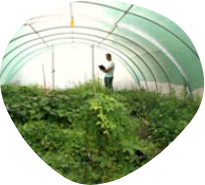 As soon as you place your order your plants are selected
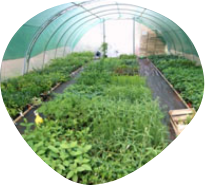 Each order is processed individually.
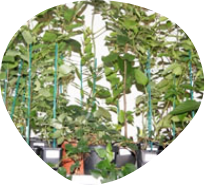 Plants are packed, staked and labeled.
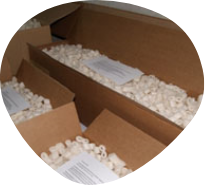 Packaging is carefully implemented to avoid any problems.
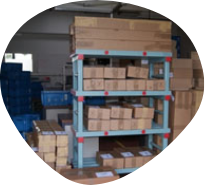 Packages are ready to be shipped.