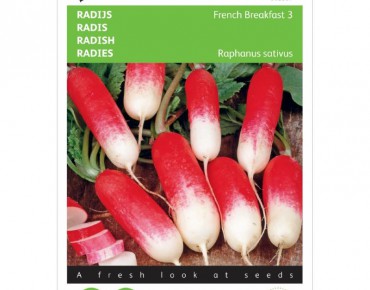


White Pickling Onion De Barletta
Allium Cepa
Make your own pickled onions with White Onion De Barletta! This Italian variety produces an abundance of small, white, mild, and crunchy bulbs. Easy and fast to grow, it's essential for appetizers and summer salads.
Description
White Pickling Onion De Barletta - Allium cepa
Introductory Summary
The White Pickling Onion De Barletta is an early Italian variety, renowned worldwide for producing small, immaculately white bulbs. It is the absolute reference for lovers of pickled onions and cocktail onions, perfect for preserving in vinegar jars. Its white flesh, crunchy and particularly mild, also makes it a delight to consume fresh, raw in salads, or whole in spring vegetable stews.
Very fast-growing, this variety is ideal for the amateur gardener who wants quick results without occupying the vegetable patch for too long. It produces round, slightly flattened bulbs that are usually harvested before full maturity to preserve their tenderness. Growing De Barletta onions ensures a supply of homemade condiments for the whole year or allows you to enjoy the delicate flavor of spring onions right from the start of summer.
Origins and Botanical Family
Geographical Origin
As its name suggests, this variety originates from the region of Barletta, a port city located in Puglia, southern Italy. It is an heirloom variety selected over centuries by local market gardeners for its earliness and pure color.
Botanical Family
It belongs to the large Alliaceae family (or Amaryllidaceae depending on classification), just like garlic, leeks, shallots, and chives. It is part of the species Allium cepa, which groups together the majority of cultivated onions.
Historical Particularities
Traditionally, Italians utilized these small onions (the "cipolline") to preserve them in olive oil or white balsamic vinegar. They constitute an essential ingredient of the famous Mediterranean antipasti served as appetizers.
Botanical Description and Characteristics
Mature Height and Habit
The plant develops fine, tubular, and upright foliage that generally reaches 20 to 30 cm in height. The habit is compact and erect, which allows these onions to be grown quite densely without interfering with each other.
Foliage Description
The leaves are bluish-green (glaucous), cylindrical, and hollow. They are less vigorous than those of large storage onions, because the plant's energy quickly concentrates on the formation of the small basal bulb.
Bulb Description
The bulb is small in size, generally harvested when it reaches 2 to 3 cm in diameter for pickling purposes. It is spherical to slightly flattened in shape, covered with a very fine, shiny, pure silvery-white skin.
Sowing and Culture Conditions
Ideal Sowing Period
Sowing is done directly in place as soon as the soil warms up, generally from March to May for a summer harvest. In regions with mild winters, autumn sowing is possible for a very early harvest the following spring.
Ideal Germination Temperature
Onion seeds germinate from 10°C, but a soil temperature between 15°C and 20°C ensures faster and more uniform emergence. Below these temperatures, germination can be long and irregular.
Germination Time
Emergence varies according to temperature, generally taking between 10 and 20 days. It is crucial to keep the soil moist during this period to facilitate the breakthrough of the seedlings, which are quite fragile at the "crook" stage.
Sowing Depth and Spacing
Sow thinly in shallow drills, about 1 cm deep, and cover with fine soil. Space rows 20 to 25 cm apart and plan for a high density within the row, as these onions are harvested small.
Recommended Soil Type
De Barletta Onions prefer light, sandy, and well-drained soils that warm up quickly in spring. They dread heavy, clayey, and waterlogged soils above all, as these cause the bulbs to rot.
Ideal Exposure
A full sun exposure is indispensable for the proper development of the bulb and to avoid fungal diseases. The onion needs a lot of light to perform photosynthesis and accumulate sugars.
Thinning Method
To obtain pickling onions (very small), it is often not necessary to thin if sowing was well-dosed. If you wish for larger onions for fresh consumption, thin to about every 5 to 8 cm roughly one month after emergence.
Water Requirements
Watering must be regular during the germination phase and leaf growth. However, reduce or stop watering a few weeks before harvest to allow the bulb to ripen and prevent diseases.
Maintenance and Care
Weeding
This is the crucial point of onion growing: it hates competition from weeds. Meticulous and regular manual weeding must be carried out between the rows and within the row to let the onion breathe.
Disease Prevention
To avoid onion fly and downy mildew, strictly respect planting distances and avoid fresh manure. Association with carrots is an effective natural method to confuse the sense of smell of pests.
Harvest
Harvest Period
The harvest is quick, occurring 8 to 12 weeks after sowing, usually from June to August depending on the sowing date. It is an early variety that frees up space in the vegetable garden for autumn crops.
Recognizing Maturity
For pickling onions, harvest when the bulb is the size of a marble or walnut, while the foliage is still green. For later fresh consumption, wait until the stems begin to yellow and fall to the ground.
Average Yield
The yield depends on the harvest stage, but it is generally excellent in terms of the number of bulbs. On one square meter, several hundred small pickling onions can be harvested if the density is managed.
Storage Method
De Barletta is not a long-keeping onion for open-air storage (it keeps poorly in winter). It is intended to be consumed fresh quickly or to be processed into vinegar preserves to be stored all year round.
Garden Usage
Placement in the Vegetable Garden
It fits perfectly into crop rotations, ideally after a fruit vegetable (tomato, squash) that has left clean soil. It can also be grown on the edge of raised beds thanks to its small footprint.
Beneficial Plant Associations
The alliance with carrots is famous: the smell of the onion repels the carrot fly and vice versa. It also gets along very well with beets, strawberries, and lettuce, but must be kept away from legumes (peas, beans).
Crop Rotation
Wait 3 to 5 years before replanting onions or alliums in the same spot. This helps prevent the long-term establishment of soil diseases like white rot or nematodes.
Culinary Uses
Flavor
It is a mild onion, not very pungent and sweet, especially when harvested young. Its crunchy texture remains firm even after preservation in vinegar, which is its primary quality.
Ways to Cook
It is the star of pickled onions (silverskin style) served with cold cuts or cheese boards. Fresh, it slips whole into peas, caramelizes around a roast, or is eaten raw with a little salt.
Tip or Typical Recipe
To peel these very small onions easily, blanch them in boiling water for one minute then plunge them immediately into ice water. The skin will slip off by itself with a simple pressure of the fingers, saving you precious time.
Ecology, Curiosities, and Assets
Ecological Interest
Although often harvested before flowering, if a few plants are allowed to bolt, the spherical white umbels attract many pollinating insects. It is a plant with low input requirements that is well suited to organic gardening.
Container Growing
This is a variety that lends itself very well to growing in a window box or pot on a balcony. Its shallow rooting depth and reduced volume allow for fresh onions within reach even in the city.
Why this vegetable deserves a place in the garden
The De Barletta Onion is indispensable for gourmets who like to make their own preserves ("homemade"). Its cultivation is easy, fast, and the taste of a small white onion freshly harvested or prepared by yourself has absolutely nothing to do with industrial products in jars.
Features
- Common name : White Pickling Onion De Barletta
- Category : vegetable
- Time to sow seeds : from the beginning of March until the end of April
- Harvest : after 120 days
Specific References
- EAN13
- 8711117028802
Expédition & livraison
How does the delivery work?
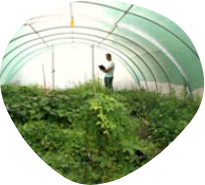 As soon as you place your order your plants are selected
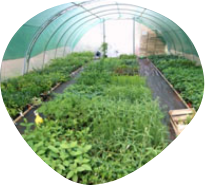 Each order is processed individually.
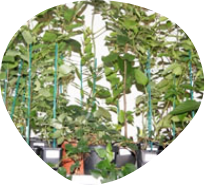 Plants are packed, staked and labeled.
 Packaging is carefully implemented to avoid any problems.
 Packages are ready to be shipped.
Our delivery methods
Shipping of our plants throughout Europe (except overseas and islands).





Customer reviews
Nobody has posted a review yet
in this language