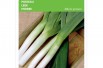







Grow a giant in the vegetable garden with the Autumn Mammoth Leek! This heirloom variety from Normandy produces huge, tender, and tasty shafts in autumn. Ideal for creamed leeks and soups, it is the champion of productivity and taste.
Description
The Leek autumn Mammoth, historically known as the "Giant of Elbeuf" or "Monstrous of Elbeuf," is a legendary heirloom variety from Normandy that truly lives up to its name. It is an outstanding autumn leek, famous for its exceptionally short and wide shafts (the white part), which can reach a record-breaking thickness in ideal growing conditions. Unlike thin winter varieties with blue-tinted leaves, this giant develops vigorous, light green foliage that grows in a broad fan shape.
From a culinary perspective, this leek is a symbol of tenderness: its white flesh is soft, mild, and completely free of tough fibers, making it a favorite for gourmet cooking. Although categorized as an autumn variety, it is hardy enough to stay in the ground until the first hard winter frosts. It is the perfect choice for gardeners seeking high yields and superior flavor from a relatively small garden plot.
This historic variety originates from the town of Elbeuf in the Normandy region of France. Local market gardeners developed this strain over decades in the fertile Seine Valley, where the rich, moist soil provided the perfect environment for this giant vegetable to thrive.
Leeks belong to the Allium family (Alliaceae or Amaryllidaceae), alongside onions, garlic, and shallots. The species Allium porrum is a domesticated form of wild leeks from the Mediterranean, cultivated for thousands of years for their nutritious and flavorful stems.
During the 19th century, the Elbeuf Leek was the undisputed star of Parisian markets. Its ability to produce a massive amount of "white" meat on a short stalk made it a luxury vegetable for the rich soups and stews of the industrial era.
The Elbeuf Leek features a stocky and robust growth habit. It typically does not exceed 50 to 60 cm in total height, as the plant focuses its energy on widening its shaft rather than excessive vertical growth.
The leaves are remarkably broad, with a light to medium green color and a flexible texture. They curve gracefully outward, providing natural protection for the heart of the plant against intense sun or mild weather changes.
The most striking feature is the shaft: it is exceptionally dense and cylindrical. Unlike onions, it does not form a rounded bulb at the base, meaning almost the entire stalk can be eaten after minimal cleaning.
Sowing begins under cover as early as February or March for an early start, or directly in an outdoor seedbed from April to May. Early sowing is recommended to allow the plant enough time to build its massive shaft before autumn arrives.
For optimal germination, the soil temperature should be between 15°C and 20°C. While seeds can germinate as low as 10°C, warmth ensures much faster growth and stronger resistance for the young seedlings.
Leeks are a vegetable that requires patience: it usually takes between 12 and 18 days for the first green loops to appear. It is vital to keep the soil consistently moist during this phase to prevent the seed coat from hardening.
Seeds should be sown approximately 1 cm deep. When transplanting to their final location, space the plants 15 cm apart within the row and leave 30 cm between rows to allow the wide foliage enough room to spread.
This giant is demanding: it requires deep, loose, and very rich soil with high organic matter content. It thrives in cool soil that retains moisture but avoid waterlogged areas where roots may rot.
The plant requires a full sun position to convert light energy into a thick shaft. In very hot climates, a bit of afternoon shade can help keep the foliage tender and prevent wilting.
Once seedlings reach pencil thickness, they are transplanted. Trim the roots and leaves slightly (a process called "dressing") and plant them deeply in a hole to encourage the natural blanching of the stem.
Watering must be regular and frequent, especially during July and August. The soil should never dry out completely; a lack of water will stop growth and cause the leek to become tough and fibrous.
To achieve the maximum amount of white flesh, you must hill up the plants (pulling soil around the stem) two or three times a season. This keeps the base in the dark, preventing chlorophyll production and ensuring a snowy white shaft.
Watch for the leek moth and use insect netting if necessary. By watering only at the base and keeping the foliage dry, you significantly reduce the risk of rust and other fungal diseases.
Harvesting begins in September and continues until the first serious frosts in December. For the best quality, it is recommended to consume the leeks before the harshest winter weather sets in.
The leek is ready whenever it reaches your desired size. For the Elbeuf variety, gardeners usually wait until it reaches a diameter of at least 4 to 5 cm to fully enjoy its generous size and melting texture.
This is one of the most productive varieties available: a single plant can weigh double that of a standard variety. On average, you can expect 3 to 4 kg of vegetables per linear meter in a well-fed garden.
Plant in an area that was well-manured the previous year. Since it occupies the space for a long time, it is ideal for borders or beds dedicated to root and bulb vegetables.
The association with carrots is world-famous: leeks drive away the carrot fly, and carrots repel the leek moth. Strawberries and tomatoes are also excellent neighbors for this crop.
Wait at least 4 years before planting Alliums in the same spot again. After leeks, the soil is perfect for beans or peas, which benefit from the soil structure loosened by the leek roots.
The flavor is sweet, mild, and delicate, with much less pungency than winter varieties. It is the preferred leek for gourmets due to its complete lack of bitterness.
This leek is perfect for a classic leek fondue with butter, where the flesh literally melts. It is also excellent steamed and served with a vinaigrette or braised as a side dish for poultry or fish.
Use the thick shafts for "leek cannelloni": slightly hollow out a pre-cooked shaft and fill it with cream cheese and herbs for a spectacular oven-baked appetizer.
If left in the ground until the following spring, the leek produces a magnificent spherical flower. This flower is very rich in nectar and attracts numerous bees and hoverflies, boosting garden biodiversity.
In permaculture, its strong root system is valued for improving soil structure. With a thick layer of mulch, it requires little maintenance and helps feed the underground soil life.
The Leek autumn Mammoth is a champion of productivity and gastronomy. It is easy to grow in rich soil and offers the unique satisfaction of harvesting giant specimens. Its exceptional tenderness makes it a must-have for any family vegetable garden.
Pack of 2.50 grams for 10M²
Shipping & delivery
 As soon as you place your order your plants are selected
 Each order is processed individually.
 Plants are packed, staked and labeled.
 Packaging is carefully implemented to avoid any problems.
 Packages are ready to be shipped.
Expédition de nos plantes dans toute l'Europe (sauf en outre mer et les îles).
Avis clients


Grow a giant in the vegetable garden with the Autumn Mammoth Leek! This heirloom variety from Normandy produces huge, tender, and tasty shafts in autumn. Ideal for creamed leeks and soups, it is the champion of productivity and taste.