- New




The magnificent White birch 'Crispa', an exceptional weeping tree with unique laciniated foliage and brilliant pure white bark. This majestic specimen brings rare elegance and poetic verticality to your garden landscape.
Description
The White birch "Crispa", also known as the Swedish birch, is an ornamental tree of rare distinction that instantly transforms the atmosphere of a garden by its mere presence. This tree quickly reaches a majestic stature and is characterised by a weeping habit of great fluidity, where each branch falls with poetic lightness. Its airy silhouette is enhanced by its laciniate foliage, whose fine and irregular cuts evoke the delicacy of botanical lace. Unlike the species, this cultivar offers a much lighter visual texture, allowing light to filter gently through the canopy and create moving shadows on the ground. One of its major assets is its white bark, which exfoliates with age, revealing silvery tones and dark fissures that structure the landscape, especially during winter. Its use in the garden is primarily aesthetic, serving as a focal point or natural screen while maintaining a transparency that never overwhelms the surrounding space. It is a preferred choice for lovers of romantic or contemporary gardens seeking to combine exceptional hardiness with incomparable graphic elegance.
This remarkable variety was discovered in the wild in Sweden, specifically in the province of Dalarna, at the end of the 18th century. Since then, it has become established throughout Northern Europe as a symbol of botanical refinement adapted to boreal climates. Its ability to survive harsh conditions while maintaining its aristocratic appearance has made it a key selection in European horticulture.
The White birch "Crispa" belongs to the Betulaceae family, a group of woody plants essential to temperate and cold ecosystems. This family also includes alders, hazels and hornbeams, all of which flower in the form of catkins. Members of this family are known for their light wood and strong ability to colonise open soils.
This cultivar is often cited as synonymous with Betula pendula 'Dalecarlica', in homage to its region of origin. Historically, it was widely planted in the parks of manor houses for its romantic silhouette and luminous bark. Its botanical singularity lies in the natural mutation of its leaves, which are much more deeply cut than those of the species.
At maturity, this tree reaches a height between 10 and 12 metres. Its vertical growth is well marked, allowing it to dominate the shrub layer with great nobility. This stature makes it ideal for structuring large spaces or serving as a visual landmark in a park.
The spread of this birch generally stabilises between 5 and 6 metres. Its habit is not rigidly spreading, but rather contained by the downward fall of its supple branches. It occupies a reasonable footprint while offering a strong aerial presence.
The habit is pendulous, almost weeping, with a crown that remains fairly slender. The fine twigs cascade from the main branches, giving the tree an impression of perpetual movement. This elegant structure is highly appreciated for softening the rigidity of architectural lines in formal gardens.
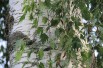
The white bark is the major asset of this tree, becoming increasingly bright and pure with age. It exfoliates in thin horizontal strips, creating a rich and tactile texture. On older specimens, the base of the trunk cracks deeply in black, adding a wild and authentic character.
The deciduous foliage is laciniate, with very pronounced cuts that give it unparalleled lightness. Bright green in spring, the leaves turn golden yellow in autumn before falling. The fine leaf structure ensures the tree never blocks the view completely.
The growth rate is fast during youth, allowing quick enjoyment of its decorative effect. It establishes vigorously when given favourable conditions from planting. Once the basic structure is formed, growth slows to ensure strong wood.
This birch displays exceptional hardiness, capable of withstanding extreme temperatures down to -40 °C. It is not affected by long winters or late spring frosts. This robustness makes it one of the most reliable trees for cold regions or mid‑mountain climates.
Flowering occurs early in spring, generally between March and April. It appears at the same time as or just before leaf emergence.
The flowers appear as pendulous catkins, typical of the genus Betula. The male catkins are longer and yellowish, releasing pollen into the wind, while the female catkins are shorter and initially upright.
The fruits are small winged seeds grouped in cylindrical cones that disintegrate at maturity. These seeds are dispersed by the wind over long distances.
Although mainly wind‑pollinated, the birch provides shelter for many insects and birds. Its seeds feed finches and siskins in winter, and its foliage hosts numerous caterpillars.
Full sun is essential for the bark to develop its purest whiteness and for the crown to remain dense. It tolerates partial shade but becomes less vigorous.
Dig a wide and deep hole, two to three times the volume of the pot. Add quality soil or compost to help root establishment.
Allow at least 6 metres of free space around the trunk for isolated planting. For a grove effect, 4 metres may suffice.
Very adaptable: tolerates acidic, neutral and slightly stony soils. Prefers fresh, well‑drained soil.
Hydrate the root ball, place the tree without burying the collar, backfill and firm the soil. Stake for the first years.
A generous watering is essential, even in rain. Water once or twice a week during the first year.
Once established, the birch is autonomous, but weekly watering during heatwaves is beneficial.
Pruning is unnecessary and should remain minimal to preserve the natural habit. Prune only in winter to avoid sap bleeding. Never cut the main leader.
'Crispa' is propagated exclusively by grafting onto Betula pendula. Seed and cuttings do not preserve the characteristics.
Best as a specimen in a lawn or near water. Avoid terraces due to falling seeds and leaves.
Combine with heathers, ferns, rhododendrons, azaleas, hellebores and spring bulbs.
Birch bark was used for waterproof containers and roofs. The sap has medicinal uses. The wood is valued in fine woodworking.
Birch symbolises wisdom and renewal in Celtic and Nordic traditions. In Sweden, the Ornäs birch is a national symbol.
Aphids, birch borer, rust in prolonged humidity.
Healthy trees resist best. Black soap against aphids. Encourage natural predators.
Add compost each spring, protect the trunk from damage, ensure good air circulation.
'Crispa' has finer foliage and a more elegant silhouette than the common white birch.
The White birch "Crispa" is an exceptional tree combining a weeping habit, laciniate foliage, white bark and extreme hardiness down to –40 °C. A majestic and poetic focal point for any garden.
Shipping & delivery
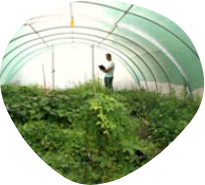 As soon as you place your order your plants are selected
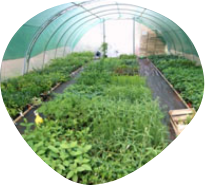 Each order is processed individually.
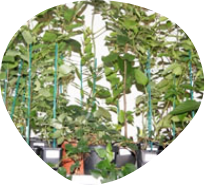 Plants are packed, staked and labeled.
 Packaging is carefully implemented to avoid any problems.
 Packages are ready to be shipped.
We ship our plants throughout Europe (excluding overseas territories and islands).
Avis clients


The magnificent White birch 'Crispa', an exceptional weeping tree with unique laciniated foliage and brilliant pure white bark. This majestic specimen brings rare elegance and poetic verticality to your garden landscape.
Your cart is empty
Continue shopping