Spring Tamarisk, Tamarix tetrandra
Main Interest
The Spring Tamarisk (or Tamarix tetrandra) is the quintessence of lightness and resilience in the garden. Often associated with seaside landscapes, this shrub deserves a prominent place in all gardens, even inland, for its inimitable vaporous appearance. Its main interest lies in its spectacular spring flowering: a veritable cloud of small pink flowers covering the entire wood of the previous year, giving the impression of a pink cloud floating above the ground even before the foliage is fully developed.
It is a plant of unfailing robustness, capable of thriving where many others fail. It is perfectly adapted to difficult conditions: it withstands salt spray, violent winds (which it filters without breaking thanks to the flexibility of its branches), poor, sandy, and even slightly brackish soils. Its foliage, fine and light as feathers, brings a delicate texture that contrasts beautifully with the heavier and static foliage of laurels or conifers. In a windbreak hedge or as a solitary specimen, it is a shrub that brings movement and grace, while requiring minimal maintenance once established.
Origins and Characteristics
Geographical Origin:
Tamarix tetrandra originates from Southeast Europe (notably Greece and Bulgaria) and Western Asia (Turkey). It is a typical plant of riparian and coastal zones in these warm regions, accustomed to draining soils and intense sun exposure.
Botanical Family:
It belongs to the Tamaricaceae family. It is a small family of dicotyledonous plants, often halophytes (salt-loving) or xerophytes (drought-resistant), adapted to arid or saline environments thanks to deep root systems and reduced leaves to limit evaporation.
Notable Features:
An amazing physiological peculiarity of the Tamarisk is its ability to excrete excess salt through glands located on its leaves. Tiny salt crystals can sometimes be observed on the foliage in the morning. Furthermore, its root system is taproot-like and extremely powerful, capable of seeking water very deep, which makes it nearly indestructible in the face of drought.
Description and Particularities:
Mature Height
The Spring Tamarisk is a large shrub or small tree. At maturity, it generally reaches a height between 3 and 5 meters. Its growth can be contained by pruning, but it is more majestic when allowed to take its natural spread.
Mature Width
It is a shrub with a spreading and diffuse habit. Its span is often equal to its height, being 3 to 5 meters wide. Its branches tend to arch and droop gracefully, occupying space with great lightness without creating too dense shade.
Habit (General Shape)
Its habit is irregular, weeping, and vaporous. The main branches are upright, while the secondary twigs, very fine and flexible, cascade down. This "disheveled" silhouette gives much movement to the garden at the slightest breath of wind.
Bark (characteristics, colour, particularities)
The bark is an ornamental asset, particularly in winter. Young twigs are reddish-brown, while old wood becomes almost black or dark purple. This dark colour contrasts superbly with the pale pink flowering in spring and the tender green foliage.
Foliage (type of foliage, colour, seasonal changes)
The leaves are deciduous, alternate, and extremely reduced, resembling scales (like those of cypresses) overlapping along the stems. Tender green to glaucous green in color, this "feathery" foliage is very fine. It turns yellow in autumn before falling, leaving the dark structure of the tree apparent in winter.
Growth (growth rate)
Growth is medium to rapid. In soil that suits it (well-drained), it can grow 40 to 60 cm per year. It establishes itself quickly enough to form an effective windbreak screen in a few years.
Hardiness (temperature tolerance)
Tamarix tetrandra is very hardy and withstands temperatures down to -20°C. It fears neither frost nor snow, although branches can sometimes break under the weight of very heavy snow if not shaken off.
Flowering and Fruiting:
Flowering Period
As its name suggests, it blooms in spring, specifically in May. This distinguishes it from the summer tamarisk (Tamarix ramosissima) which blooms later. The flowering is brief (about 3 weeks) but of unforgettable intensity.
Description of Flowers
The flowers are tiny, with four petals (hence tetrandra), from bright pink to pale pink. They are gathered in compact cylindrical clusters (racemes) of 3 to 5 cm long which are born on the wood of the previous year (old wood). The abundance is such that the branches disappear under the flowers.
Fruits
After flowering, small capsules form, releasing seeds equipped with a silky tuft (coma) which facilitates their dispersal by wind (anemochory) over long distances. These fruits have no major ornamental interest and are not edible.
Melliferous Characteristics or Wildlife Attraction
It is a melliferous plant. The early and abundant flowering offers an important source of nectar and pollen for honeybees and wild bees in spring. Its dense and fine foliage offers excellent shelter for bird nesting.
Exposure and Soil
Ideal Exposure:
The Tamarisk demands full sun. It is a light-loving plant that does not tolerate shade, where it becomes leggy, flowers little, and becomes puny. It perfectly withstands windy situations and salt spray, making it the king of seaside gardens.
Adapted Soil Type :
It is not difficult. It grows in all soil types: sandy, stony, poor, calcareous, or neutral. It even tolerates slightly salty soils. Its only requirement is deep well-drained soil; it dreads heavy, clayey lands permanently waterlogged.
Planting
Tips for Soil Preparation:
Work the soil deeply to facilitate the installation of its taproot. In heavy soil, imperatively add coarse sand or gravel to the bottom of the hole. Do not add rich fertilizer, the tamarisk prefers lean soils which strengthen its resistance to wind.
Spacing Between Plants:
For a loose hedge or windbreak, space the plants 1.50 meters to 2 meters apart. As a solitary specimen, provide a free space of 3 to 4 meters all around so that it can express its weeping habit without hindering other plants.
Nature of the Soil:
The soil must be light and draining. It is one of the rare shrubs that accepts growing in pure sand or construction fill. It accommodates dry soils and does not require organic amendment like potting soil; ordinary garden soil suffices.
How to Plant:
Planting is preferably done in autumn or spring (excluding frost). Lightly prune roots and branches before planting to balance the plant. Water copiously (20 liters) after planting to settle the soil, even if it is raining.
Watering
Water Needs at Planting:
Although it is drought-resistant, the young plant needs water to establish. Water once a week copiously during the first summer following planting. A lack of water at the start can slow down its initial growth.
Water Needs at Maturity:
Once its deep root system is established (after 2 years), the Spring Tamarisk is totally autonomous. It requires no watering, even in full heatwaves. Excess water or automatic irrigation can even be harmful to it by favouring fungal diseases.
Pruning
When and How to Prune:
Warning, pruning is crucial for flowering! Since Tamarix tetrandra blooms on the wood of the previous year, it must imperatively be pruned just after flowering (in June), and not in winter. Cut back branches that have flowered by half or two-thirds to favour the start of vigorous new shoots that will flower the following year. This pruning also allows keeping a compact habit and preventing it from becoming bare at the base.
Multiplication
Possible Propagation Methods:
The Tamarisk propagates very easily by hardwood cuttings in winter. Take sections of branches the size of a pencil (20-30 cm) in December-January and plant them directly in the ground or in sand for two-thirds of the length. Take-up is generally excellent in spring.
Uses in the Garden
Ideal Location for the Plant:
It is irreplaceable on the seafront, in the first line against salt spray. In inland gardens, it is magnificent as a solitary specimen on a lawn, at the back of a bed, or integrated into a country loose hedge to bring lightness. It can also be used to stabilize sandy banks.
Recommended Plant Associations:
Associate it with other seaside or dry ground plants like Oleaster (Elaeagnus), Sea Buckthorn (Hippophae), Brooms, or Lavenders. The contrast of its fine foliage with the broad and grey leaves of a Buddleia or the dark needles of a pine is very aesthetic.
Traditional Uses
Description of Historical or Cultural Uses:
Historically, Tamarisk wood, hard and salt-resistant, was used to make tool handles or small carpentry in desert regions. Some species produce a sweet substance called "manna" following insect bites, although this mainly concerns Middle Eastern species (T. mannifera).
Protection Against Diseases and Pests
Potential Sensitivities:
The Tamarisk is a very healthy shrub. It is little sensitive to diseases. In overly moist and poorly drained soil, it can be subject to root rot. It can sometimes harbour scale insects, but this remains rare and without great seriousness for the plant's survival.
Prevention Tips and Natural Treatments:
The best prevention is respecting its cultural needs: sun and drainage. Do not plant it in a wet hollow. In case of scale insects, a spray of vegetable oil and black soap usually suffices to regulate the population.
Practical Tips to Favour Good Development:
Post-flowering pruning is the secret to keeping a tamarisk dense and floriferous. Without pruning, it tends to make "old wood" and only flower at the tips, leaving the base bare. Do not be afraid to prune young specimens severely to force them to branch out from the base.



 As soon as you place your order your plants are selected
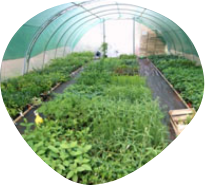 Each order is processed individually.
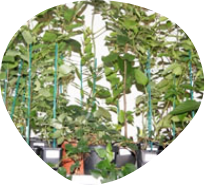 Plants are packed, staked and labeled.
 Packaging is carefully implemented to avoid any problems.
 Packages are ready to be shipped.