- New



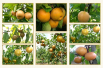
Set of 7 Nashi pears selected for their biodiversity and orchard performance. A perfect synergy guaranteeing optimal cross-pollination in April. Fresh, staggered harvests from the end of August until the first frosts of October.
Description
Introducing several varieties of the nashi pear (Pyrus pyrifolia) within the same growing area is the most effective method to guarantee maximum productivity through cross-pollination, while staggering harvests over several weeks. Our selection gathers premium, rigorously grafted Asian cultivars offering a unique diversity of textures, skin colors (green and russet varieties), and aromatic profiles. By combining these complementary varieties, you establish a self-sustaining, resilient, and highly productive fruit ecosystem, perfectly adapted to the climatic requirements of our regions.
One of the major advantages of this complete lot lies in the successive maturity of the fruits, preventing orchard glut and allowing for a staggered fresh consumption from the end of summer until the first frosts:
Late August (Early varieties): The season opens with the Nashi Pear 'Tama'. This cultivar stands out for its early maturity, offering the first fruits of the year while the other varieties are still in their growth phase.
During September (Mid-season varieties): The succession is ensured by a dynamic group including 'Shinseiki', 'Kosui', and the famous traditional variety 'Nijisseiki'. Their fruits reach their full potential under the late summer sun.
Late September to late October (Late varieties): The harvest extends and concludes with later cultivars such as 'Hosui', 'Chojuro', and finally 'Shinko'. These denser fruits often possess an excellent aptitude for winter storage.
Each variety in this lot develops its own organoleptic characteristics, allowing you to vary tasting pleasures and culinary uses:
'Tama': Offers a white flesh with a remarkable crispness and is highly refreshing, characterized by a sweet flavor and an almost non-existent acidity.
'Kosui': Recognized for being one of the sweetest; this russet-skinned fruit reveals a tender, extremely juicy flesh with subtly scented notes.
'Shinseiki': Proposes a perfect balance with smooth yellow-green skinned fruits, a very crisp texture, and a mild, clear, and pure flavor.
'Nijisseiki' (or '20th Century'): The historical reference with smooth green-yellow skin. Its flesh is incredibly juicy and crisp, with a subtle and refreshing balance between sweetness and a very slight touch of acidity.
'Hosui': Develops a often superior caliber, a bronze-russet skin, and a very melting flesh for a nashi, with a rich aroma and a slight tart note that enhances the sugar.
'Chojuro': Stands out for its originality, offering dense aromatic notes, sometimes compared to caramel or melon, combined with firm flesh and a thick orange-brown skin.
'Shinko': Presents a bronze-golden skin and a fine, very crisp flesh rich in water, whose particularly mild and sweet flavor develops rich aromas at the end of the season.
Although some varieties are partially self-fertile (such as 'Nijisseiki' or 'Tama'), the simultaneous presence of these seven cultivars exponentially increases the fruit set rate and the final caliber of the nashi pears, thanks to synchronized flowerings in April. The genetic compatibilities within this lot are absolute:
The Nashi Pear 'Tama' sees its fruiting performance significantly improved when planted in the immediate vicinity of 'Kosui' or 'Shinseiki'.
'Kosui' and 'Hosui' form a pair of reciprocal pollinators of remarkable effectiveness, their flowering periods coinciding perfectly.
'Nijisseiki' and 'Shinseiki' act as excellent universal pollinators for the entire group. Their abundant and viable pollen secures the production of varieties that flower slightly later, such as 'Chojuro' and 'Shinko'.
'Shinko' brings excellent added value by extending the availability of pollen in the orchard, benefiting in turn from the pollination of 'Hosui' and 'Nijisseiki' to maximize its fruit load.
Increased overall resistance: The association of different genes (such as the good tolerance to scab of 'Tama' or the high resistance to fire blight recognized in 'Shinko') limits the spread of pathogens compared to a monoculture.
Space-saving: Since the recommended planting distance between each tree is 3 to 4 meters, this lot makes it possible to create a fruiting hedge, a neat alignment, or a compact orchard that is highly aesthetic, optimizing every square meter of your land.
Homogeneous vigor and maintenance: All subjects share similar soil requirements (deep, moist, well-drained soils that are preferably neutral to slightly acidic), which simplifies organic amendment, watering, and mulching operations.
Shipping & delivery
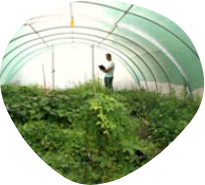 As soon as you place your order your plants are selected
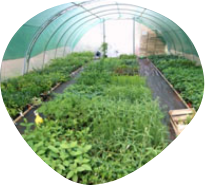 Each order is processed individually.
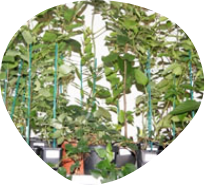 Plants are packed, staked and labeled.
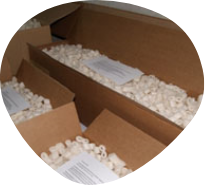 Packaging is carefully implemented to avoid any problems.
 Packages are ready to be shipped.
Expédition de nos plantes dans toute l'Europe (sauf en outre mer et les îles).
Avis clients




Set of 7 Nashi pears selected for their biodiversity and orchard performance. A perfect synergy guaranteeing optimal cross-pollination in April. Fresh, staggered harvests from the end of August until the first frosts of October.
Your cart is empty
Continue shopping